30 June, 2013
GUDIGII U XILSAARAANAA ARIMAHA XASSAN DAAHIR AWEYS OO CAMBAAREEYAY QAA...


Somaliland: Saga of Nima’an Bowden, A child of love and Passion
Somaliland: Saga of Nima’an Bowden, A child of love and Passion
|
Stranded in Somaliland, the son of a South Hams water engineer pleads for help from the British Government
'A child of love, a child of two nations united by history has been abandoned and forgotten by his father's homeland...'
 Nimaan stranded in Somaliland Nimaan stranded in Somaliland
By STUART NUTTALL
Somalilandsun - THE son of a South Hams water engineer murdered in Africa is pleading for help from the British Government.
Nim'an Bowden, who lives in Somaliland, claims he is one of five children whose father Brian Bowden was from Dartmouth.
Brian Bowden, who was born in Dartmouth in 1928, left Britain in 1958 to work for the Hargeisa Water Agency, in northern Somalia, what is now the self-declared independent state of Somaliland. He later married a Somali woman.
At the start of 1991, as rival tribal militias fought to gain control of the country and overthrow President Mohamed Siad Barre, Mr Bowden was working at the British embassy in Somalia's capital city Mogadishu.
Ian McCluney, the ambassador at the time, was evacuated by the Americans, along with other embassy staff on January 6, 1991.
Mr Bowden stayed behind to protect his Somali wife and family, as the bloody civil war was being fought around them.
The British Government at the time said Mr Bowden, described by journalist and author Aidan Hartley in his book The Zanzibar Chest as 'the last Englishman in the whole of Somalia', had been offered the chance to leave but chose not to, preferring instead to stay behind, look after his wife and children, the embassy and its local staff.
Not long afterwards, Mr Bowden was bludgeoned to death in front of his family.
The Foreign Office said then that he had been 'killed by an armed gang' and that Mr Bowden 'had been given the opportunity to leave' and the decision to stay was his.
According an African newspaper report at the time, the state-run Mogadishu radio station said: 'Mr Bowden was murdered at his home by an eight-man gang who made off with gold, money and food.' The report added that Somali police were hunting the killers.
The BBC reported that, in an interview shortly before his death, Mr Bowden said he had stayed behi
 Niman Bowden standing in-front of a refugeend because his wife was a Somali and he did not have enough money for a flight to the UK. Niman Bowden standing in-front of a refugeend because his wife was a Somali and he did not have enough money for a flight to the UK.
The report added: 'He said when he'd originally considered leaving... the British authorities sent him forms to fill out as the bullets were flying around.'
In an email to this newspaper, Nim'an Bowden, who is now in his mid-20s and living in a refugee camp in Hargeisa, said: 'My father was the last British citizen working in the British embassy of Somalia in Mogadishu in early 1991 when Somalia entered into chaos and anarchy and the central government collapsed.'
He added that after the British Government had stopped paying staff at the embassy, his father, who was 'very much a humanitarian', had borrowed money from a local lender to pay wages. Armed thugs followed him and he was robbed and killed.
Nim'an said that after his father's murder, the family went back to Hargeisa but 'we lost my elder brother in the Mogadishu chaos'. He added: 'My mother, Run Aw Dahir Mohamed, also died in 1994 and then I had to face a difficult time and every hardship in life.
'I was among the vulnerable street children in the valley of Hargeisa and in the open and who lived on a hook and by a crook – I was doing shoe polishing and every heavy child labour for the business places in Hargeisa.'
He added: 'I have long suffered from loneliness and have been the victim of severe discrimination as I am regarded an outcast.'
Nim'an wants the British Government to allow him and his wife to have his passports to come to Britain.
Mark Jones, the London-based chief executive of the Horn of Africa Business Association, who is backing Nim'an's cause, said: '[Brian] Bowden's Somali wife is now dead and his children are in a desperate situation made all the worse by the fact that they are of mixed race. Bowden's youngest son, Nim'an, has been an orphan since he was six and has to live on the streets since strangers occupied his family home and he has no means of affording legal redress.
'Nim'an has suffered constant harassment because of his mixed heritage and has felt suicidal because of his desperate situation.
'Now "living" in Hargeisa, his situation is a dire one, as he is deemed of no tribe, a non-person, an outcast.
'A child of love, a child of two nations united by history: he has been abandoned and forgotten by his father's homeland and shunned and derided by the land of his mother.'
He added: 'Nim'an lives in the capital of a land Britain is yet to officially acknowledge [Somaliland declared its independence from the rest of Somalia in May 1991].
'The excuses for inaction from British officials and those in Whitehall are and will be legion.
'In this case sophistry and semantics should not be allowed to triumph. Britain has a moral duty to act and to do the decent thing.
'Britain owes a debt to Brian Bowden, a debt of honour, one it must pay in full by standing by his children. Nim'an deserves to be allowed to have a future.'
South Hams MP Sarah Wollaston said: 'I have made enquiries and helped them with the guidance for applications.'
Brian William Thomas Bowden was born in Dartmouth on June 27, 1928, according to photocopies of his passport emailed to this newspaper by representatives of Nim'an.
Aidan Hartley, a Kenyan-born former Reuters foreign correspondent, author and a correspondent for Channel 4's award-winning current affairs series Unreported World, described meeting Mr Bowden shortly after the British embassy in Mogadishu was evacuated with the help of the Americans.
In his book The Zanzibar Chest, he describes being in Somalia's capital city in 1991: 'Almost all the foreigners in Somalia had already been evacuated on the eve of Operation Desert Storm [the first Gulf War to force Saddam Hussein's forces out of Kuwait].
'As the fighting in Mogadishu peaked, the US ambassador had gathered scores of foreigners in his compound, posted his diplomatic staff on the walls with rifles and transmitted a mayday calling for help.
'A flotilla of US ships steaming for the Gulf was diverted and raced to the rescue.
'A squadron of CH-53 Sea Stallion helicopters had taken to the air from the ships as time ran out and flown all night to reach the US embassy before the compound was invaded.
'As they lifted off, gangs of Somali looters were already scaling the walls.'
He added: 'I found the last Englishman in the whole of Somalia at the British embassy.
'At the door of the building, the ambassador's chauffeur in his peaked cap greeted me, snapping smartly to attention and saluting.
'He announced that not only had his boss vanished, but the embassy limo had also been looted.
'Inside, I found an elderly man. He was a familiar, paternal old colonial.
'He wore patched khaki shorts and sandals, glasses on his nose.
'The thin hair was plastered back onto his tanned skull. When I returned, he was sitting on a
 Niman Bowden and his wife in Hargeisa refugee camp packing crate, sorting scattered papers from the trashed office floor. Niman Bowden and his wife in Hargeisa refugee camp packing crate, sorting scattered papers from the trashed office floor.
'We shook hands and he said his name was Brian Bowden.
'When I told him my name, his eyes brightened. "Hartley. Was your father [Brian Hartley] up here once?" I said that he was.
Bowden exclaimed: "Well, well!"
'The last time he had seen me, he said, I was a towheaded little boy of four.
'I was taken aback. Bowden motioned me to the packing crate. "And how are your parents?" I said they were fine.
'Bowden chuckled. "I remember your father..." And immediately he launched into a desert tale that drew a perfect portrait of Dad.
'Dad and Bowden, it turned out, had become friends many years before.
'Bowden, a water engineer, had fallen in love with a local girl and never left northern Somalia. As the civil war got worse, he and his wife and five children fled to the city, where he got a slot doing paperwork at the British embassy.
'Since the collapse, Bowden had stayed in Mogadishu.
'He said: "It's been a bit scary, especially with these automatic cannons going off. It's been dodging bullets to find water."
'Daily, Bowden woke at five and joined the city's residents as they picked their way through the bombed-out warrens, foraging for food and the odd bucket of water.
'Looters had invaded his house twice, stealing anything they could carry, including clothes and the furniture.
'Still, at eight sharp Bowden reported for work at the looted embassy, as he had done every day before the slide into chaos.
'Turning up to work gave Bowden's formless life the illusion of purpose.
'He sat on that packing crate, sorting the scattered papers into piles, being especially careful with the confidential documents. It was an act of loyalty to a nation that had forgotten him.
'He said: "Last week we had a circular signed by the ambassador expressing his thoughts. He told the staff their salaries are being paid in the UK."
He was obviously impressed. Then, he added: "But we need the money here, not in London."
'Despite this, he did not resent Britain, which had yet been great when he had been posted to Somalia. In his mind it was still great.
'She couldn't possibly abandon an entire nation, half of whose population were her former colonial subjects.
'She could certainly never leave her own embassy staff to die of starvation or flying bullets. "It's been long enough and I personally would say the ambassador should come back," he shrugged. "But that's diplomacy. They're probably waiting..."
'For what, he didn't say. In the end I was no better than the British.
'Africa is full of tribes, which care for their own people in times of distress.
'Bowden was from my tribe. He stood before me, my father's long-lost friend, a malnourished old man.
'There was nobody else to save him. "You must leave," I pleaded with him. "No," he said. "I am caught. If I go, I go as a refugee, even back to the UK," and smiled weakly. "Here is the only future I can see right now."
'Mr Hartley later went to the British High Commission in Nairobi, Kenya, with some letters Bowden had asked him to deliver.
He said: 'I asked why the British were doing nothing to help him.
'The diplomat explained that under Government regulations, a citizen must cover the cost of his own repatriation, even from a war zone.
'Bowden was destitute... and he had a black Somali wife and five children.
'The Government could not under these circumstances evacuate either Bowden or his large mixed-race family.
'Bowden hung on for months. One day, he borrowed cash from a Somali loan shark to pay wages to the embassy staff since they had no way of getting to their salaries, which accumulated untouched in a London bank.
'On his way from the moneylender to the embassy, he dropped by his home for a few minutes.
'A gang of armed thieves that had got wind, forced his family to watch as they beat him to a pulp and when he was dead they made off with the cash.'
When this newspaper spoke to Mr Hartley at his farm in Kenya about what might have happened to Brian Bowden's family, he said he was aware of Nim'an's claims.
He added he believed Mr Bowden's daughters may have fled to Kenya as refugees.
Mr Hartley said he was hoping to go to Mogadishu and Hargeisa later this year.
Jim Shanor, an American who went to Somalia as a volunteer with the Peace Corps and who now lives in Nakuru, Kenya, met Brian Bowden several times.
He told this newspaper that they first met in Hargeisa in the period 1967-69.
He added: 'I ran across him again in Mogadishu in 1989-90 and we lunched together almost daily at a popular Somali restaurant, Abdi Steak's place.
'His work was always with the water and sanitation sector of the government.
'I knew Brian Hartley in much the same way in Hargeisa. Brian Hartley worked with livestock development and was journalist Aidan Hartley's father.
'The two Brians were very regular at the Hargeisa Club, a former British club later opened to other expats and then to Somalis.'
• The Zanzibar Chest, by Aidan Hartley, is published Harper Collins, recommended price £9.99. ISBN: 978-0-00-653121-0.
All content © of South Hams Newspapers Ltd unless stated otherwise.
|
LA-TALIYAHA MADAXWEYNAHA EE DHAQAALAHA AXMED CARWO OO HANBALYO IYO BOGAADIN U DIRAYAA XILDHIBAAN MAXAMUUD JAAMAC WARFAA
LA-TALIYAHA MADAXWEYNAHA EE DHAQAALAHA AXMED
CARWO OO HANBALYO IYO BOGAADIN U DIRAYAA XILDHIBAAN MAXAMUUD JAAMAC WARFAA
 Waxaan aad ugu farxay in
kaalintii uu ka baxay Alle ha u naxariistee xildhibaan Axmed Ibraahim Daahir (
Axmed Weyne), uu buuxiyo saaxiibkay XILDHIBAAN MAXAMUUD JAAMAC WARFAA. Kolka
ruux geeriyoodo meesha uu ka baxo waa la buuxiyaa, waxay noqotaa meel qofka yimaada
la yidhaahdo walee wuu ku habboon yahay iyo mid laga naxo oo loo arko qof aan u
qalmin. Waa marag ma doon in Maxamuud Jaamac, aan ugu daro naaneesta aanan la
jecleyn bal se ay in badani ku garan doonto Xildhibaan Wedka, inuu kaalintaas
buuxin doono oo uu noqon doono intayadii Axmed Weyne ka dhintay nin ay ku qancan
fikir, karti,mabda iyo degaan ahaanba.
Waxaan aad ugu farxay in
kaalintii uu ka baxay Alle ha u naxariistee xildhibaan Axmed Ibraahim Daahir (
Axmed Weyne), uu buuxiyo saaxiibkay XILDHIBAAN MAXAMUUD JAAMAC WARFAA. Kolka
ruux geeriyoodo meesha uu ka baxo waa la buuxiyaa, waxay noqotaa meel qofka yimaada
la yidhaahdo walee wuu ku habboon yahay iyo mid laga naxo oo loo arko qof aan u
qalmin. Waa marag ma doon in Maxamuud Jaamac, aan ugu daro naaneesta aanan la
jecleyn bal se ay in badani ku garan doonto Xildhibaan Wedka, inuu kaalintaas
buuxin doono oo uu noqon doono intayadii Axmed Weyne ka dhintay nin ay ku qancan
fikir, karti,mabda iyo degaan ahaanba.
Waa ruug caddaa muddo
dheer siyaasi soo ahaa golaha sharcedejinta, maamulkii SNM, nabadeentii, Golaha
Wasiirada, iyo kaalinta kowaad ee uu kaga jiray xisbiga KULMIYE ayaa u marag ah.
Waa nin ay u dhantay aqoon siyaasi iyo waayo-aragnimo noloasha Soomaliland dhan
walba.

Waxuu ku samray mabda’iisa.
Marna, nolol kasta oo adag oo soo martay muu noqon nin hoos u dhiga fikirkiisa xorta ah. Maanta
waxuu helay midhihii samirkiisa. Waana mid daris u ah rag badan oo dabayshu
kolba dhan u kaxayso, dhaawac weyna u geesta geedi socodka dimuquraadiyadda.
Inaynu helno xukuumad iyo shacbi ku naalooda nidaamka dimuquraadiyadda
xisbiyada badani waxay u baahantay rag iyo dumar ku adkeysta xisbinimada oo
dhidibka u taaga dimuquraadiyadda.
Shacbigu waxay xaq u
leeyihiin inay kala doortaan xisbiyada, ooy kolba key kheyr u arkaan doortaan,
haddii se ay walaaq noqoto oon cidba loogu imanayn xisbiyada, ma garan karaan
cidda ay doortaan.
Hanbalyo ayaan leeyahay
saaxiibkey XILDHIBAAN MAXAMUUD JAAMAC WARFAA., halkaas ka wad oo hayso mabd’aad
ku caano maashay, golaha kaga shaqee siyaasadii caddayd ee KULMIYE leynagu
doortay ilaa haddana aad ahyd inta yare e dabo socoto. Maxamuud Jaamac waa Guddoomiye Xigeenka Golaha Dhexe ee Xisbiga Kulmiye.
Axamed Xasan Carwo
La-taliyaha Madaxweynaha ee Dhaqaalah
29 June, 2013
Will Mohamed Morsi's opponents destroy Egypt's democracy by protesting?
President Morsi's detractors — saying that the leader has lost all legitimacy — are staging huge rallies to force him out after a year in power
By Harold Maass

Opponents of Egypt's Islamist President Mohammed Morsi protest in Tahrir Square in Cairo on June 28.
AP Photo/ Amr Nabil
upporters and opponents of Egypt's Islamist president, Mohamed Morsi, are staging rival protests in Cairo on Friday as he marks his first year in power. Ahead of the mass rallies, the ruling Muslim Brotherhood said one of its members was shot dead in an attack on a provincial party office, and it blamed groups that are leading the campaign to force Morsi from office.
Morsi this week called on his detractors to push for change at the ballot box — not in the streets — adding that "enemies of Egypt" are trying to "sabotage the democratic experience." Opposition leaders said Morsi was the one who derailed the country's pro-democracy revolution by replacing Hosni Mubarak's rule with an oppressive Islamist regime. Egypt's army chief warned that the military would intervene if necessary to stop the nation from erupting in chaos. Is Egypt's democracy about to collapse?
Morsi's opponents don't think so. They say they are trying to save Egypt's democracy, not destroy it. They have accused the former Muslim Brotherhood member of ramming an Islamist constitution down the throats of the secular and Christian opposition in an autocratic manner worthy of the iron-fisted Mubarak. The people might have accepted the seeming continuation of authoritarian rule, Magdy Samaan, a Cairo-based journalist for London's Daily Telegraph tells the Los Angeles Times but only if Morsi hadn't also failed to revive the crumbling economy and reverse a crackdown on foreign, pro-democracy NGOs.
Because none of these things has materialized, Morsi is now treading on thin ice. We shall soon see how strong his hold on power really is. [Los Angeles Times]
Regardless of a leader's failings, however, it is hard to argue that forcing him or her out would be a feather in the cap of any democracy. John L. Esposito notes at The Huffington Post that nobody (not even Morsi himself) is denying that he has made mistakes, including his refusal to reach out to some of his rivals to build a broader coalition. "But the response of an outraged opposition," Esposito says, "ought to be recourse to the democratic process not calls to topple the first democratically elected government in Egypt's history." If Morsi's opponents want to save their democracy, he says, they should speak up and demand reforms:
This is an opportunity for all Egyptians to embrace the notion of loyal opposition, a pillar of a democratic peoples government. One can be relentless and fierce in opposition to elected officials but must be loyal at the same time to the nation's system of government. Egypt has a mechanism to remove Morsi and any future presidents or members of parliament and that is the next round of elections. [Huffington Post]
The prognosis for Egypt's democracy might become more clear on Sunday, when opposition groups mark the end of Morsi's first year on the job with even bigger rallies to demand that he call early elections and quit. The Tamarod (or Rebel) campaign says it has gathered 15 million petition signatures — outnumbering by several million the votes Morsi got to win the presidency last year.
"The level of violence on Sunday," predicts Abu Dhabi's The National in an editorial, "may reveal what lies ahead." If both sides can keep a lid on the bloodshed, "Egypt's democratic future will be shown to be sturdy and promising — and the next elections will be quite interesting. But widespread violence, however it starts, would only weaken the government's fragile legitimacy, encourage further violence from both sides, and tempt the army to sweep democracy away."
Harold Maass is executive editor at TheWeek.com and was a member of the team that launched The Week's U.S. print edition. He has worked for a variety of news outlets, including The Miami Herald, Fox News, and ABC News.
http://samotalis.blogspot.com/
CENTRAL AND EASTERN AFRICA: IRIN weekly humanitarian round-up 689 28 June 2013
 | humanitarian news and analysis a service of the UN Office for the Coordination of Humanitarian Affairs |
| |||||||||||||||||||


France 'home-made' label to combat reheated dishes
France 'home-made' label to combat reheated dishes

The bill is aimed at defending the quality of French cuisine
Related Stories
Is France learning to love British food?
The changing face of French lunchtimes
French MPs have approved a bill forcing restaurants to label as "home-made" dishes which were prepared from raw ingredients in their kitchen.
The "fait maison" label on menus is aimed at curbing the practice of buying in pre-cooked meals from outside, microwaving them and passing them off as freshly made.
Restaurants marking dishes as "fait maison" fraudulently will be fined.
The Senate (upper house) still has to back the bill for it to become law.
MPs from both the ruling Socialist Party and opposition centre-right UMP called for the measure to be obligatory, overruling Business and Tourism Minister Sylvia Pinel, who did not want it to go that far.
"We're making things more transparent and restoring our trade's respectability," said Didier Chenet, head of restaurant federation Synhorcat.
"Clients will know what to expect. The problem right now is that you push the door of a restaurant and you don't know if there's actually a chef in the kitchen," he told Reuters news agency.
http://samotalis.blogspot.com/
Related Stories
Is France learning to love British food?
The changing face of French lunchtimes
French MPs have approved a bill forcing restaurants to label as "home-made" dishes which were prepared from raw ingredients in their kitchen.
The "fait maison" label on menus is aimed at curbing the practice of buying in pre-cooked meals from outside, microwaving them and passing them off as freshly made.
Restaurants marking dishes as "fait maison" fraudulently will be fined.
The Senate (upper house) still has to back the bill for it to become law.
MPs from both the ruling Socialist Party and opposition centre-right UMP called for the measure to be obligatory, overruling Business and Tourism Minister Sylvia Pinel, who did not want it to go that far.
"We're making things more transparent and restoring our trade's respectability," said Didier Chenet, head of restaurant federation Synhorcat.
"Clients will know what to expect. The problem right now is that you push the door of a restaurant and you don't know if there's actually a chef in the kitchen," he told Reuters news agency.
http://samotalis.blogspot.com/
QIIMEYN GUUD TARTANKII CIYAARAHA-3
QIIMEYN GUUD TARTANKII CIYAARAHA-3

Ahmed Arwo
Waxa inaga soo dhexgashay qiimeyntan ooy ahayd inaan mar
hore sameeyo damaashadkii iyo mashxaradii cadada inoo ahayd kolka cid cusub la
magacaabo. Waa dabeecad wacan oo soo dhoweynta ayeynu can ku nahay. Haddaba aan
toos u abaaro ciyaarihii goballada iyo waxii dhacay iyo sidaan u arkay.
Horaan hanablyo ayaan u dirayaa Wasiirka iyo shaqaalaha
wasaaradda iyo intii hawsha muggaas leh isku soo dubariday. Tartanku aad ayuu
uga cuslaa ugana badnaa kii kal hore. Waxa kubbaddu dhex taalay 13 Gobal.
Dhibta ugu weyni waxay ka timid goballadan qabiileysan een
haddana afka mooye aan maamul ahaan dhisnayn. Waana masiib ina sugaysa wax
qabadkeedu. Waaa goballo fiirsasho la’aan loo magacaabay dalkuna qaadi karin,
ummaddana kala qaybin iyo gobal beeleysan ka dhigaysa. Waana fikirkani kii aynu KULMIYE
ahaan qabnay, welina ah kan hagaagsan ee bulshadu badi aaminsantay. Haddii
Gobollo la sameynaayo ha noqdaan qaar ayna lahayn beel keliye. Hana noqdaan
qaar dhaqaale ahaan is bixin kara, dalkana wax ku soo kordhin kara.Yaan arrintan lagu eegin xukuumadda oo keliye. Waa mid u baahan in la gorfeeyo oo danta guud la wado eego mucaarid iyo muxaafidba. Go'aan wadajir ah ayaa wax lagaga qaban kara . Waxay leedahay culays siyaasadeed oon xukuumaddu keli riixi karin.
Taas waxa xigtay garsoorayaasha oo u muuqday dar aan la siin
tababar farsamo iyo mid sharciba, Waxay u muuqdeen qaar aan maareyn karin qaska
yar ee garoonka ka dhaca. Askarta iyo mas’uulinta soo farogeliyana aan joojin Karin,
oon xataa iskuba deyin inuu la hadlo. Garoonka isagaa ka ah madax aan cidi uga
sareyn cid amarkiisa heysata ayuunba soo geli karta. Askartuna isagay amar ka
sugaan.
Waxa iyana jirtay inaan sharci jirin sheegaya ciyaartooygu
siday ugu ciyaari karaan gobal. Waxa aynu naqaanay in ardaygu u ciyaaro halka
uu iskuulka iyo jaamacdada kaga jiro ee ayna ahayn halkuu abtirseen ahaan ka
soo jeedo. Waxa iyana la yaab ah inuu marba qof keliye gobal u ciyaaro. Waxa
habboon in sharci cad laga soo saaro cidda u ciyaari karata gobal kolka uu
gobal u ciyaaran aanu marnaba gobal kale u ciyaari karin, kolka la eego
ciyaarha goballada, bal see uu kooxo kale oo magaalooyin kale ah ka ciyaari
karo. Calaa kuli xaal sharci tafaasiil leh ayaa loo baahan yahay.
Caasuumadaha kooxaha waxa habboon in furitaanka dhammaan
kooxaha la casuumo hal mar oo keliya. Xukuumaddu ma aha in mas’uul waliba
gobalkiisa casuumo. Dhaqaale ahaan waa khasaare magac ahaan waa liidnimo iyo
qaybsanaan. Magaca xukuumadda waa in hal mar oo qudha si wadajir ah loo
casuumaa. Kolka dambe gobalada koobabka qaata iyana waa in casuumad wadajir ah
lagu sagootiyaa.
Dhinaca farsamada, kol haddaanu garoonku ahayn cagaar waa in
shabaga goolka la mariyaa rinjiga cagaaran , lagana dhigaa nooca caalamku
kubadda ku cayaaro oo gudadka waaweyn ee kubbaddu ka dusayso amba daloolinayso
la yareeya.
Halka ay fadhiyaan ciyaartooyga iyo tababarayaashu waa in
loo sameeya hadh. Teeda kale waxay ahyd arrin adag in ciyaarta la bilaabo 2
duhurnimo. Waxa aniga ila wacnaa in hal ciyaar maalintii la ciyaaro, oo dadku
runtii madadaalo iyo arrin ay qaadka kaga maarmaan ayey heleen muddada loo dheereeyo, dhalintana wey u
wacnayd ee inay intaas dhaqaale ahaan dusha loo rito ayaa habboonayd.
Yaan la iloobin wiilasha kubbadda soo qabqabanaayey, ha la siiyo labis wacan iyo waliba in afarta geesood loo dhiibo afar kubadood ooyna sugin kubadda meesha fog lagu laaday ee markiiba ay soo dhiibaan tan ay gacanta ku hayeen.
Qalad weyni waxuu ka jiray dhinaca waqtiga. Ma garan karo saacadda TVga iyo siidhiwalaha waxay u wada socon waayeen. Inta badan iska daa waqtigii lumay oo uu ku daro, ee iyadoo weli dhowr daqiiqadood hadhsantay dhinaca TVga ayaa dhamaadkii la afuufi jiray. Waana arrin u baahan dib u eegid.
Kolkaad guud ahaan qiimeyso iyo duruufaha dalka ka taagnaa,
waxay ahyd dhacdo guul iyo reynreyn ku dhammaatay, nabad iyo wadajir ku
dhammaatay, oo laga soo kabtay qaskii hadheeyey bilowgii. Waxa nabarka ugu
weyni ahaa kii kooxda Togdheer gaadhay, oon ku tilmaami karo ayaan darro.
Ugu dambeyn waxaan hanbalyeynayaa hawlwadeenadii guushan soo
hooyey, dhaliishuna waa toosin, waana mid inoo dhex ah iyo daris aynu wax ku barano.
Xaasha ee waxba meydaan hagran, qaladkii dhacana waad ka dabotegteen, waxayna inoogu dhammaatay farxad iyo kaftan bari iyo galbeed ah, oo maanta ciyaari waa Galbeed, laakiin kal dambena waa sanad kale iyo Bariyoo aargoosi oo waliba Togdheer ay ceebta sanadkan raacday ku dhaarsan tahay inay ku meydho koobka kal dambe..waa
ayaamo tirsan ee Galbeed yuuna guusha ku sakhraamin..
Aad ayaan u xiiseeya una jeceley ciyaaraha, waaxaan isku
dayi inaan kalin ka qaato horumarinta ciyaaraha.
Guul iyo horumarinta ciyaaraha iyo dhallinta.
Axmed Xasan Carwo
La-taliyaha Madaxweynaha ee Dhaqaalaha
Italy's First Black Minister Confronts Culture of Casual Racism - Cecile...
28 June, 2013
DR. OMAR OSMAN RABEH: A SOMALI HERO IN A NATION LACKING HEROES
DR. OMAR OSMAN RABEH: A SOMALI HERO IN A NATION LACKING HEROES
Ali H. Abdulla
Axmed Guray ma uu dhiman
ma goblamin darwiishkii
geenyadu ma daalana
maan beelin gamastii
waxaan uga gol leeyahay
hadii geesi ii kaco
gayaankeyga waan heli
Hadraawi, a Somali Poet (A song from Aqoon iyo Afgarad delivered by Shankaroon)
Somalia is a country bereft of national heroes. For nearly sixty ears, it has failed to produce heroes like Imam Ahmed Gurey, Sayed Mohamed Abdulla Hassan and Sheikh Bashir Yusuf. In lieu, it has been afflicted with a bunch of greedy Warlords, and blood-thirsty religious extremists who lack vision and an understanding of the world.
As a young boy, I used to admire the Somali poet Hadrawi who had the guts to confront a dictatorial regime trying to force an alien concept upon its people, scientific socialism. His early works inspired me to run away from Somalia without finishing high school. I had to be smuggled in a boat to South Yemen after confrontations with Russian teachers, who hardly spoke English but managed to take over our high school in the beautiful town of Sheikh in Northwestern Somalia. Imagine being taught English by a Russian lady who thought that “Took to his heels” meant “Grabbed his heals”.
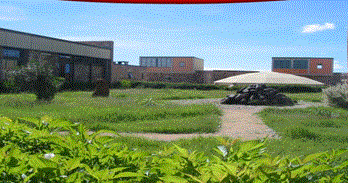 Sheikh Secondary School
The junta probably had a long term strategy of gradually transforming the language of instruction in the school into Russian. It regarded Sheikh High School as a British island dominated by western and Indian teachers. The elite school was run since its inception in the early 1950s by the late R.R. Darlington, a former British officer. In hindsight, the British colonialists did have their own agenda and designed the school to produce future Somali leaders who were sympathetic to Western values. Regardless, the students preferred Darlington and his team to the crude Russians. During his time, the school library, sports facilities and laboratories were well stocked and functioned smoothly. The students called him “Gacmadheere”, a Somali word for” the one with long arms”. The military junta finally got rid of all the western teachers and the school eventually lost its elite status. The GCE exams from London and the scholarships associated with it followed Darlington.
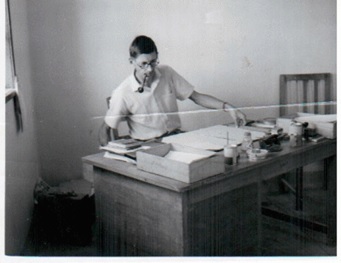 R.R. Darlington (Gacmadheere
I was nearly dragged to jail by the military junta when a number of us in my class made fun of those teachers for their lack of proficiency in the English language. I was spared such a fate by a courageous math teacher called Huseen Max. As acting headmaster, he tricked the junta regional officers, who were sent from Burao to arrest us, into believing that the troublemakers were sacked from the school. I am not sure if Huseen is still alive, but I will never forget his bold stand, and I will always remember him as a true hero who risked being incarcerated for misleading the powerful junta and saving a bunch of young kids from its clutches. When the head master came back and took over from Huseen, I was indeed sacked for one month after which I decided to bail out from Somalia.
Coming back to Somali heroes, Hadrawi in the early seventies lamented in one of his famous plays, “Aqoon iyo Afgarad”, the lack of heroes in Somalia but expected the rebirth of the likes of Ahmed Gurey and Sayed Mohamed, two Somali heroes who fought against Ethiopian and British aggression. More than 30 years later, Somalia still lacks such heroes except for one man who remained oblivious to many of us till now. His name is Dr. Omar Osman Rabeh and he unfortunately passed away in April of this year in Cairo. Dr. Rabeh is from the great state of Awdal, Ahmed Gurey’s seat of power in the 15th century.
Dr. Rabeh was raised in Djibouti under French colonial rule and started his struggle against the French at an early age. He lost his freedom in 1968 and nearly lost his life when he was sentenced to death after being accused of trying to assassinate Ali Arif Burhan, the French appointed Prime Minister of Djibouti. His execution was later commuted to life sentence. After spending 7 years in a French jail, he was later traded for the French Ambassador in Somalia who was kidnapped by the Djibouti Freedom Fighters. While in jail, he earned a PhD degree in philosophy.
After regaining his freedom, Dr. Rabeh devoted his life to educating young Somali minds. He started a French Immersion Islamic school in Canada known as Ibn-Batouta. The school serves the Ottawa Muslim Community and is considered one of the best schools in the area.
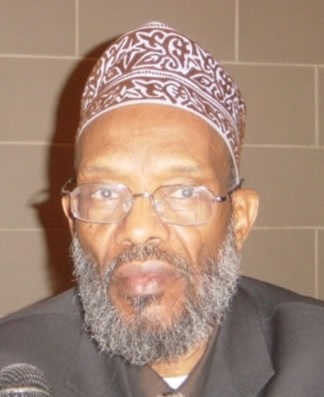 Dr. Omar Osman Rabeh (GBHS)
Dr. Rabeh also dedicated most of his energy to seeking Somali Unity. His dream of a united Somalia remained with him till the last minute of his life. He was not a politician and shunned the limelight. When Ethiopia invaded Somalia in 2006 and destroyed the moderate Islamic Courts, a process that sadly led to the birth of the Shabab extremists, he encouraged all Somalis to defend their country against an invasion that he predicted many years ago. Ethiopian pressure may have forced him to leave Canada and settle in Egypt where he died.
Dr. Rabeh was a visionary who predicted the complete collapse of the Somali state including all its institutions. He later predicted that Somalia had a brighter future and would recover from its failed state status. In one of hislectures he painted a Somalia free from hunger, bloodshed and clan divisions.
Dr. Rabeh was also a prolific writer who authored many books and articles. His works include:
1. Le cercle et spirale (The Circle and the Spiral) published in 1984.
2. La Somalie (Somalia) published in1989.
3. Le etat e la Pan Somalism (The State and Pan Somalism)
4. Somalia: The psychology of the nomad published in 1983.
5. The Somali Nation, Historical consideration and issues published in 1985.
6. Republic of Djibouti or spare tire of Ethiopia published in 1985.
Dr. Rabeh deserves to be remembered as a Somali hero who dedicated his life to Somali freedom, dignity and Unity. I would like to call upon the Governments of Somalia and Djibouti to honor Dr. Rabeh by naming schools and universities after him and to bestow upon him posthumously an order of merit if such an order exists.
Dr. Rabeh reminds me of all of the values that most of our people have lost over the last 50 years: integrity, honesty, righteousness, loyalty, courage, determination and love of country.
Finally, I would like to call upon young Somalis to listen to his numerous lectures in Youtube and use him as a role model if they want to stand above the destructive clan politics that destroyed Somalia. Dr. Rabeh campaigned vigorously against clan politics and refused to be sucked into it like other Somali intellectuals.
May the Lord have mercy on his soul and reward him for his good deeds.
Ali H. Abdulla
Email: aliegeh@gmail.com
Mudaneyaasha Baarlamaanka Ee Hungurigu Ka Hayay Golaha Wasiirada Oo Talaabadii Wasiir Duur Xilka Lagaga Qaaday U Quus Goysay
Mudaneyaasha Baarlamaanka Ee Hungurigu Ka Hayay Golaha Wasiirada Oo Talaabadii Wasiir Duur Xilka Lagaga Qaaday U Quus Goysay
Hargeysa, June 28, 2013 (Haatuf) - Xildhibaano ka tirsan golaha Wakiilada oo u badan xildhibaanada Xisbul xaakimka Kulmiye oo muddooyinkan u dambeeyay loolan ugu jiray in xilal Wasiirnimo Madaxwayne Siilaanyo uga magacaabo golihiisa Xukuumadda, kuwaas sii hiyi kacay markii Madaxwaynuhu xilal Wasiirnimo u magacaabay guddoomiye ku xigeenkii hore ee golaha Wakiilada oo haatan ah wasiirka Maaliyada Cabdicasiis Maxamed Samaale iyo Ex. Xildhibaan Maxamed Nuur Carrale Duur oo isagana loo magacaabay Wasiirka Arrimaha Gudaha ayaa markii xilalkaa loo Wasiirnimo loo dhiibay kuraasidoodii iyo xubinimadii golaha Wakiilada si rasmiya iskaga Casilay. Xildhibaanada suudhka iyo tayga u xidhnaa inay ka mid noqdaan golaha wasiirada ayaa damacoodii wasiirnimo ay u quus goysay talaabada xilka lagaga eryay Wasiirkii Hore ee Arrimaha Gudaha Maxamed Nuur Carrale (Duur) oo golohooda wakiilada ka tirsanaan jiray, kuwaas oo u arkayay maadaama kursigiisi Baarlamaanka uu iskaga casilay xilka wasiirnimo ee loo magacaabay inuu ku cimridherersandoono golaha Wasiirada hase yeeshe xubnaha goloha Wakiilada ee hunguraynayay inay ka mid noqdaan golaha xukuumadda ayaa talaabadan uu Madaxwayne Siilaanyo xilka kaga qaaday Mr. Duur ay u noqotay cashar ay ku cimra qaataan kuwaas oo qaarkood sheegeen in kuraasidooda ay xejisan doonaan wixii imika ka dambeeya. Mudane ka tirsan xubnaha Golaha Wakiilada ee xilka wasiirnimo hunguraynayay oo magiciisa ka cudurdaartay in la shaaciyo oo wargayska Haatuf wax ka waydiiyay in wax iska badaleen damaciisii uu ku doonayay in golaha Wasiirada xil looga magacaabo ayaa isagu sheegay in talaabadan xilka lagaga qaaday Wasiirkii hore ee Arrimaha Gudaha Maxamed Nuur Carrale (Duur) ay golahooda Wakiilada iyo xubnahoodii hunguraynayay xilka wasiirnimo ay u noqotay tusaale ay ku cimra qaatan wixii imika ka danbeeyana ay kuraasidooda xejisan doonaan isagoo arrimahaa ka hadalayana wax uu yidhi “Runtii xildhibaanno badan oo aan ka mid ahay ayaa hunguri kaga jiray in xil wasiirnimo looga magacaabo golaha xukuumadda diyaarna u ahaa in kuraasidayada aanu iska casilno haddii madaxwaynuhu xil noo magacaabo balse waxaa noo quus goysay tallaabada xilka lagaga qaaday saaxiibkayagii Duur oo aanu u arkaynay in muddo dheer uu ka sii tirsanaandoono golaha wasiirrada maadaama uu kursigiisii baarlamaanka wasiirnimada ku doorsaday sidaa darteed waxaanu ogaanay in magacaabista wasiirnimadu tahay Bil saddex oo marka ladoonana lagaa qaadi karo balse kursigayaga Baarlamaanku waa mid ku yimaada doorasho laguna waayi karo cod shacbi”.
Suldaanka Guud Ee Subeer-Awal Oo Si Weyn Loogu Soo Dhaweeyey Degmada AGABAR
Wefti aad u balaadhan oo uu hogaaminayey Suldaanka guud ee Subeer-awal Suldaan Xasan Suldaan Cabdilaahi Suldaan Cabdiraxmaan............
 Wefti miisaan culus oo uu hogaaminayey Suldaanka guud ee Subeer-awal Suldaan Xasan Suldaan Cabdilaahi Suldaan Cabdiraxmaan ayaa maanta dadweynaha reer AGABAR ku soo dhaweeyeen caleemo-qoyan, sacab iyo mashxarad, iyaga oo u sii galbiyey keyn dhireed jiq ah oo casuumad-qaddo sharafa loogu sameeyey weftiga.
Weftigan uu hogaaminayey Suldaanka guud ee Subeer-awal ayaa waxay u-jeedada socdaalkiisu ahayd sidii uu u soo sahamin lahaa goobta loo asteeyey inuu ku qabsoomo shirweynaha beelaha SACAD MUUSE ee HOODAALE oo qaban-qaabadiisa si weyn loo dareemayey guddo iyo dibadba,
Cali Cabdilaahi Jaamac oo ka mid ah odayaasha degmada AGABAR ayaa sheegay inay weftiga ku soo dhaweynayaan gacmo furan, waxaanu yidhi “Waxaanu si aad iyo aad ah u soo dhaweynaynaa weftiga baaldhan ee uu hogaaminayo Suldaanka guud ee Subeer-awal Xasan Suldaan Cabdilaahi Suldaan Cabdiraxmaan, Cuqaasha, Aqoonyahanka, Xildhibaanada,waxaanan ku soo dhaweynaynaa gacmo furan annaga oo aad iyo aad ugu xiisa qabnay shirweyne SACAD MUUSE oo la qabto,aanu aad ugu jeelanayn”.
Guddoomiyaha degmada AGABAR Cali Yuusuf Jaamac oo isna halkaasi ka hadlay ayaa waxa uu yidhi “Waxaan degmada AGABAR ku soo dhaweynayaa Weftiga uu horkacayo Suldaanka Guud ee Subeer-awal, waxaan Suldaan kugu soo dhaweynaynaa gacmo iyo qalbi furan, annaga oo aad ugu faraxsan gogosha aanu u fidinay shirweynaha Beel-weynta SACAD MUUSE,Waxay in muddo ahba ka wada shaqeynayeen odayaasha deegaanka iyo guddida qaban-qaabada Shirweynaha Beesha SACAD MUUSE ee degmada AGABAR lagu qabanayo”.
Marwo Foosiya oo iyaduna halkaasi ka hadashay ayaa waxay u mahad-celisay dhamaanba Suldaanka guud ee Subeer-awal, Ugaaska, Cuqaasha iyo guddida qaban-qaabada Shirweynaha beesha SACAD MUUSE ee dhawaan ka dhici doona degmada-tan AGABAR. “Suldaanka Guud ee Subeer-awal waxaanu leenahay ku soo dhawoow gacmo furan, waxaanan ILAAHAY ka baryayaa inuu shirkani noqdo mid la innaga aqbalo oo inoo qabsooma”.Ayey tidhi Foosiya.
Caaqil Cabdiraxmaan Cabdilaahi Barkhad oo isna halkaasi ka hadlay ayaa waxa uu yidhi “Annagu waxaanu ku nimid baaqii Salaadiintu ku baaqday, waxaan leeyahay qolloda Salaadiinta ee meesha gaarka ah fadhida, wixii ay dadka ugu baaqeen inay meel mariyaan ayaa looga baahan-yahay,maaha inay daaha dabadiisa fadhiistaan., Shirkanina maaha mid wax u dhimaya xukuumadda ee waa mid ay reerku danihiisa kaga tashanayaan, Salaadiintuna inay Siyaasiyiin noqdaan maaha.”
Xildhibaan Ibraahim Axmed Xasan oo ka mida ah mudanayaasha Golaha deegaanka Gobolka Gabiley oo isna halkaasi ka hadlay ayaa waxa uu yidhi “SACAD MUUSE ninkaan ahayn ee iska saaraya isaga ayaa cirka roob ku og, annagu shirkaas ayaanu taageersanahay,cid aanu wax u dhimaynaana ma jirto, dawladna lagu xumeyn mayo, beel kalena lagu xumayn maayo,laakin shirkayaga cidna fasax uga qaadan-mayno”.
Chief Caaqil Cabdiraxmaan Axmed Xoore oo isna halkaasi ka hadlay ayaa waxa uu yidhi “Waxaanu idinka gudoonay reer AGABAROOW soo dhaweynta aad sida heerka sare ah noo soo dhaweyseen. Weftigan uu hogaaminayo Suldaanka Guud ee Subeer-Awal Suldaan Xasan Suldaan Cabdilaahi Suldaan Cabdilaahi u-jeedadiisu waxa weeyaan inuu soo eego, goobta uu SACAD MUUSE uu ku shiri doono oo aanu annaguna sahankeedi ku garab-taaganahay, SACAD-MUUSE kale oo hadhay oo meel kale joogaana ma jiro, SACAD MUUS-aha uu isagu (Suldaanku) hogaaminayo ayuunba Sacad Muuse ah, Subeer-awalka uu isagu hogaaminayo ayuunba Subeer-awala.
Afhayeenka guddida qaban-qaabada Shirweynaha Beel-weynta SACAD MUUSE Maxamed Cabdi Ismaaciil (Digtoorka) oo isna halkaasi ka hadlay ayaa waxa uu yidhi “Soo dhaweyntan aad sida weyn noo soo dhaweyseen aad ayaan ugu faraxnay waad ku mahadsan tihiin,warkiinu hore ayuu noogu yimid, sida aad Weftigii naga horeeyey u soo dhaweyseen reer AGABAROOW waad ku mahadsan tihiin,haddii maanta AGABAR shir SACAD MUUSE ah lagu qabanayo waa ILAAHAY mahaddii,nasiib ayaad u hesheen in shirkii ugu horeeyey ee la hadal-hayn jirey ee la sugaayey uu halkan ka dhaco.
Ugaaska SACAD MUUSE Ugaas Ibraahim oo isna halkaasi ka hadlay ayaa waxa uu yidhi “Weftiga uu hogaaminayo Suldaanka guud ee Subeer-awal ee aan halkan gogol xaadhka ugu sameynay way ku mahadsan yihiin sida ay noo soo sharfeen ee ay noogu yimaadeen marti-qaadka shirweynaha SACAD MUUSE ee dhawaan qabsoomi doona. Beesha reer AGABAR oo aad iyo aad u shaqeysay oo na soo dhaweysay aad iyo aad ayey u mahadsan yihiin”.
Wannaga aanu halkan ka doonaynana AGABAR ayaa ka kow ah, weli hawshu inagamay dhamaan hadaynu nahay reer AGABAR oo way inoo hadhsan tahay, maanta waa sahan uun”.Ayuu yidhi Ugaasku.
Suldaanka guud ee Subeer-awal Suldaan Xasan Suldaan Cabdilaahi Suldaan Cabdiraxmaan oo halkaasi ka hadlay ayaa waxa uu yidhi “Beesha reer AGABAR rag iyo haween-ba, odayaal iyo dhalinyaraba, iyo guddida qaban-qaabada Shirweynaha HOODAALE, Cuqaasha, Chief caaqilada, Ugaaska beesha reer Agabar waxaan idinku salaamaya Asalaamu Caleykum wa raxmatulaahi wa barakaatu aad iyo aad ayaan idinka mahadnaqayaa, farxad-weyna way ii tahay inaan maanta soo gaadho degmadeydii AGABAR, sida qiimaha leh ee aad noo soo dhaweyseen ee aad bacadka noogu tunaydeen waanan u duceynayaa degmada AGABAR iyo dadka ku noolba.
Waxaad leedihiin sharaf weyn, ILAAHAY ayaa idinla damcay in shirweynihii beelaha SACAD MUUSE in halkan lagu qabto, degmadani waa degmo taariikhiya oo ay fac-weyn tahay waa degmo aynu ku xasuusan karno halgankii dalkan lagu xorreeyey, ALLE ha u naxariiste waxaynu ku xasuusanayaa Mujaahidkii Raage Bidaar marka xadkan la soo galo, Insha Allaahu taallooyin lagu xasuusto ayeynu halkan uga sameyn doona mujaahidiintii dalka u soo halgamay ee uu ugu horeeyo Marxuum Mujaahid Raage Bidaar.
Suldaan Xasan waxa uu reer Agabar uga mahad-celiyey sida ay uga sii shaqeynayeen goobta uu ku qabsoomi doono Shirka HOODAALE, “Sida hagar la’aanta ah, toll-jaceylka ah ee aad hawsha u qabateen, deegaanka iyo dadka reer AGABAR duco-weyn ayaan u sidaa.


HOW IS A GHUSL PERFORMED?
SERENITY FOUNTAIN
(HUZUR PINARI)
Check our new websites!www.serenityfountain.org
www.salsabeelussafa.com
For your questions about Islamic knowledge:
serenity@serenityfountain.org
28 June 2013 / 19 Sha’ban 1434
HOW IS A GHUSL PERFORMED?
To perform a ghusl [1] as prescribed in the sunnat [2], we must first wash both of our hands and private parts even if they may be clean. Then, if there is any najasat [3] on our body, we must wash it away. Then we must perform a complete ablution. While washing our face we must intend to perform a ghusl. If water will not accumulate under our feet, we must wash our feet, too. Then we must pour water on our entire body three times. To do this, we must pour it on our head three times first, then on our right shoulder three times and then on the left shoulder three times. Each time the part on which we pour water must become completely wet. We must also rub it gently during the first pouring. In a ghusl, it is permissible to pour the water on one limb so as to make it flow onto another limb, which, in this case, will be cleaned, too. For in a ghusl the whole body is counted as one limb. If in performing an ablution the water poured on one limb moistens another limb, the second limb will not be considered to have been washed. When a ghusl is completed it is makruh [4] to perform an ablution again.
GLOSSARY
[1] ghusl: ablution of the whole body as defined in fiqh.
[2] sunnat: i) act, thing that was, though not commanded by Allahu ta’ala, done and liked by the Prophet (‘alaihi ‘s-salam) as an ‘ibada (there is thawab if done, but no sin if omitted, yet it causes sin if continually omitted and disbelief if disliked; the Sunna; i) (with fard) all the sunnas as a whole; ii) (with the Book or Qur’an al-karim) the Hadith ash-sharif; iii) (alone) fiqh, Islam.
[3] najasat: i) any kind of dirt, filth, that prevents one from performing namaz. ii)religiously impure thing.
[4] makruh: (act, thing) improper, disliked and abstained by the Prophet (‘alaihi ‘s-salam); makruh tahrima: prohibited with much stress.
Anybody who makes ghusl and goes to the mosque early on Friday will gain a reward of giving a camel as charity.
Hadith-i-sharif
'One should carefully choose whom to love, and share the love accordingly'
'What is important is whom you are with, not who you are.'
'Kalam-i kibar, kibar-i kalamast.'
(The words of the superiors are the superior words.)
www.serenityfountain.org
http://samotalis.blogspot.com/
Madasha Qurbejooga iyo Xuska 26 June - 53 Sano Ka Horr Sidee ayey ahayd?
27 June, 2013
Bogga Xarakadad Alshabaab Oo Xaqiijiyey In Ku Xigeenkii Xarakadaasi Ibraahim Xaaji Jaamac Meecaad (Ibraahim Afghani) Uu Geeriyooday Isla Markaana Uu Dilay Amiirka Xarakadaasi Axmed Cabdi Godane
Bogga Xarakadad Alshabaab Oo Xaqiijiyey In Ku Xigeenkii Xarakadaasi Ibraahim Xaaji Jaamac Meecaad (Ibraahim Afghani) Uu Geeriyooday Isla Markaana Uu Dilay Amiirka Xarakadaasi Axmed Cabdi Godane
Baraawe (Halbeegnews)–27/06/2013– Mid ka mid ah bogaga internetka ee ay leeyahiin xarakadda Alshabaab ayaa maanta goor dhawayd xaqiijiyey in ku xigeenkii xarakada Alshabaab Ibraahim Xaaji Jaamac Meecaad oo looga yaqaanay gudaha xarakada Alshabaab dhexdeeda magaca ah Sheekh Abuubakar Al-Zaylici iyo nin kale oo ay ku sheegeen magaciisa Sheekh Cabdixamiid Xaashi Colhaye loona yaqaanay Sheekh Macalin Burhaan labada ninba lagu dilay magaalada Baraawe.

Shabakadani waxay sheegtay in labadaninba oo lahaa seddex xaas loo sheegay geeridooda xaasaskoodii laguna war geliyey in ay asayda qaadaan waa sida boggaasi tibaaxayo eh.
Yaa Dilay Ibraahim Xaaji Jaamac Meecaad
Sida boggani tibaaxayo dilka Ibraahim Xaaji Jaamac Meecaad isla markaana Alshabaab u taqaanay Sheekh Abubakar Alsaylici ayaa waxaa ka danbeeyey amiirka xarakadda alshabaab Axmed Cabdi Godane, oo todobaadkani sidoo kale kooxo taageersani ay damacsanaayeen inay khaarajiyaan Xasan Daahir Aways oo isla xarakadaasi ku jirta.
Shabakaddani taageersan kooxda Alshabaab waxay sheegtay in Amiirka xarakadaasi Abu Subayr oo ay u yaqaan Axmed Cabdi Godane looga fadhiyo inuu faah faahin ka bixiyo sababta uu u dilay nimankani.
Ibraahim Xaaji Jaamac Meecaad ayaa mar ahaa madaxii xarakada Alshabaab ee jubooyinka, iyadoo sida boggaasi tibaaxayana dhawaan loo magacaabay ku xigeenka Xarakada Alshabaab, isagoo sidoo kalana ahaa madaxa maaliyadda ee xarakadda Alshabaab.
Axmed Cabdi Godane, iyo Ibraahim Xaaji Jaamac Meecaad ayaa labaduba waxay dhalasho ahaan ka soo jeedaan magaalada Hargeysa ee caasimadda Somaliland, waxaana la sheegaya in ay labada ninba tababaro ku qaateen dalka Afghanistan, iyagoo sannadakii 80-maadkiina ka mid ahaa kooxahii Mujaahidiinta loo yaqaanay ee ka dagaalamay dalka AFghanistan lana dagaalamay ciidamaddii Sovietka.
Kala Qaybsanaanta Kooxda Alshabaab
Kooxda Alshabaab ayaa waxaa soo dhex gallay kala qaybsanaan, iyadoo la sheegay in hogaanka ururkaasi ay isku qabteen qaabka loo wajahayo xaaladda ururkaasi gallay, koox uu horkacayo Ibraahim Meecaad ayaa soo jeediyey in weeraraddani lagu qaadayo goobaha dadka rayidka ahi degenyahiin laga joojiyo, iyadoo la sheegay in koox taabacsan Axmed Cabdi Godane ay iyaguna ku doodayeen in kooxdani ay bilaabeen inay kala qaybiyaan Alshabaab.
Axmed Cabdi Godane oo la sheegay inuu taageero ka hellayo Roobow Abu Mansuur oo ay isku jaal wadaag yahiin ayaa bilaabay bilahii ugu danbeeyey inay weeraro ku qaadaan rag uu ka mid yahay nin asalkiisu maraykan ah oo la yidhaahdo Al Amriiki, taasi oo kala qaybisay xarakadda keentayna in Ibraahim Meecaad, Xasan Daahir Aways, Shangoloon iyo rag kale ay ka soo horjeedsaan.
Wararka ayaa tibaaxaya in Axmed Cabdi Godane uu imika ku daba joogo Fu’aad Shangolo oo isaguna ahaa ku xigeenkii xarakadaasi muddo dheer loona yaqaanay inuu ahaa muftidga ruuxiga ah waa sida ay u haysteen eh, kaasi oo uu doonayo inuu isagana khaarajiyo.
Halkani Guji Warka Shabakadda Taageersan Alshabaab ee Dhimashada Ibraahim Afghani
Halbeegnews, Baraawe
contact@halbeegnews.com
http://samotalis.blogspot.com/
Deprivation, despair at a migrant dead-end in Yemen
humanitarian news and analysis
a service of the UN Office for the Coordination of Humanitarian Affairs
Deprivation, despair at a migrant dead-end in Yemen

HARADH, 27 June 2013 (IRIN) - In temperatures in the high forties around 1,000 Ethiopian migrants, sweating profusely, turn their backs to Saudi Arabia and start the walk south - away from the Yemeni border town of Haradh and their dreams of a new life.
On the road they silently pass others heading north, still hopeful of crossing the border.
Haradh is at the crossroads of these dreams - a potential gateway to a new life in Saudi Arabia, but getting there is becoming increasingly difficult.
To get here, the migrants have endured considerable hardship; often taking on debt to fund the journey, walking for weeks to get to the East African coast and then crossing the shark-infested Red Sea.
Thousands get picked up by smugglers in Yemen who kidnap and torture them to extract ransom money.
Then, they reach what for many is the end of the road and their hopes: a dusty poverty-stricken town, 10km from an increasingly impenetrable Saudi Arabia.
"There's a general feeling of depression. They come with dreams. Some just keep trying - they owe so much money", Fatwa Abdok, psychiatrist, MSF
"There's a general feeling of depression. They come with dreams. Some just keep trying - they owe so much money," Fatwa Abdok, a psychiatrist working with Médecins Sans Frontières in Haradh, told IRIN.
She describes hearing testimonies of "torture you can never imagine" from those held captive by smugglers.
"Some of them are completely destroyed. Some get consumed just coping with it. It all depends on the strength of the person. Some recover when they have food and a place to sleep. Ethiopians are strong people, but some go crazy," she said.
The numbers of arrivals in Yemen from the Horn of Africa in the last three years has doubled - from 53,382 in 2010 to a record 107,532 in 2012.
Ethiopians make up the majority of arrivals - up from 64 percent in 2010 to 78 percent last year.
The fence
"The Saudis have cracked down. The border's not closed but it's more difficult to get in," said one aid worker who asked not to be named.
"You see the migrants on the road and they're stuck. They trudge up to the border from Haradh. It's an awful place. There's nothing there. They trudge up to the border and they come back and they're stuck."
Earlier this year, Saudi Arabia announced plans to resume construction of a 3m-high fence along its 1,800km border with Yemen.
Work on the controversial project initially started in 2003, but was suspended a year later. In 2008 a fence was put up along the coastal area around Haradh where much of the cross-border smuggling of people, drugs and weapons is concentrated.
In addition to the fence, Saudi Arabia has also cleared the border areas of settlements and uses floodlights and thermal detection cameras to try to stop the often heavily-armed smugglers.
Growing crisis
These restrictions have led to a build-up of pressure in Haradh and the surrounding Hajjah Governorate, where poverty is widespread.
The governorate, which depends on economic ties with Saudi Arabia, already supports more than a 100,000 internally displaced persons (IDPs) who fled neighbouring Sa'dah Governorate after the 2004 Houthi uprising and subsequent conflicts.
Some of the IDP families at the al-Mazraq IDP camps a short drive from Haradh rely on breadwinners in Saudi Arabia, but residents complain that the border restrictions have pushed them into poverty.
"We used to work in construction in Saudi, but now because of the fence, lots of Yemenis have been jailed there. Now there are video cameras and machine guns stopping us getting across," said one camp resident, Saleh Hassan.
Recent changes to Saudi labour laws have also threatened tens of thousands of Yemenis with expulsion, which would further add to the country's economic difficulties two years after the turmoil of the Arab Spring.
Press reports quoted government officials this week saying 53,000 Yemenis had been deported from Saudi Arabia since the beginning of June, and tens of thousands more are expected in the coming days.

Photo: John James/IRIN
Women migrants at the IOM centre in Haradh
Community leaders in Haradh say the new restrictions have led to a significant decrease in economic activity, making it more and more difficult for the town to support the tens of thousands of African migrants.
"We are afraid for the migrants because of the torture they often suffer, and also of them. Now with the fence up, they are creating more problems," the head of the local council in Haradh, Sheik Hamoud Haidar, told IRIN.
"We are afraid of them because they are hungry. A hungry man is an angry man."
Around 2,000 migrants have also been freed around Haradh in recent months following army raids on smuggling yards to free them from captivity. Deportations from Saudi Arabia also push African migrants back into Haradh - an estimated 40 percent of the 3,000 migrants using the International Organization for Migration (IOM) Migrant Response Centre in Haradh have come from Saudi Arabia.
"It is clear that it is the right of any country to close its borders to clandestine operations. Having said that, we are today faced with 25,000 people who are trapped in the border," said Ismail Ould Cheikh Ahmed, the humanitarian coordinator in Yemen.
"Every time there is a military operation, we discover another 500 or 700 who have been in this or that camp controlled by human traffickers and abusers. So the number is only increasing - 25,000 is something that Yemen today cannot absorb."
Repatriation
The increase in demand for migrant services in Haradh this year came at just the wrong time for the supply of humanitarian relief services, which face cutbacks due to funding shortfalls.
IOM suspended large-scale repatriation flights in September 2012, and the World Food Programme's provision of hot meals to around 3,000 migrants at the IOM centre was scaled back temporarily in January by 90 percent, though these have now been restored.
The UN Children's Fund (UNICEF) has been working with NGO InterSOS and the Yemeni government in supporting a Child Protection Centre in Haradh, where IRIN met 50 Ethiopian children getting ready to fly back home.
"We were beaten, tortured and scarred by armed gunmen when we arrived in Yemen. We escaped and made it into Saudi Arabia, but we were caught," said Saed Oumar Youssouf, 16.
"After a night in jail, and 12 nights elsewhere, we were shipped back to Yemen."
All the children said they were looking forward to returning to Ethiopia. Preliminary registration for repatriation at the IOM centre in Haradh restarted at the end of May, and since early June 633 migrants have voluntarily returned on IOM-organised flights to Ethiopia, with places given as a priority to the most vulnerable.
Health
IOM's operations in Haradh are focused on the Migrant Response Centre set up in October 2010. It has voluntarily repatriated nearly 10,000 migrants since then, and treated 52,000 at the health centre, where they deal with 100-150 cases per day depending on the season.
New arrivals in Yemen
Year
Total arrivals
Ethiopians
2010
53,382
34,422
2011
103,154
75,651
2012
107,532
84,376
2013*
42,137
35,240
*up to 31 May Source: UNHCR
"The numbers are just growing. Many of the cases we see are infectious diseases and diarrhoea; their immunity is very weak due to malnutrition," said IOM's doctor at the centre, Fadl Mansour Ali.
"I'm going to tell people my own story. Smugglers cost money and aren't reliable. But it's very hard for people to say that they have failed."
Changing perceptions
There is broad recognition that tackling the migration at source can really help reduce the suffering.
"IOM is talking about flying back 500 but by that time there will be another 2,000 here," said Haradh local council chief Sheik Haidar.
"I'm willing to go to Ethiopia and Djibouti to explain how challenging migration is because the picture there now is that you can go to Saudi, [and you can get] thousands of dollars and dream jobs," he added.
Conversations with migrants in Haradh suggest many think it will be socially difficult to explain their lack of success, and that means thousands continue to cross into Yemen with little appreciation of the risks and difficulties.
"The problem is that somehow at the origin people are not receiving the information. They are still thinking that this is an El Dorado and it will change their lives," said Ould Cheikh Ahmed.
"The reality is that the border is now totally fenced or closed and the camps that are receiving them in Yemen are completely overwhelmed, so it's a dramatic situation."
He says part of a solution would be a regional conference between the concerned countries including Yemen, Ethiopia and Saudi Arabia among others.
"It's a case that has to be addressed with a sub-regional approach. The point is simply to say that it goes beyond the possible effort of the government of Yemen and the possible financial means and capacity of Yemen."
jj/cb
DIMUQURAADIYAD: DAWLAD MASUUL AH OO DADKA MATASHA Q4- Ahmed Arwo
DIMUQURAADIYAD: DAWLAD MASUUL AH OO DADKA MATASHA Q4
Ahmed Arwo

"kolka cod bixiyo garto awoodiisa siyaasadeed, iyo inuu isagu yahay isha ay ka unkanto awoodda dawladdu,Wakiilo iyo Xukuumadba, ayaa ay taabogal tahay dimuquraadiyaddu."Ahmed Arwo
Salaan iyo nabadi korkiina ha ahaato. Assalaamu calaykum wa raxmatullaah wa barakaatu.
Aan ku bilaabo hanbalyo iyo bogaadin Madaxweynha isbedelka ku sameeyey xukuumadda iyo xubnaha ku soo biiray. Waa sunnaha dimuquraadiyadda in kolba cidi qabato xilka. Waxaan xubnaha cusub dhaamaan u rajeynayaa inay noqdaan xilqaad xilku damqo oo dhab u garta cidda ay hawsha u hayaan, inay la yimaadaan wadashaqayn (Teamwork) Illaheyna waxaan uga baryayaa inuu u sahlo gudashada waajibaadkooda. Madaxweynahu wuu idin xushay qadar Allana wuu raacay, noqda cududa uu Madaxweynahu wax ku fuliyo, iyo maskaxda u soo jeeda baahida dadweynha, xilkana ku guta sidaad u dhaarataan, sinaan iyo cadaalad ayaa leydinka fadhiyaa. Xilkana ku waarimeysaan ee waa waxaad taariikhda gashataan waxa idiin waari doona.
Waa qormadii afraad ee geedi-socodka dimuquraadiyadda furan ee adduun weynaha. Ujeedada socdaalkeena taariikheed waa inaynu dhabadii la soo maray dib u qaadno, si aynu daawo ugu helno xanuunada aafeeyey nidaamka aynu qaadanay.
Inta aynaan u gudbin mas'uuliyadda looga baahan yahay dawlad dimuquraadi ah, aynu ku nagaano qaybtii matalaada ee aynu qormooyinkii hore ku gorfeynay, annigoo qormadan ku soo gunaanadi doona matalaadda iyo qiimaha ay leeday inuu noqdo codbixiyahu qof waaci ah oo garanaaya waajibka cod-bixinta.
Innagoo soo aragnay in halgankii loo galay HAL QOF, HAL COD, oo ay hogaaminayeen aqoonyahanka iyo ururada bulshadu, waxa is weydiin leh dalkeena kaalinta ay kaga jiraan colkaasi. Waxa hubaal ah inayna wax raad ah ku lahayn jaamacadaha, aqoonyahanka, iyo ururada tirada badan ee bulsho ee dhowaan sida waarigta u soo foocay. Kowaas oo dhan kaalinta wacyigelinta dadweynha ayaa xil ka saaran yahay. Waxa waajib ku ah inay la yimaadaan doodo dantoodu tahay in garaadka dadka kor loo qaado, in qabiilka iyo kala faquuqa lala dagaalamo, in mas,uulka iyo shacbiga loo dhig dariiq ay ku xisaabtamaan. INtuba wey ka maqantay madasha siyaasadda.
Kolka cod bixiyo garto awoodiisa siyaasadeed, iyo inuu isagu yahay isha ay ka unkanto awoodda dawladdu., ay tahay mid ay isaga ka farcantay ooy wakiilnimadiisa ku kasbadeen, waxa ilko yaxaas yeelanaysa la xisaabtanka dawladda oo ku soo uruuraysa gacmaha dadweynaha. Waxa ay aqoonsanayaan hawl wadeenada dawladdu inay yihiin shaqaale u adeega dadweynha bixiya mushaharkooda, ciddii hawshoda ka soo bixi weydana ay tusi karaan dhabbada loo maro suuqa shaqo la'aanta
Xukuumadda iyo dadweynaha waxa u dhexeeya Golaha Wakiilada ooy u igmadeen inay xukuumadda ku ilaaliyaan sharciga iyo nidaamka dalka u yaal.Dadweynahu waxay tahay inay gartaan cidda matalaysaa inay tahay wakiilada oo ay kula xisaabtamaan wax qabadkooda mid midna u eegaan .
Haddaba dalalkan galbeedka ee ku socda nidaamka dimuquaadiyada furani, waxa ay gaadheen heer dhab ahaan awooddu gacanta shacbiga ugu jirto. Waxaad taas arkaysaaa marka aad ka qayb qaadato shirarka Madaxdu la yeelato dadweynaha. Waxa kuu muuqanaysa dhacdo aad uga duwan tan looga bartay madaxda Afrika iyo Carabta. Ma jiraan ciidan hubaysan iyo dhar cad dadka juuq dhegaystaa, waayo waxa meesha joogaa waa madaxda oo hor timi ciddii shaqada u qoratay, mushaharkoodana bixiya oo ka raba xisaab iyo xog waran. Cidi uma dhaxayso, su’aalahana waxa leh shacbiga, dhididka iyo madax foorarkuna waxa uu la saaxiib yahay madaxda. Waxaad maqlaysaa ereyga, haddaanu nahay cashuur bixiyaasha ( Tax Payers). Waa erey kolka codbixiyo laabta gashado siinaysa geesinimo iyo dhiranaan uu nin kasta oo xil dawladeed haya kula xisaabtamo, isagoon libiqsanayn, bal se indheha ku caddeynaaya shaqaalihiisa uu hawsha ka sugaayo.
Madxadu waxay ogtahay in xisaabtan adag dadweynahu xaq u leeyahy, haddayna u diyaar garoobina ay xilka waayi doonaan. Xildhibaan kasta iyo Wasiir kastaa waxuu jecel yahay inuu cidda u soo cabata sida ugu habboon wax ugu qabto, isagoon u eegeen inuu yahay qof u codeeyey iyo in kale, waayo haddaanu u codeyn waa mid uu u baahan yahay inuu xeradiisa ku soo xidho, haddii uu u codeeyeyna inuu kalsoonidiisa sii adkeeyo.
Mar walba waxa boqor ah dadweynaha. Siyaasi weyn oo arrintan ka hadlay waxuu yidhi, --- Waxaan ugu jecelay kolka muwaaadin cabanayaa ii yimaado, waxaan u guntadaa inaanu marna iga tegin isagoon qalbigiisu kalsooni buuxda igu siin. Maalinta aan waayo cid cabanaysa, waa maalin aan ii tirsanayn. Ninka qof toos ugu soo cowday kalsoonidiisa kasban waayaa, ma noqon karo siyaasi dimuquuradi ah.
Ereyga iigu dambeeyaa, waa in la helaa doodo aqoonyahanno oo ku dhisan aqoon aan xisbiyeysneyn hormoodna ay ka noqdaan jaamacaduhu . Ma kula tahay in la dhiso ururo mihnadeed si inta isku dan ihiba u yeelato mel ilaalisa dantooda, taas oo toos u wiiqi doonta qabyaaladda.Maxaa ragaadiyey doorka Jaamacadaha looga baahnaa dhinaca dhismaha bulshada iyo horumarinta hilinka dimuquuradiyadda. Arrimahani waa qaar u baahan inaynu u aragno wadar ahaan, innagoon dawlad iyo shacbi kala soocneyn, innagoon mucaarid iyo muxaafid u kala baxayn.
Aan idinku maca-salaameeyo in aynu noqono dad wada dooda oo doodoodu ka fogtay shakhsi toocsi, iyo qabiil dirir iyo gobalaysi. Doodo danta guud ah iyo meelaha nidaamkeenu uga baahan yahay kabidda, aynu noqono dar isku duuban kolka ay timaado arrimaha qarannimada, aan wada ilaalino nabadda iyo wadajirka. Xukuumadda aynu dooranay aynu noqono kuwa garab gala, meelaha ay ka gaabisana si nidaamsan wax ugu sheegno. Nidaamka iyo sharciga aynu muxaafid iyo mucaaridba dhowrno
Dhawaan waxaynu geli doonaa waajibadka dawladda ooynu ku bilaabi xundhurta dadweynaha iyo xukuumadda oo ah Golayaasha Sharcidejinta.
Waa inoo maqaal kale iyo fikir aan idinla wadaago Insha Allah.
Ahmed Hassan Arwo
La-taliyaha Madaxweynaha ee Dhaqaalaha,
Ganacsiga iyo Maalgashiga
https://www.facebook.com/aharwo
samotalis@gmail.com
Subscribe to:
Posts (Atom)