Showing posts with label Islam in Pictures. Show all posts

05 August, 2015

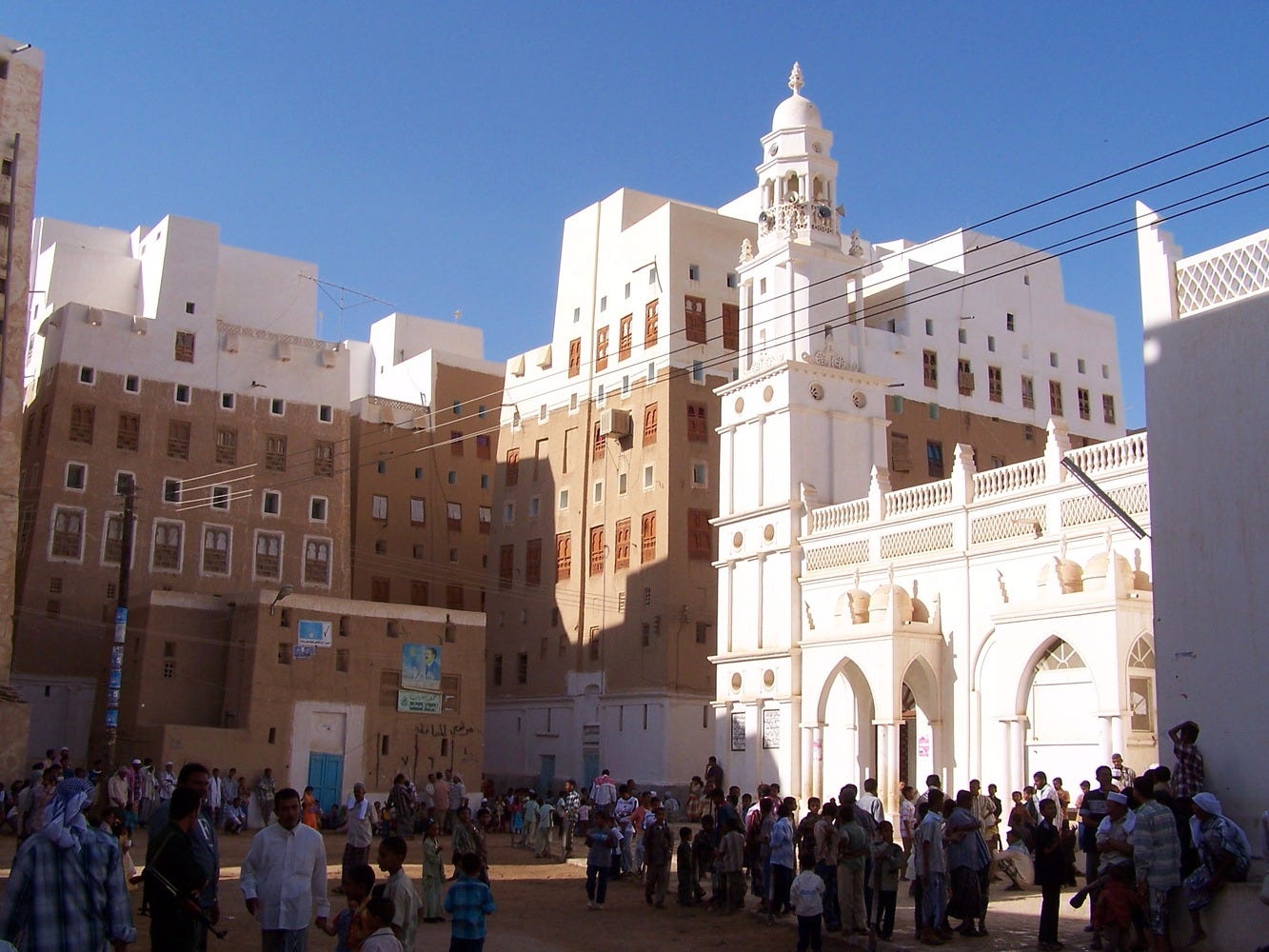
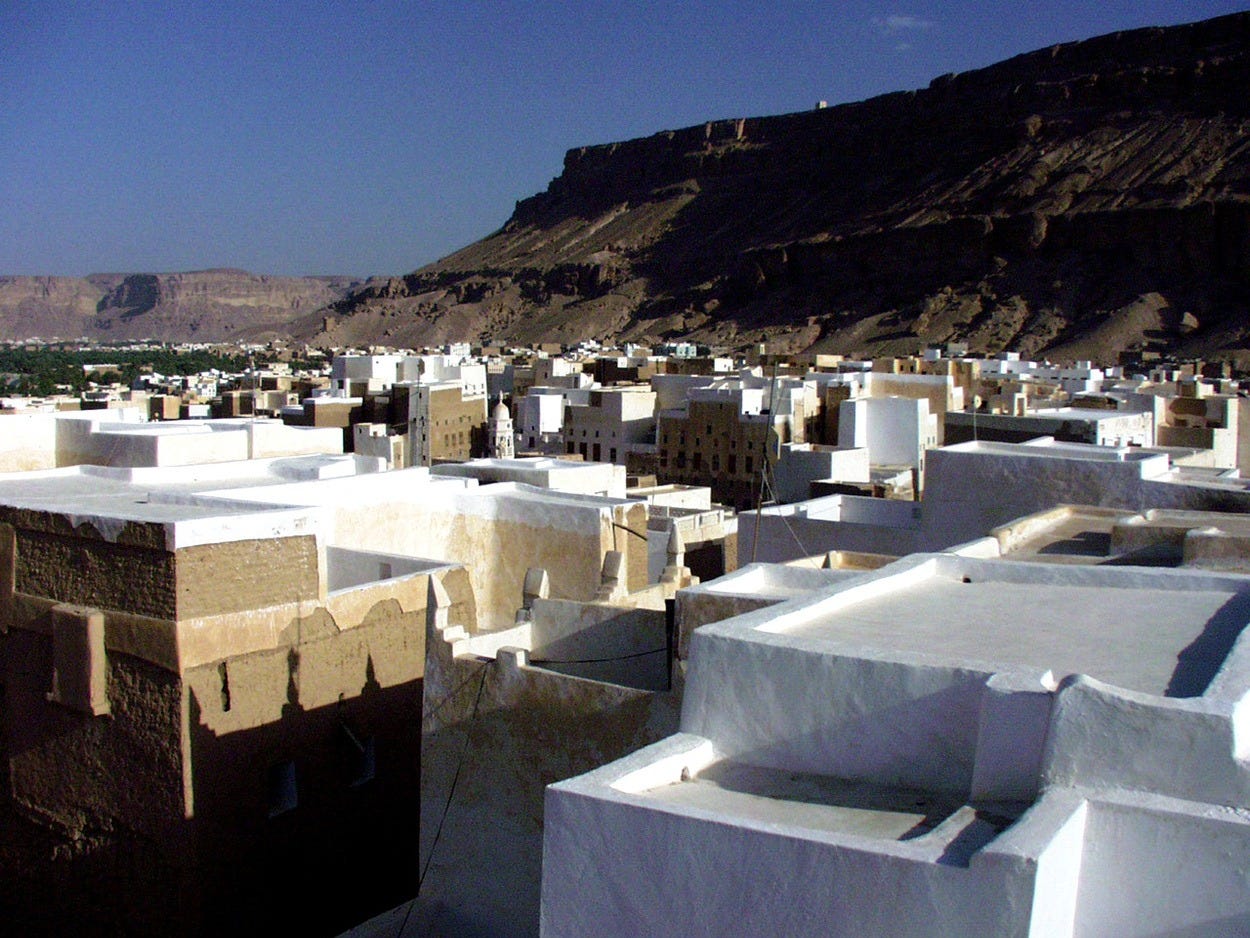
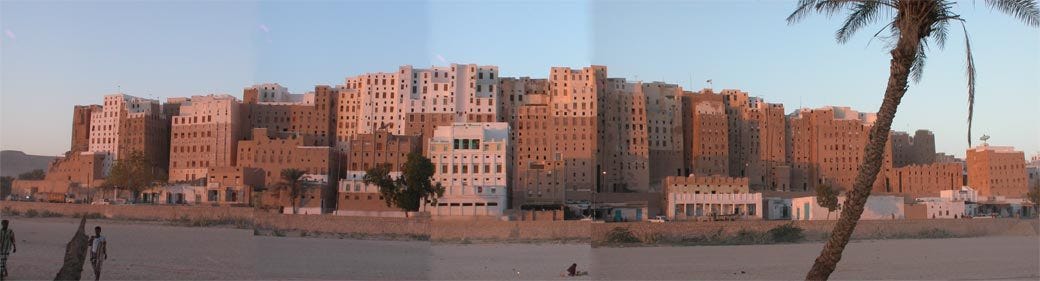
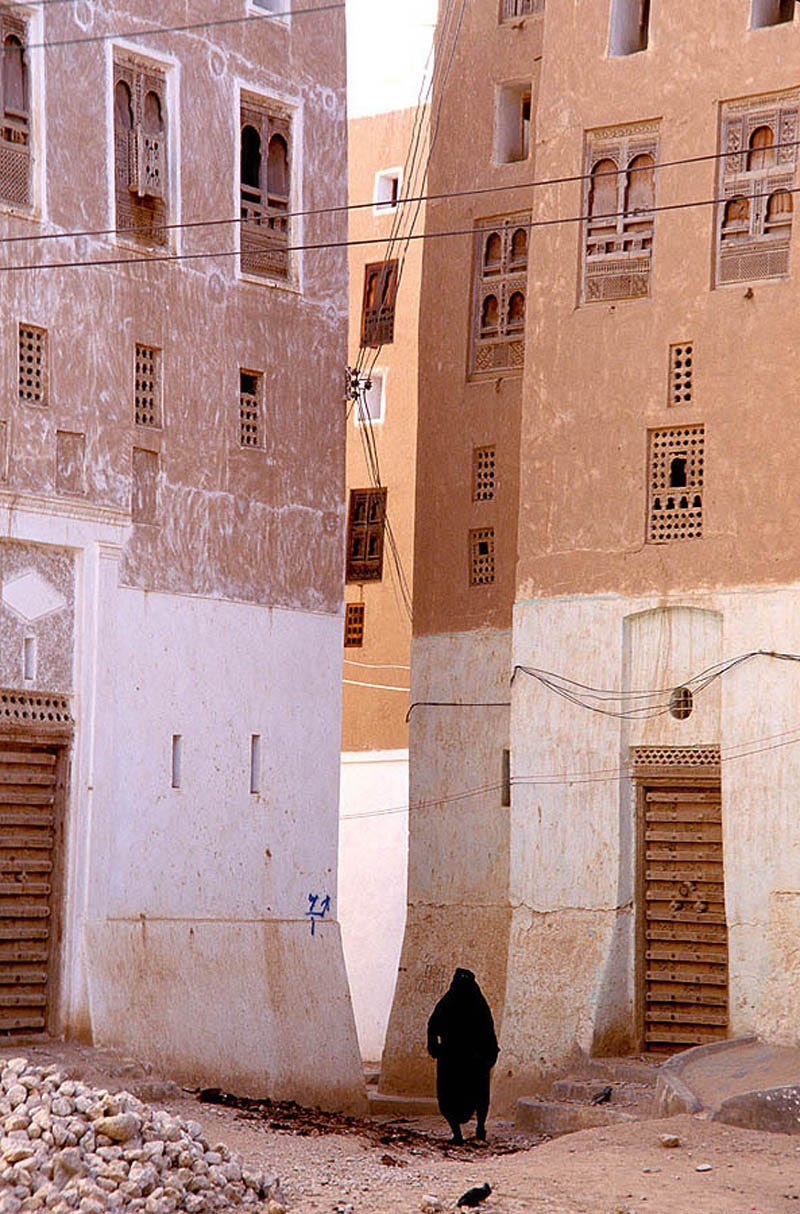
This 2,000-year-old city in Yemen is known as Manhattan of the desert...

ral Hadhramaut district, Shibam has roots in the pre-Islamic period, and evidence of construction dating from the 9th century.
Shibam is known as the first city on earth with a vertical masterplan.
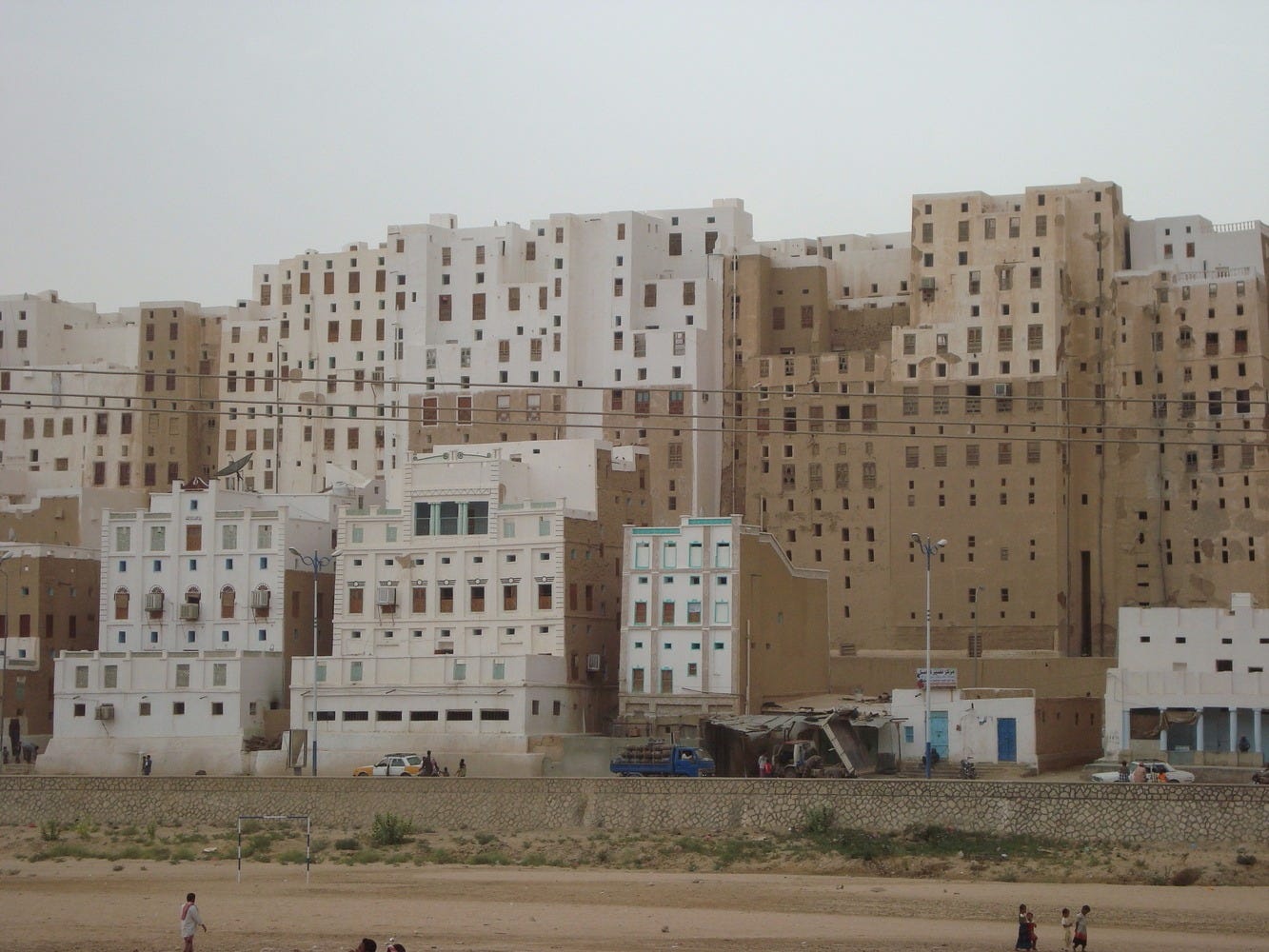
A protected UNESCO World Heritage Site since 1982, the city is home to densely packed buildings ranging from four to eight storeys, beginning in 300 AD but now mostly built after 1532.
Thanks to a fortified ring wall, the city has survived nearly two thousand years despite its precarious position adjacent to the wadi floodplain.
Shibam, YemenWikimedia Commons/Aiman titi
As an important stop on the spice and incense trade route,Shibam emerged as a beacon of wealth in the Southern Arabian plateau. The city began as an enclave for rival families seeking prestige, political power, and protection from Bedouin thieves.
The notion of stacked housing quickly became the architecturalmodus operandi, and thus began the construction of hundreds of mud brick buildings. The solution the contiguous tower-houses eliminated vulnerabilities from attack, while simultaneously exhibiting the wealth of the residents.
Shibam_Yemen_InteriorWikimedia Commons/Jialiang Gao
Shibam was built atop the pre-Islamic capital of Shabwa after its destruction in 300 AD, largely levelling the former community.
A few fragments remain from the earliest construction in Shibam, including a mosque built in 904 and a castle built in 1220, however the city was largely rebuilt after 1532 when a devastating flood swept the region, crippling the foundations of the city's ancient towers. Despite its strategic location on the highest point of the wadi floodplain, Shibam has frequently been the subject of flooding, prompting the fortification of its outer walls.
332546390_627e49409c_oFlickr/ Najeeb Musallam
The city is surrounded by fertile land employed for agriculture, using an integrated urban system for the simultaneous generation of food and building materials. After crops are harvested from the surrounding land, soil is collected for construction inside the walled city - and construction is a continuous process, with the towers requiring regular maintenance with fresh coats of mud.
Shibam is historically revered for its ingenious urban planning methods, particularly with architecture that harmonizes with a population deeply devoted to traditional Muslim culture. Early incarnations of Islamic architecture can be noted in the fenestration on the higher levels of the structures while the ground levels were dictated by security, creating a fortress-like defense system to protect the affluent residents inside.
3174734998_9c525d9199_oFlickr/maartenF
"Sometimes called the 'Chicago of the desert' or the 'Manhattan of the desert', the old city of Shibam presents to historians and urbanists one of the earliest and most perfect examples of rigorous planning based on the principle of vertical construction," reads the UNESCO brief on Shibam. Credited as the home of the first highrise apartment buildings, Shibam has become a symbol for the rise and resilience of middle eastern culture in the desolation of the surrounding desert.
2526986536_9922f3c0ea_o
http://samotalis.blogspot.com/

15 October, 2011

There's still some hope for Somalia

There's still some hope for Somalia

According to aid workers from areas hit by famine, the situation is bad but improving. Forecasts for the coming rains are promising
— The Economist


Image Credit: Reuters
A woman attends to her malnourished child outside their makeshift shelter at a temporary camp in the Hodan district of Somalia’s capital Mogadishu in last month.

Where there are beasts, there is life, goes a saying in Somalia. Half of its people depend on livestock for their survival. This year they will export record numbers of animals. That seems improbable given that a famine is raging in south Somalia, which has seen over a million animals die of hunger and thirst. But the grazing in other parts of Somalia, especially the north, has been excellent and demand for livestock from abroad has never been higher. After banning Somali sheep and goats for many years, Jeddah in Saudi Arabia has once again declared them welcome.

For the first time since the collapse of Somalia as a unitary state in 1991, Saudi and Lebanese traders have ventured into the local livestock markets. Goats are mainly exported to Makkah for the annual Haj.

The UN's Food and Agriculture Organisation estimates that $250 million (Dh918 million)-worth of animals will leave the port of Berbera and its more ramshackle rival, Bossaso, in the seven weeks before the Haj in early November.

In the livestock market in Hargeisa, capital of the semi-autonomous region of Somaliland, sweaty goatherds press in on Adan Ahmad Deria, a trader. Hundreds of camels are being loaded onto lorries.

Deria nods to show that the price is fixed. "God willing," he says, "I will buy 800,000 goats and sheep this year." That is $52 million of business, in cash, in a country where the economy has apparently collapsed.

Trade is set to grow further. Saudi Arabia wants to double its livestock imports from Somalia by 2013. The herders face fierce competition from Georgia, China and Paraguay, but halal butchers value the quality of Somali animals, which are raised by nomadic Muslims.

Economic growth


Though the region suffers from rampant piracy, it mainly affects international shipping rather than locals. Last month pirates captured a livestock ship in the waters off Bossaso; they were killed within hours by irate traders and herders. Meanwhile, hijacked foreign freighters litter the coastline undisturbed.

As parts of the economy grow, Somalis increasingly look to the diaspora for loans. Its members are prominent in gold and metal markets across Africa. Many excel at moving goods and money around. The once thriving fishing industry would be helped by investment in refrigerators, as would frankincense cultivation, which employs 10 per cent of the workers in Puntland, a breakaway region in the north.

None of this is to deny that the situation in south Somalia — the country's breadbasket — is anything other than dire. UN figures yet to be published suggest that 80,000 people may already have died as a result of the famine. More are certain to follow them to the grave. According to Somali aid workers from the hungriest areas, the situation is bad but improving. Forecasts for the coming rains are promising. Showers have already arrived in some places. Recovery will be a struggle, but apocalypse looks less likely now.

An American celebrity campaign, entitled "F — famine", emphasises that famines are man-made. That is unhelpfully vague but not necessarily wrong. In Somalia famine results from the strictures imposed by the Al Qaida-linked Al Shabab militia, which controls large parts of the south.

A drought has strained the entire region. But Kenya and Ethiopia have dealt with it much better than the ignorant and petty Al Shabab. They have been kicked out of Mogadishu, Somalia's ruined seaside capital, by African Union (AU) troops paid by America and the European Union.

Al Shabab are not yet defeated, but they have lost a lot of ground and support. The story of a 23-year-old farmer, Ahmad Mohammad, is typical. He fled his village of Bulamerer on the Shabelle river along with his heavily pregnant wife and one of their children.

They left two other children behind in the village with Mohammad's mother and his teenage brothers and sisters. The family's goats died of hunger. He fears his children might suffer the same fate. Still, he says he will not return home until Al Shabab have gone.

Now on the defensive, Al Shabab have taken actions as desperate as they are deadly. On October 4 they arranged a suicide bombing in Mogadishu which killed over 100 people. Most were students queuing up for scholarships to Turkey. The bomber, a teenager, recorded an interview before the attack in which he said of the victims, "They never think about the hereafter and about harassed Muslims."

The International Crisis Group, a research and lobby group, argues that a "European style centralised state, based on Mogadishu, is almost certain to fail".

Somali elders talk of free-spirited nomads "vomiting up" orders made far away. Devolving power to towns and clans — the linchpin of Somali society—would be better. But that too is risky. Further economic growth in northern Somalia is dependant on law enforcement— an unlikely prospect.

But with north Somalia recovering somewhat, while the south is mired in famine, one conclusion is inescapable. The Somalia of the past is gone. The southern breadbasket has fallen too far behind. Even though it may slowly be freed from control of militants, Mogadishu will only ever be the capital in name.


http://samotalis.blogspot.com/

11 March, 2010

Modernity in Makkah: History at a glance

Modernity in Makkah: History at a glance

A view of a street in Makkah in the 19th century.

By MAHMOUD ABDUL-GHANI SABBAGH, mahmoud_sabbagh@msn.com

Arab News

Reforms that came with the introduction of the Ottoman constitution in 1908 helped to radically transform common life in Makkah.

The re-enactment of the Ottoman constitution was accompanied by a number of political reformations such as Makkah's first modern elections to elect a city representative to the Meclis-i-Mebusan (also known as the Federal Deputy Parliament).

On Nov. 4 of that year, in a massive inauguration at Ajyad Castle that was attended by all public personalities and headed by Sharif Hussein, the then governor of the Hijaz Kazim Pasha delivered a statement from the Ottoman Ministry of Interior that mentioned the names of three regional election winners. Makkah's representative was Sheikh Abdullah Siraj, the city's supreme judge.

In 1910, Abdul-Ra'ouf Sabban moved from Makkah to Egypt to pursue scholarly studies at a modern institute. He embarked on his studies on the wishes of Khedive Abbas who had launched the first scholarly mission. It was a symbolic event due to the rise of a new liberated national generation that called for reformation and independence. In 1912, local merchant and pearl trader Muhammad Ali Zainal Alireza founded the Al-Falah School in Makkah as a civil institute to preserve national identity and language, all of which embraced modern values such as individualism, hard work and entrepreneurship.

A major event changed the course of history in the region; the Arab Revolt, which erupted in Makkah in 1916, and was followed by the rise of the Grand Sharif of Makkah Al-Hussein bin Ali. These prudent changes brought about new challenges in the region, especially amongst the younger generation at the time. In fact, Hijazi-bred youth became more influential for their spirit of renewal and so the road was open for them to connect and interact with literature overseas. Throughout the imitation and renewal phases, living and authentic samples emerged, exhibiting their creators' personalities and attributing to their artistic independence.

It reached a level in which the Arab author Muheb-Eddine Al-Khatib traced the modernity and renewal trend to Fifth Avenue in New York, something that is indicative of the influence of Arab-American authors such as Gibran Khalil Gibran, Elia Abu Madi, Mikhail Neihmeh and others.

According to the first official Ottoman report on the Hijaz in 1883, there were 33 traditional scholarly circles in Makkah with an enrolment number of 1,150. The most notable ones were the circles of Sheikh Abdul-Mouati Nouri in Al-Shubikka, Ibrahim Faouda in Ajyad, Sheikh Ahmad Hamam in Harat Al-Bab, and Sheikh Abdullah Hamdouh Al-Sinnari in Bab Al-Ziyadah at Al-Samman corner.

In 1936, the School of Mission Preparations was founded in Makkah by Muhammad Taher Dabbagh, the first minister of education after Saudi unification. This school was preceded by the Scientific Academy in 1926 as an essential transition toward new teaching methods in Makkah. The first health institute was also established in Makkah in 1926 at Ajyad Public Hospital under the supervision of Dr. Husni Al-Taher. Makkah also witnessed the establishment of the first university college, the Shariah College (1949). This was just before the Umm Al-Qura University opened its doors with 19 modern colleges. In the period after the Arab Revolt, individuals with modernist views came forth, including a group of youths in Makkah who possessed freedom-loving hearts and were inspired by the Arab rising.

The mountains and hills of Makkah were the stimuli of modern literature in the whole Arabian Peninsula.

Leaders of modernity worked hard in Makkah and all over the Arab World in producing the first newspaper, followed by magazines, books and cultural societies (clubs). These were means of communication, as they were not ruled by the authority of tradition.

Nouri Pasha, the Ottoman ruler of Makkah, had introduced Al-Mirriya (state) printing press house to Makkah in 1882, with the acclaimed Makkan scholar Ahmad Zaini Dahlan, considered by Joseph Schuchat to be "the sole Makkan historian in the 19th century," in charge.

The press' debut release was the official annual calendar for the Hijaz in 1883, which was regarded as the first effort for administrative and financial organization in the Hijaz. The writing process prospered thanks to the new press house, but only focused on religious and historical issues. Before the printing press, Makkan scholars printed their publications in Egypt. Amongst these publications was Sheikh Al-Hadrawi's book, The Precious Contract, which was published by the Cairo-based publishing house Shaheen Printing Press in 1870.

Nonetheless, the first newspaper in Makkah was published in 1908 and was called Hijaz. It was soon followed by the Shams Al-Haqiqa in 1909 and Al-Qiblah in 1916, with the latter lasting for nine years and being considered one of the first serious efforts. Then came the agricultural newspaper Jerwal in 1920 and Al-Falah in 1920.

With the declaration of the Saudi era came the issuance of the Umm Al-Qura paper in 1924, and, despite being the government's official newspaper, it worked on vitalizing the literary movement in the Kingdom. The birth of the newspaper Sauwt Al-Hijaz in 1932 was a historical moment in the quest for modernization in Makkah. The newspaper then moved to Jeddah and currently operates under the moniker Al-Bilad.

The Hijazi National Party, a modern political party, was founded in 1924 by Sheikh Muhammad Al-Tawil with members comprising elite Hijazi leaders and influential youth, including Abdul-Raouf Sabban, Muhammad Ali Zainal Alireza and Muhammed Taher Dabbagh.

These political developments were reflected in the writing styles and intellectual and literary methods of that time. Among the most prominent publications that speak for this new inclination are Hijaz Literature (1925), The Exhibition (1926), Proclaimed Notions (1926), The Desert Revelation (1936), The Poets of Hijaz (1950) and The Observatory (1955).

In 1921, Muhammad Hassan Awwad broke the uprightness of poetry as a challenge to the authority of tradition. This was the first group in the post 1916 Hijaz rising. Comprising political, intellectual and literary pioneers of the Arab rising in the Hijaz, they were merely a group of Makkan youths that included Awwad, Muhammad Surur Sabban, Al-Tayyeb Al-Sassi, Abdul-Wahab Ashi, Muhammad Said Al-Amoudi, Umar Arab, Jamil Meqdami, Hamid Ka'aki and Hussein Dabbagh, all of whom paved the way for a new cultural era.

The prime of the Arab rising and prosperity was generally a national and patriotic obsession among the Makkan elite back then. The call for freedom and adoption of the spirit of the era manifested widely among the youth.

Muhammad Surur Sabban launched the first independence, reformation and advancement trends. Sabban was the center of renewal and modernity in the Hijaz. He famously asked a gathering of Makkan authors: "Is it good for the Arab nations to cling to the classical Arabic methods or should they succeed in reaching the standards of new development, follow the modernists' examples in breaking linguistic barriers and use a general absolute method?"

A rebellious youngster, Muhammad Hassan Awwad, was the first to respond to this plea. He released his noteworthy book on the Arab Rising, Khawater Mosarraha (Proclaimed Notions). Along with his leadership over the contemporary literary movement and his massive political strife, Sabban (1898-1971) rose to prominence as an economical leader who set the liberal economic basics and standards in the Kingdom. After his appointment as financial minister during King Saud's reign, he followed the Egyptian economical leader Talaat Pasha Hareb's footsteps by setting the infrastructure for national banking in Saudi Arabia, and established the Arabic Corporation for Economy and Savings. He also established other ventures such as Al-Fallah Automobiles, the Arab Exports Corporation, the Arab Printing and Publishing Corporation (1935), Al-Zahra'a Construction Company and others, encouraging the shift from traditional business patterns to modern corporate ones.

Sabban was a civic society pioneer, who initiated the establishment of the first civic NGOs in Makkah and in Saudi Arabia. Examples include The Hijazi Library (1926), Al-Esa'af Society (1933), which undertook groundbreaking health and cultural activities, the Qirsh Union, the Palestine-Aid Association and the Al-Wehda Sports Club (1945).

When people's enthusiasm for establishing car-dealing ventures boomed, they left their traditional jobs to instigate and participate in the new automobile import business. As a result, the Al-Taiseer, Qasid Karim and Al-Sahalah companies were founded. Traditional cleric Abdul-Hafeez Kutbi left his long-inherited book-selling job and closed his shop in Bab Assalam to sell cars.

In the late 1950s, the individual entrepreneurial spirit prospered in Makkah. Hassan Abdul-Hai Gazzaz established Arafat newspaper (1958), Ahmad Al-Subaii established Al-Nadwa (1958) and Saleh Jamal established Hira'a (1961).
01 December, 2009

Eid Prayer worldwide in pictures


Different in nations, different in language, different in colour all united in Islam, united in Prayer.

http://samotalis.blogspot.com/