Showing posts with label SOMALI KENYA. Show all posts

08 April, 2015

Politicians behind attack, says Ahmednasir Abdullahi


Ahmednasir Abdullahi. FILE PHOTO | BILLY MUTAI | NATION MEDIA GROUP
In Summary

In an interview with the Nation on Tuesday, the lawyer stood his ground.
Mr Abdullahi maintained that the attack was the work of criminal networks residing in the county and known to the politicians.ADVERTISEMENT

By NATION REPORTER


A city lawyer has stirred controversy on social media by linking local politicians to the terror attack on Garissa University College.


Not one to shy away from controversy, Mr Ahmednasir Abdullahi posted a series of tweets on his account claiming that the attack in which 148 people were killed was carried out by local militia and not Somalia’s Al-Shabaab terror group.


“The attack in Garissa is obviously the work of Kenyan Somalis. Let us not blame Somalia’s Al-Shabaab. This is local,” he tweeted.


“Let us be truthful to ourselves. Kenyan Somalis and their leaders must stop the senseless killings in northern Kenya. Full stop,” he said in another tweet.


And in yet another tweet, Mr Abdullahi wrote: “Evidence emerged that an employee of Garissa univ (sic) related to the mastermind of the attack (Mohamed) Kuno helped the attackers in surveying (the area) for a week.”


In an interview with the Nation on Tuesday, the lawyer stood his ground and asked politicians from the county to take responsibility for the attack.


Mr Abdullahi maintained that the attack was the work of criminal networks operating in the county and known to the politicians.


“My view is that what we saw in Garissa was a surgical strike requiring a lot of precision. Such a strike requires a lot of mapping of the target, stock piling of weapons and a clear knowledge of the university. My take is that this was a local enterprise, even the mastermind was a local,” said Mr Abdullahi.


The lawyer spoke a day after local politicians, led by National Assembly Majority Leader Aden Duale, promised to help identify the financiers of terror activities in the country.


The leaders, including Garissa Governor Nathif Jama, also demanded that the Dadaab refugee camp be closed.

http://samotalis.blogspot.com/

24 August, 2014

Nairobi:- THE chewing of miraa will be restricted to five hours a day if the national anti-drug body has its way.


Nairobi:- THE chewing of miraa will be restricted to five hours a day if the national anti-drug body has its way.


National Campaign Against Drug Abuse Authority director Mohamed Fazul has said they are in the process of drafting a law that seeks to regulate the chewing of the mild narcotic also known as khat.
He did not say how the law will be enforced.
According to Fazul, Nacada proposes that miraa chewing is restricted to between 5pm and 10pm.
“It is a drug with two active ingredients – cathine and cathinone,” said Fazul. “We are drafting a law to regulate its usage and consumption.”
He was speaking in a phone interview with the Star.
Reacting to the proposal, Nyambene Miraa Traders’ Association spokesman Kimanthi Munjuri said: “To seek to know who exactly is chewing miraa and at what time is not a problem as such. Even where miraa comes from, it is controlled. There is an unwritten rule in Meru, set by the council of elders, that chewing of miraa among the youths is not allowed before you are circumcised…also it is frowned upon when women chew miraa in this region.”
He welcomed Nacada’s proposal to regulate miraa use.
“Chewing miraa should be controlled. Our current problems [the ban of the miraa trade in the Western nations, most recently the UK] was brought about by lack of control, where people mostly of Somali origin used to chew miraa for days in the UK and then later complain that it is harming them health-wise,” Munjuri said.
“Everybody suffering from all manner of situations and drug abuse hides behind miraa. You find someone taking only one bundle the whole night, during which he adds consumption of other drugs like bhang, and then, because miraa is the one they are seen chewing or holding, their obviously visible drugged state is blamed on miraa,” he said.
Munjuri said the only recommendation they have for Nacada is to have the chewing time set for between 2pm to midnight and not between 5pm and 10pm as he had proposed.
But Changamwe MP Omar Mwinyi, who has intensified his campaign against the drug in his constituency, said restricting the sale and consumption of miraa is not enough.
He said miraa destroys families, especially in the Muslim community, and also eats into the economy.
“This should not be about regulation. It is supposed to be banned,” said Mwinyi on the phone.
Council of Imams and Preachers of Kenya organising secretary Sheikh Mohamed Khalifa yesterday supported Mwinyi’s sentiments that the drug should be banned.
He said there is no need to regulate the sale and consumption of a drug “that has no benefit to the society”.

Source: The Star


http://samotalis.blogspot.com/

30 March, 2014

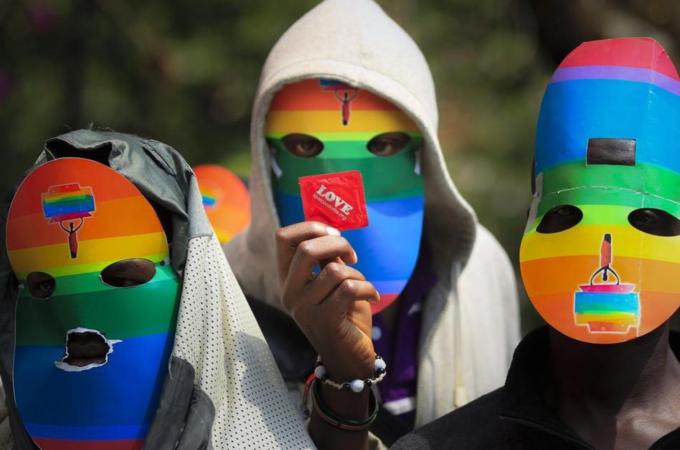
Top Kenyan MP: Homosexuality like terrorism

Top Kenyan MP: Homosexuality like terrorism

Aden Duale, who speaks for government in parliament, says homosexuality should be treated like "any other social evil".


Group of Kenyan MPs are calling for homosexuality to be outlawed like Uganda did recently [EPA]


Homosexuality in Kenya is as bad a problem as terrorism, the ruling party's parliamentary leader said, but argued against stepping up legal sanctions on the grounds that existing laws were tough enough.

Aden Duale, the majority leader from President Uhuru Kenyatta's ruling Jubilee coalition, was responding on Wednesday to a group of MPs demanding tougher laws.


We need to go on and address this issue the way we want to address terrorism. It's as serious as terrorism. It's as serious as any other social evil

Aden Duale, MP

"Can't we just be brave enough, seeing that we are a sovereign state, and outlaw gayism and lesbianism, the way Uganda has done?" legislator Alois Lentoimaga said.

Uganda has voted for life imprisonment for some homosexual acts, prompting some international donors to suspend aid.

Duale, who speaks on behalf of the Kenyan government in the assembly, said: "We need to go on and address this issue the way we want to address terrorism.

"It's as serious as terrorism. It's as serious as any other social evil," Duale said, referring to a spate of attacks by al-Qaeda-linked al-Shabab carried out in retaliation for Kenya's intervention in neighbouring Somalia.

But he said the Kenyan constitution and the penal code already had sufficient anti-gay provisions, denying the government was reluctant to tighten such laws for fear of losing international aid.

Duale said 595 cases of homosexuality had been investigated in Kenya since 2010, when a new constitution was adopted, and courts had convicted or acquitted the accused, while police had found no organisations openly championing homosexuality in violation of the law.

"We do not need to go the Uganda way, we have the constitution and the penal code to deal with homosexuality, and so this debate is finished, we will not be enacting any new tougher laws," Duale told the Reuters news agency later.

'Vermin'

Kenya's penal code says any person "who has carnal knowledge of any person against the order of nature" is guilty of a felony and can be jailed for 14 years.

Anti-gay groups have emerged in Kenya after Nigeria and Uganda toughened up laws against homosexuals.

One of these groups, The Save Our Men Initiative, has said it is launching a "Zuia Sodom Kabisa" campaign, meaning "prevent Sodom completely" in Swahili, to "save the family, save youth, save Kenya".

Nigeria has outlawed same-sex relationships. Gambia's President Yahya Jammeh has said homosexuals are "vermin" and must be fought like malaria-causing mosquitoes.

Homosexuality is broadly taboo in Africa and illegal in 37 countries there.


http://samotalis.blogspot.com/

05 October, 2013

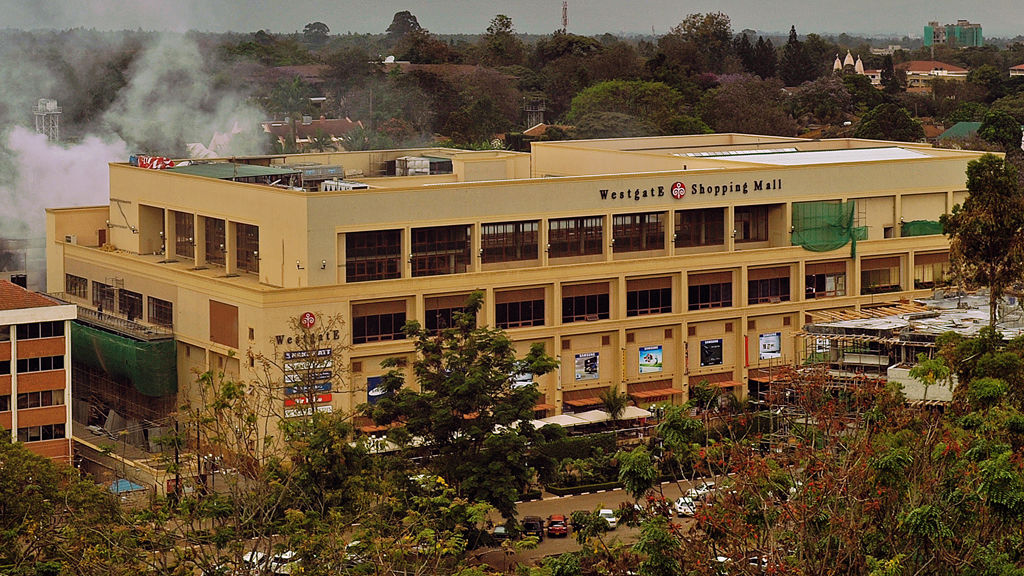
Kenya military names Westgate mall attack suspects

Kenya military names Westgate mall attack suspects


New CCTV footage shows armed men carrying weapons and searching areas leading off a storeroom

Kenya attack
'I played dead'
Slideshow: Mourning
Somalia and Kenya: Blood brothers
Kenyans united

Four men believed to have been involved in the deadly shopping centre attack in Nairobi last month have been named.

The Kenyan military said Abu Baara al-Sudani, Omar Nabhan, Khattab al-Kene and Umayr - shown in new CCTV footage - were killed during the standoff.

Kenya said previously 10-15 militants had been involved, but the police chief says the figure may now be four to six.

The al-Shabab group said it carried out the attack on the Westgate mall on 21 September, leaving at least 67 dead.

The al-Qaeda-linked group said the attack was in retaliation for Kenya's military involvement in Somalia.Too early?

The naming of the men came as CCTV footage was aired showing four attackers calmly walking through a room in the mall holding machine guns.

Kenya Defence Forces spokesman Maj Emmanuel Chirchir told Reuters news agency: "I confirm these were the terrorists; they all died in the raid."

Kenya: Major attacks
1998: US embassy in Nairobi bombed, killing 224 people - one of al-Qaeda's first international attacks
2002: Attack on Israeli-owned hotel near Mombasa kills 10 Kenyans; simultaneous rocket attack on an Israeli airliner fails
2011: Suspected al-Shabab militants raid Kenyan coastal resorts and a refugee camp, targeting and kidnapping foreigners
2011: Kenya sends troops into Somalia to tackle al-Shabab
2011-13: Numerous grenade attacks near Somali border and in Nairobi
How the attack happened
The victims
Horror and heroism

Reuters quoted Maj Chirchir as saying that al-Sudani was an "experienced fighter" from Sudan and was believed to be the leader of the group.

Maj Chirchir said Nabhan was a Kenyan of Arab origin and al-Kene a Somali linked to al-Shabab. Further details about Umayr had not yet been verified, he said.

Kenyan police chief David Kimaiyo told Kenya's KTN television station it was now believed that four to six gunmen had carried out the attack, not 10-15.

"None of them managed to escape from the building after the attack," he said.

Kenya had earlier said five attackers were killed in the security operation and that nine people were in custody.

The BBC's Gabriel Gatehouse in Nairobi says the latest CCTV footage is from a limited part of the complex and, with some eyewitnesses reporting a two-pronged attack, it is too early to say definitively how many gunmen were in the building.

In addition to the 67 people killed in the attack, a further 39 are still missing, according to the Kenyan Red Cross.

Al-Shabab is banned as a terrorist group by both the US and the UK and is believed to have between 7,000 and 9,000 fighters.

Its members are fighting to create an Islamic state in Somalia.

About 4,000 Kenyan troops were sent to Somalia in October 2011 to help pro-government forces end two decades of violence, with clan-based warlords and Islamist militants all battling for control of the country.

On Saturday, Islamist fighters in southern Somalia said Western forces had launched a night-time raid on one of their bases.

No-one has admitted the attack. US and French special forces have carried out raids in Somalia in recent years.

It is not clear whether the raid was linked to Westgate.
Graphic: Final phase


http://samotalis.blogspot.com/

28 September, 2013

Revealed: suspected leader of Kenya terror attack

Revealed: suspected leader of Kenya terror attack


JAMAL OSMANReporter


Exclusive: Channel 4 News learns the alleged leader of the Nairobi shopping mall attack was born a Christian in Kenya and is a former member of the country's special forces.


Multiple sources from within Somalia have told Channel 4 News the identity of the man who led the group behind the attack on Nairobi's Westgate shopping centre.

According to sources connected to al-Shabaab, his Jihadi fighting name is Omar or Umayr.

Omar, who is believed to have been killed in this week's siege, was a Kenyan national, born to a Christian family from Nairobi. He converted to Islam and was also a former member of Kenya's special forces.

Umayr is understood to have left Kenya for Somalia in 2005, where he joined the Kamboni militant Islamist group. Kamboni later joined with al-Shabaab.

Sources say Umayr used to teach al-Shabaab fighters martial arts and boxing at a training camp in Somalia. They say he fell out with leadership because they thought he lacked ambition.

Second man


A second man been named by Channel 4 News sources.

Known as Khadhab, he is a Somali national who worked in an Islamic bookshop in the Nairobi suburb of Eastleigh. He was arrested and imprisoned in Somalia, and it is alleged he was tortured by the CIA while in custody there.

When he was released, sources say, he crossed over into al-Shabaab territory.

The Kenyan government has not yet officially confirmed the identities of any of the attackers.

On Thursday, Interpol issued a "red notice" against Samantha Lewthwaite at the request of the Kenyan authorities. Though the red notice did not refer to the Westgate attack, it has been speculated that Lewthwaite, the wife of 7/7 London bomber Germain Lindsay, may have been involved in the attack.

A spokesman for Al-Shabaab earlier told Channel 4 News that the attack was an "offical operation", planned and carried out by al-Shabaab leadership.

Sixty-seven people are confirmed dead following the four-day siege, but that death toll is expected to rise.
http://samotalis.blogspot.com/

27 September, 2012

Interview with AhmedNadhir Omar who is Contesting Garissa County Governor

Interview with AhmedNadhir Omar who is Contesting Garissa County Governor
WardheerNews

September 26, 2012


Editor’s Note: With the general elections in Kenya getting closer day by day, WardheerNews is now going the extra mile to bring you interviews with prominent political personalities mainly in the Somali-inhabited North Eastern Province. This time, we introduce to you the well-established and outspoken politician, AhmedNadhir Omar, who is contesting the newly-created post of governor in Garissa County. In a lengthy interview with Adan Makina, our own Editorial Board Chairman, AhmedNadhir  rehearses the unfolding political transformation taking place in the region  and the complete political formula contained in his manifesto.
WardheerNews (WDN): Welcome to WardheerNews Mr. AhmedNadhir and could you tell us briefly about your background?
AhmedNadhir Omar:I was born and raised in Garissa. I did my elementary and high school in Garissa, having attended Jaribu Primary School and Garissa High School which I completed in 1998. Afterwards, I joined Jomo Kenyatta University of Agriculture and Technology, where I did my Bachelor’s degree in Information Technology. I also did a number of professional courses related to management, administration and governance. Since then, I tried my hand on a number of business ventures, most importantly in the petroleum sector, and that is what I am doing to date.
AhmedNadhir Omar
AhmedNadhir Omar, Candidate for the governor of Garissa County
WDN: Could you please give us specific information on the circumstances that led you to run for the position of governor for Garissa County?
AhmedNadhir: It’s impossible to give an isolated set of circumstances that prodded me to vie. The decision was the culmination of inter-related realities; the need for a generational shift in leadership in the region, especially in this vital transitional period in the history of this nation; the effective strangulation of our youth and their total alienation in resource allocation and governance; and the need to shed the kind of reactionary leadership that failed us for so long.
I have always been perceived as the ‘political type’, even during my school days. At an early age, and particularly during the high school days, I developed an impassioned interest in the political discourse at both the regional and national levels, but it was not the politics per se that captivated me. What really sustained my passion was the governance and administrative aspects of politics.
 I have always had that sense of duty to take the initiative; to help improve any given situation – be it the class or school setting, or the family and social setting or in any of the other entrepreneurial and professional challenges I found myself and others confronted with. I always had this penchant for not shying away from the call of leadership when I felt my contribution would be needed.
WDN: In the past district leadership was based on nomination by a decree of the president. Recently that system has changed. What can you tell us about the current system of electing the governors?
AhmedNadhir: Since the early 1990s, the country has been on a democratization trajectory, even though the ride felt – and continues to feel – rather rugged and sloppy at many points. But the key is Kenya has been making some commendable progress since this labored process started. We in North Eastern Province seem to have missed that train. Our political leaders still seem to be stuck in the old sycophancy syndrome, where they feel obligated to please some ‘big man’, imaginary or otherwise, to derive sustenance and legitimacy. We are still stuck with leaders whose discourse has only one rather monotonous theme: who competes with who for the favors of big man A or B. And sadly, this democratization train is not the first we missed. 1963 was a lamentable precedent, and we had all those decades wasted.
Our people have now learnt that they can easily dislodge establishment projects, and I feel they now fully understand no godfather can anoint leaders on their behalf. After decades of tyrannical Provincial Commissioners posted at the whims of State House, we will directly elect the Governors who will administer the regions, and they will be answerable to us, the people. It is an opportunity we dare not miss.
WDN: How many candidates are currently listed to run for the post, and do they represent various parties or they are independent?
AhmedNadhir: Besides me, I am aware of 4 other candidates for the gubernatorial position, so that’s a total 5 as of this moment. I am certain some of them have already identified the parties on whose tickets they wish to vie, but others are obviously reticent, probably watching the fast-evolving national political landscape and tethering their moves to how that shapes up.
WDN: What is your political party and what is the  prospect of you being elected as governor of Garissa ?
AhmedNadhir: I really have not paid as much attention to party affiliation as I have to more pressing pursuits. I invested more time on youth and professional engagement, community advocacy and grassroots mobilization. I feel these issues are more fundamental, and the political party issue has been secondary. But it is something that I attend to soon enough.
WDN: The constituency you are vying to lead has in the past suffered myriads of problems including mounting insecurity, abject poverty, limited resources, declining education, poor infrastructure, political obscurantism, insurmountable misappropriation of county treasury, and lastly but not least state oppression and marginalization. What grand scheme do you have in place to reverse these negative trends?
AhmedNadhir: My manifesto is anchored in one basic and vital idea. It is so basic that it might not even sound grand at all. But it is also so profound and immense; it is the very essence of grandeur. Our program will be predicated on the twin concepts of Rights and Responsibilities.
Rights, in the sense of realigning the existing notions of leadership with the beckoning reality of people power and popular legitimacy leaders derive from their people. A kind of re-education, if you will like is that we, the people, own the power. That we give it to those we think will exercise it to advance our common good. We have inalienable rights to determine who governs us and how. And that the government, be it County or National, ought to invest in our resources and support to sustain our rights to dignified life. And that we have the conscience and determination to take it back if the government does not honor that obligation.
But Right has a conjoined twin called responsibility; the sense of individual and collective duty to one another and to the government. While the question: what must the government do for us? Is pretty subliminal, we must instill in our people the equally sublime question: What can I do for myself, for us, for the nation? The culture of governance in this country is primarily deficient. The individual and collective psyche is programmed to fear the leadership; to forget that what is perceived as ‘favor’ is actually a ‘right’-to view the leader as the boss, when it should be the other way round. Even more crucially, to imagine that development is some manna, that rulers rain on us, without us really investing much in it.
Essentially, the grandness of our program derives from policies and instruments designed to fundamentally re-adjust our notions of Rights and recalibrate our perceptions of responsibilities. Our agricultural, administrative, educational, medical, social and economic policies will all have this notion of Right and Responsibility as a point of embarkation. Once that right balance is struck, we will be on a smooth sailing and no problems will be insurmountable.
WDN: Why is it that the concerns and interests of the Ethnic Somalis were not voiced, particularly when there are many Kenya-Somalis in the high ranks of government?
AhmedNadhir: There is not a single issue that can underline the obvious neglect of our needs by successive Kenyan governments. The most widespread narrative being peddled around is the claim that the Kenyan government – and its ‘people’- just happen to not like us. This theme, which I find rather simplistic and conspiratorial, seems to be the favorite singsong for our politicians, especially during the election season.
There is no denying that geopolitical factors – precisely our attempted secession in the aftermath of independence- created mutual suspicion, mistrust and engendered an undesirable, pervasive, security-oriented administrative regime that literally cut us off from the rest of Kenya. Profound human rights abuses were committed, and this only perpetuated the cycle of mistrust.
But we must not forget that ours is not the only neglected region. Generally speaking, the entire northern part of the country, regardless of whether the inhabitants are Turkana or Somali has been left behind.
I believe there are other more convincing reasons, chief among them, economic. The much-maligned sessional paper 65 of the 1960s comes to mind. It was essentially an economic policy where the government would only invest in regions that were agriculturally productive, condemning the pastoralist regions to a life around the periphery of the nation. And it is alive, both in letter and spirit. Incidentally, Kibaki was the architect of that monstrosity. Given the right agricultural policies, our land can equally as productive, but the climatic conditions require imagination and dexterity, something the Kenyan government hardly ever takes credit for.
I do not believe we were entirely helpless, and I am convinced there is a lot we could have done to arm-twist the government into investing more in our region. Before the advent of multiparty politics, the public may not have had much role in the politics of patronage. But even then, if we had moderately proactive leaders, they would have found a way of coaxing their godfathers to do a little more for the region. But they did not, for they had neither the will nor the intellectual capacity to conceive big ideas.
Did we learn much since the end of those days? It seems not. For the past 2 decades, we had the chance to elect our representatives, but the system of electing leaders has been fraught with so many debilities it is barely an improvement to what we had before. We elect them on a wrong approach – clan calculations and financial largesse. We do not interrogate their performance; in fact, we reward mediocrity and abject failure.
We do not use our numbers, and in democracy, you are handicapped if you do not have numbers. In the august House, Somali representatives hardly see eye-to-eye on anything. They never lobby on our behalf, because they know we will not appraise their performance. They are busy undercutting one another, and never vote as a block on anything. Development projects come to those regions whose representatives can negotiate for them in return for voting alliances that benefit the ruling parties. In our case, the government does not need to ‘bribe’ our mps with development projects; it does not have to work for the votes of our representatives.
At a popular level, presidents and presidential aspirants invest more attention and allocate more resources to regions with ‘numbers’. Our problem is, we don’t vote. Look at our major, cosmopolitan constituencies and compare the resident population with the cast votes. Our Mps are riding to parliament with total vote tallies that border on the ludicrous. In democracy, no one ever needs your brains. They need your numbers; if you can’t give them, you are just a pauper and no one gives you more than a furtive glance.

I think we ought to interrogate our own commitment to our own cause before we cry wolf. 
WDN: Tell us how you are different from current and past leaders when it comes to overturning the decline visible among ethnic Somalis in Garissa County?
AhmedNadhir:Like I stated earlier, I am campaigning on a platform of people power. Ours is not just about the evanescence of an individual and his political aspiration. It is something much more organic. It is a project; conceived of an honest sense of duty. It is derived from the dreams of our youth; fueled by the vitality of their vision. It is designed to engineer social revolution.
Development and underdevelopment are not just government-driven. If we really want to improve our lot, we must be honest enough and shed the victim mentality that has castrated our potential. Our politicians, past and present, love to play this victim narrative when they need votes. Our project is, first and foremost, geared towards emancipating our imagination, unlocking our internal energy and inculcating in us the philosophy of self-belief.
Our approach is different; it is about unlocking popular potential. Our philosophy is different; it is about people power. Our strategy is different; it is about youth and vitality and audacity imagination. Our ideology is different; it is about social engineering intellectual emancipation.
This is what sets us apart. This is what is changing the world. The celebrated Arab Spring is constructed on similar desires. Our program is in total lockstep with this global caravan of change.
 
 
WDN: Kenya is considered one of Africa's largest economy and East Africa's economic powerhouse, yet the Somali inhabited region is lagging behind the rest of the country. What do you think are the root causes of the lack of progress and development in Kenya's North Eastern province and what plans are you putting forth to address such issues?
AhmedNadhir: Underdevelopment has diverse, interlinked roots that result in self-perpetuating cycles. Governmental negligence, wrong-headed policies and oppression beget social and political apathy. Once people lose their dignity and drive, their productivity declines and a destructive culture of dependency is generated. Once, proud self-sufficient people are relegated to lethargic, begging masses. People become submissive to a destiny concocted for them by the exploitative status quo, because poverty breaks the spirit of endurance and ambition. And this is why our philosophy is centered on public re-education and helping create a new power discourse-an alternative system of relations between the governor and the governed. The people must understand that, while the government is the major driver of development efforts, they MUST drive the government.
Our manifesto has an attractive list of plans to overhaul the status quo. We will aim for food self-sufficiency by implementing tested agricultural policies which are suited for our climatic conditions. We also have plans to invigorate business, construction and infrastructure to diversify the economy and especially create employment for the youth. We will build youth capacity by instituting tailor-made education programs, such as adult education and technical development.

We will also harness local and foreign potential for investment to develop our livestock industry – dairy and beef. The plans in our manifesto are all based on concepts that are viable and will have an immediate impact at the grassroots level. Throughout the campaigns period, we will keep expounding on these plans as we engage more with the people.
WDN: If you were to be elected governor, how are you going to enhance the growth of the county notably by eradicating extreme poverty and hunger and educating the mass, combating diseases and violation of human rights, and developmental and self-sufficiency programs?
AhmedNadhir: We have identified a number of key areas that we intend to invest time and resources in, to alleviate poverty, increase economic productivity and achieve self-sufficiency in food production. We have detailed programs, some of which we have already made available to the public.
We have singled out agricultural projects to increase food production in our county. While most of our land is water-starved, we have fertile farm land along the Tana River. With appropriate strategies, this area alone can cater for our food consumption needs. But this does not mean the rest of our land is a waste. Drip irrigation is a fantastic option for us, and many countries in arid and semi-arid regions of the world are already employing it. It minimizes water wastage and maximizes productivity. Apart from food production, it is common knowledge that our region would be very good for crops like tropical fruits, which fetch good money in any market.
Our livestock industry is inexplicably neglected and underdeveloped. We produce the bulk of cattle slaughtered for beef in Kenya. Local beef and dairy industries will create employment, improve the economic capacity of livestock farmers and help them adopt a more sedentary lifestyle suitable to the changing environmental systems.
Regarding education, we have a two-pronged plan: first, encouraging educational changes to introduce technical and vocational training for the youth. As much as is possible, we need to inject more practical aspects in our schools. Computer courses, wood work, metal work, mechanical training and similar subjects must be given more prominence, to help in job creation and small business development, and that is what we hope to achieve.
WDN: How will you create peace and harmony and advance inter-county partnership among people who have been separated by politics of self-interest ever since independence and the sweeping martial law?
AhmedNadhir: Our manifesto is laden with programs designed to empower the people and improve their lives. The conflicts we see – be they violent or structural- are a reflection of the deprived lives many of our rural folks lead. If we introduce policies designed to help every homestead put food on the table, and create employment opportunities for the youth, peace will prevail.
The irony in our conflicts is really exasperating. People fight over resources that are deemed scarce. Our people are fighting over the only resource that we have plenty of. Our land is so vast and so under-utilized, it defies logic people fight over it. We think bad politics is the  culprit here, and it is that reservoir of political insanity we plan to drain. We intend to do so by advocating for and liaising with like-minded youth politicians who conduct their politics on ideological platforms, and we already have such alliances in place.
WDN: What commitments will you make to save women and children and the environment of the county you are vying for?
AhmedNadhir: Our women are industrious, indefatigable and the backbone of many families’ financial survival. Even a casual look at the small business statistics is sufficient to convince us that women are the real deal in our society. We plan to put in place specific projects aimed at improving their literacy and boosting their entrepreneurial skills. Our manifesto addresses the issue of Adult literacy, and the bulk of that will be focusing on women. And it will not be just the ‘ngumbaru’ of the old days. We will establish serious literacy programs. We will have trainings to help women improve their business and self employment chances. We plan to revolutionize our education system, so that our children can compete with the rest of the country on an equal footing. We will improve school enrollment, both in urban and rural areas.
The present health programs and facilities are fundamentally deficient, and it is women and children who are mostly affected. Our policies will be geared towards reducing child mortality, improving mother’s health and education. Our environmental policies will be implemented by capable environmental scientists, and some of them have already helped design fantastic parameters which will be used as beacons for specific polices.
 
 
WDN: How will you empower young professionals who completed high schools and colleges to either get jobs or advance their education?
AhmedNadhir: Education should not be merely about certificates, yet that has been the most serious debility in our 8-4-4 system. Look at our high school graduates; all of them have studied Math and Biology and Chemistry and Geography. How many of these subjects can help a form 4 (high school) leaver to establish a small furniture or plumbing business? Or become a vehicle mechanic? Or even building and masonry? Look around, and those businesses are booming in our region, and are entirely owned and run by non-Somalis.  These are things we need to teach at the primary and secondary school level. We are now drilling students in a very rigid system that instills in them job-seeking mentality. We will work with the school administrators to introduce more practicality in the curriculum, and we will seek to subsidize some of theses studies.
But we will also lobby the national institutions of higher learning to invest in our county, as well as mobilize local educational entrepreneurs to establish private colleges and technical institutes.
WDN: Recent Kenya census indicated growth of ethnic Somalis, yet Garissa, which is among the biggest cities in Kenya and the largest in the Somali inhabited region, does not have a university. To expand the opportunity of higher education, does your plan include establishing the first university in North Eastern Kenya? Why has a university with remarkable faculties not been established in North Eastern Kenya?
AhmedNadhir: Again, the lack of universities or other institutions of higher learning is part of our complex history and status as a satellite region of Kenya. We were neglected by our own government, and we also neglected ourselves by failing to agitate for our interests and push the elected leaders. This need is one of the issues we address in our manifesto. Just one good university would have taken care of the medium-term needs of not only Garissa county but the entire province, and that is something we would like to set up in Garissa county, because it is the administrative capital of the province and is better placed to host such a regional institution.
We will also be working on supplementary measures by inviting existing national universities to open campuses. Some of them might already have started programs, but they need to be expanded, and we will keep pushing for that.
WDN: Do you think the Constituency Development Fund (CDF) that the government allocated to your constituency has been effectively dispensed by the incumbent Member of Parliament to spur development? If the CDF kitty has been utilized effectively, which programs benefited the most? If it has been plundered, what legal action will you take if elected governor?
AhmedNadhir: I do not wish to accuse anyone of CDF plunder. I did not witness any plunder, neither do I have incontrovertible evidence to prove it. Mudslinging is one of the lamentable political cultures that we, the youth, intend to do away with, and it is something I do not wish to partake of. Having said that, I believe the CDF programs could have been handled a lot better and I think we missed a massive opportunity to efficiently manage the little resources we got from the government.
WDN: Good luck Mr. AhmedNadhir with your political endeavors and thanks for giving WDN your precious time.
AhmedNadhir: Thank you very much.


Wardheernews.com

http://samotalis.blogspot.com/

08 September, 2012

Difaac, Gabay. Haanti Dheelmato


Difaac waa gabay uu hal abuurka Ina Cawsgurow, ku difaacay Soomaalida Kenya iyo lahjadda ay ku hadasho. Daahir oo ah nin Reer Qabri-Daharre ah, ayaa ku dooday in aan nin gabayaa ahi ka soo bixi karin Soomaalida Kenya. Gabaygii oo maqal iyo muuqaalbe leh halkan ka daawo ...

16 August, 2012

SOMALIA: Next stop Kismayo

SOMALIA: Next stop Kismayo

NAIROBI/MOGADISHU, 15 August 2012 (IRIN) - Even before it kicks off in earnest, the assault on Kismayo is causing jitters.

A preliminary push by UN-backed African Union troops on the last bastion of Somalia's Al-Shabab insurgency has already caused added to Somalia's civilian casualties [ http://www.unhcr.org/refworld/pdfid/4ec4bec02.pdf ], and there are fears that more may lie ahead as air, ground and naval operations in the port city escalate.

The latest, and most senior, person to raise the alarm over the actions of the Kenyan Defence Forces (KDF), which officially operate under the banner of the African Union Mission in Somalia (AMISOM ), was UN Resident and Humanitarian Coordinator Mark Bowden.

"I am deeply concerned by recent reports of civilian casualties in Kismayo caused by naval gunfire and airstrikes," Bowden said in a statement issued on 14 August. [ http://reliefweb.int/report/somalia/humanitarian-coordinator-expresses-concern-risk-civilians-kismaayo ]

"As fighting for control of the town appears imminent, I reiterate my call for all parties to the conflict to make every effort to minimize the impact of conflict on civilians and to allow full humanitarian access to all people in need," he said.

An NGO official working on Somalia told IRIN that aid workers were worried there would be "an increase in indiscriminate shelling and large-scale civilian casualties.

"Furthermore, civilians may get trapped in between fighting forces, further restricting their access to life-saving support and humanitarian assistance in an area that is of great humanitarian need - need that is barely properly assessed due access restrictions," said the official.

Al-Shabab has banned many aid agencies from Kismayo, and general insecurity in the area has also impeded humanitarian access.

The city has a population of 90,000, with another 77,000 living in surrounding areas. Thanks to illegal exports of charcoal, the port is a major source of the insurgency's income. The city is also likely to become the capital of a proposed semi-autonomous region under the country's imminent federal government - a region sometimes referred to as the Jubaland Initiative.

International humanitarian law

Human rights organizations say [ http://www.hrw.org/embargo/node/100958?signature=9682ec5f5cc74519ce48c468f579dc1b&suid=6 ] all parties to Somalia's conflict - AMISOM, the forces of the outgoing Transitional Federal Government (TFG), Al-Shabab and other armed groups - have violated International Humanitarian Law, chiefly through the use of indiscriminate fire. Between August 2010 and August 2011, there were 4,000 combat-related civilian casualties in Somalia, including 1,000 deaths, according to Human Rights Watch (HRW).

(AMISOM is now in the process of setting up a Civilian Casualty Tracking, Analysis and Response Cell).

Two weeks after KDF deployed troops in Somalia in October 2011, the medical relief agency Médécins Sans Frontières (MSF) said one of its fighter jets had bombed a camp for displaced people in the southern town of Jibril, killing five residents. Kenya insisted its plane had only hit Al-Shabab positions.

Since then, KDF forces have been "re-hatted" under AMISOM.

"AMISOM is cognizant of its responsibilities under International Humanitarian Laws," the mission's senior spokesman, Eloi Yao told IRIN.

"As such, it has adopted a policy on the use of indirect fire weapons and has trained its peacekeepers on the same. As in operations in Mogadishu and its environs, all precautions are being observed, including the establishment of no-fire zones for use of artillery in populated areas and around schools, mosques and markets," he said.

But, he added, when asked about KDF's weekend bombardment of Kismayo, "Not all air assets operating in the Somali airspace are under [AMISOM's ] command."

One factor that could limit civilian casualties is Al-Shabab's recent history of avoiding major engagement with advancing AMISOM forces. As they did in Mogadishu in mid-2011, the insurgents are expected by some analysts to withdraw from Kismayo rather than put up a fight.

When AMISOM/TFG took control of the town of Afgoye, near Mogadishu, in May 2012, they took steps to reduce civilian casualties by choosing the routes of attack into the corridor carefully and by requiring multiple verifications of targets.

Yet, as one humanitarian source explained, that operation also disrupted humanitarian activities and displaced tens of thousands of people, many of whom fled in anticipation of the actual fighting.

Urgent needs

While there are no recent detailed assessments of the humanitarian needs in Kismayo, it is clear that the dearth of aid agencies and the presence of Al-Shabab have caused significant hardship.

Residents reached by phone told IRIN that a lack of affordable food, clean water and healthcare, as well as restrictions on their movements, were among the main problems they faced.

One inhabitant said, "Families have fled from Kismayo, and they are still fleeing. My family is among those who are fleeing."

HRW has received reports that Al-Shabab was attempting to block the movement of people out of the city.

According to the UN Refugee Agency, over 800 people have been displaced from Kismayo over the last three weeks. Unconfirmed reports point to increased displacement from the town in the last 24 hours. Before this upsurge, many people were leaving more because of a lack of humanitarian assistance than fear of military intervention, the agency's population movement tracking data indicates.

A full assessment of the population will only be possible when the situation on the ground permits. UN Department of Safety and Security clearance is required before UN agencies can operate in any area.

According to UNOSAT, in mid-May there were about 4,000 dwellings for internally displaced people in two dozen sites around the city. [ http://reliefweb.int/sites/reliefweb.int/files/resources/map_2616.pdf ]

MSF, which conducts emergency operations in Kismayo, said in July that cases of acute watery diarrhoea were on the rise, in part due to a ban on the use of chlorine.

"Kismayo's dense population means that a widespread outbreak could easily occur if urgent prevention measures are not taken," MSF said in a statement, noting that its own limited resources had been "overloaded" by patients and that "a larger facility was needed to treat the increasing number of cases." [ http://www.doctorswithoutborders.org/news/article.cfm?id=6116&cat=field-news ]

The Al-Shabab-controlled general hospital was recently reported to be admitting some 40 suspected cases of cholera every week.

Omar Saleh, the World Health Organization's emergency health coordinator for Somalia told IRIN other concerns in Kismayo included a lack of trained health personnel and that, because of access problems, "no vaccinations had been carried out since 2009".

He said there was a "very high risk" of mass casualties due to communicable diseases such as cholera and measles.

Saleh said the top health priorities now were increasing "access to safe water and sanitation, and to medical supplies, emergency surgery and trauma kits. A humanitarian corridor has to be negotiated and created."

Kismayo after Al-Shabab

Whether Al-Shabab is routed from Kismayo or withdraws quietly, few believe its departure will lead to immediate stability.

"International military interventions in Somalia have been plagued by unforeseen consequences," said Chatham House analyst Adjoa Anyimadu.

"No one's giving much attention to the idea that civilians suffering under Al-Shabab could find they are suffering again" once they leave, he said.

Laetitia Bader, a researcher at HRW, says there has been a rise in insecurity in several southern Somali towns, including Beledweyne, Baidoa and Afgoye, since Al-Shabab left them.

"Donors see the withdrawal of the Al-Shabab as an opportunity, but they need to be aware of the other actors they'll be dealing with," she said.

Documented crimes by other actors, including pro-government militia groups, include summary execution. [ http://www.hrw.org/news/2012/03/28/somalia-pro-government-militias-executing-civilians ]

Other NGOs have noted a decline in security in "liberated" towns and warn that for humanitarians, even if towns are under government control, many of the rural areas surrounding them - such as the hills overlooking Kismayo - could remain under Al-Shabab control, hampering any immediate improvement in humanitarian access.

Kismayo was fought over by rival clans long before Al-Shabab emerged as a player. "Its strategic importance, as an all-weather port in Somalia's most fertile region, ensures a strong position for those governing the city," said James Smith, an analyst with Rift Valley Institute.

"Al-Shabab's presence has guaranteed a degree of stability in Kismayo. If forced out, competition for control of the city may result in inter-clan conflict in the region," said Smith.

One aid worker who asked not to be named said there was a danger of a "governance vacuum in Kismayo, as various forces will vie for control, influence and power. It would be good to know what governance plans are being drawn up."

At the national level, the TFG's mandate expires on 20 August, when new, theoretically more sustainable, governance structures take hold.

25 June, 2012

KENYA-SOMALIA: No consensus on way ahead for world's biggest refugee camp

KENYA-SOMALIA: No consensus on way ahead for world's biggest refugee camp
Dadaab is overcrowded and becoming increasingly difficult to manage (file photo)


NAIROBI, 15 June 2012 (IRIN) - Key stakeholders meeting on 14 June to discuss the future of Dadaab refugee camp in eastern Kenya acknowledge that there are tough choices ahead, but no agreed way forward. 


The panel discussion, entitled "Dadaab 20 years on: what next?", was organized by NGO Médecins Sans Frontières (MSF) in Nairobi, and included government officials, UN agencies, NGOs and representatives from Dadaab's refugee community. 

Dadaab, originally built to house 90,000 refugees, currently hosts close to 500,000; management of the camp was handed over to the UN Refugee Agency (UNHCR) in the early 1990s. Stakeholders say with more refugees arriving daily, it is becoming increasingly difficult to run: It now has a bigger population than Nakuru, Kenya's fourth largest city, and is the biggest refugee camp in the world. 

The panel discussed possible alternatives to Dadaab, including persuading the international community to allow more refugees to resettle abroad, relocating refugees to safer areas in smaller camps, and creating ways for the refugees to become more self-reliant. 

"A refugee camp is not a long-term solution," Elena Velilla, MSF Kenya country representative, said in a statement. "Thousands of vulnerable people have already suffered too much. In a safe haven, health and dignity should be guaranteed. As long as no action is taken, the Somali refugees will continue to pay the price… 

"The solution is of course political - it's a very political question", she told IRIN after the event. "We are humanitarians - we can only question what we are doing." 

Experts like Torben Bruhn, regional health coordinator for the International Federation of Red Cross and Red Crescent Societies, spoke of "donor fatigue" - amidst deteriorating security, overstretched services and what Kellie Leeson, country director of NGO International Rescue Committee, describes as "a constant struggle... to make sure people remain healthy". 

Returning home? 

Kenyan politicians have persistently made calls for Dadaab's largely Somali population to be resettled inside Somalia. "Kenya can no longer continue carrying the burden", said President Kibaki at this year's London conference on Somalia in February. 

Badu Katelo, Kenya's commissioner for refugee affairs at the Ministry of State for Immigration and Registration of Persons, asked the international community to give greater assistance to the Kenyan government in hosting the refugees. He said Dadaab would be restructured into smaller units with a ring road around it, adding that security was a key concern, particularly with elections looming. 

While Katelo said the best solution was for the refugees to return home, he likened sending Somalis back after 20 years while their country remained insecure to "eating a whole cow but being unable to eat the tail". "The return we are talking about is not a forced return," he said. 

More on Dadaab
 REFUGEES: Moving out of the shadows
 Life on the margins of Dadaab
 Moulid Iftin Hujale, "I never regret being in Dadaab"
 Paying high price for military incursion
"The refugees who are the most educated will be the first ones to return home," said the IRC's Leeson, who has witnessed repatriation in Sudan. "We need to make sure refugees get educated so they can contribute now and in the future", she said, advocating that the government take advantage of what refugees could contribute to Kenya. 

Integration 

Bare Osman Abdi, the Dagahaley Youth vice-chair, described the camp as an "open prison" for many, some of whom have not left since arriving 20 years ago. "We believe the Somalis' case has been forgotten," he said, appealing to the government to review the employment act that prevents Somali refugees from working in Kenya. 

Non-state actors at the meeting, including UNHCR and MSF, publicly called on Kenya to consider local integration for refugees - an integration that would involve granting some refugees Kenyan citizenship. 

Integration is one of the central points of disagreement between state and non-state actors in the Dadaab debate. Deputy Speaker of Parliament Farah Maalim, an ethnic Somali, said integrating 400,000 Somalis into Kenya would not be a shrewd move for any politician hoping for election success, but was adamant that, given the opportunity, the Somali population living in Kenya would be self-sufficient. 

Maalim described a situation in Zambia where refugees were given the tools to produce their own food and helped sustain the national granary. "Yes, we could have done it differently", he said. 

Abel Jeru Mbillinyi, UNHCR deputy country representative in Kenya, said he believed there were Somali refugees who had the right to claim Kenyan citizenship. "How many are Kenyan? And if they are Kenyan, what way do we have of helping them?" he asked. "In the long term, the government can take part in absorbing citizens to Kenya," he said, describing the alternative option of voluntary repatriation as "becoming a bit illusive". 

http://samotalis.blogspot.com/

24 June, 2012

Nin Somali ah oo Xaaskiisa Ku Dilay Magaalada London oo Maanta la Xukumay.


Nin Somali ah oo Xaaskiisa Ku Dilay Magaalada London oo Maanta la Xukumay.
Zakariye Maxamed oo 29 jir ah ayaa manta Maxkamad Dalka Ingriiska ku xukuntay ugu yaraan 25 sano oo Xarig ah oo u Dhiganata (xabsi daa’im)

Gabiley.net- Zakariye Maxamed oo 29 jir ah ayaa manta Maxkamad Dalka Ingriiska ku xukuntay ugu yaraan 25 sano oo Xarig ah oo u Dhiganata (xabsi daa’im) ka dib markii uu qirtay inuu gacantiisa ku dilay Amina Adam oo 32 jir ah iyagoo jooga guri ay wada deggenaayeen oo ku yaal xaafadda Walworth ee Koonfurta Magaalada London. 


Dilkaan oo dhacay 6dii November e Sannadkii hore ee 2011 ayaa waxaa ka horreeyay labo mar oo Zakariye uu garaacay marxuumaddaan , Bishii April ee 2011 ayuu Zakariye caloosha ka garaacay ka dibna baxsaday, hase yeeshee waxaa la soo qabtay bishii July ee isla sannadkaas iyadoo markaas xabsiga la dhigay ka dibna lagu xukumay inuu iskaa wax u qabso ku shaqeeyo, dhaqdhaqaaqiisana lala socdo. Iyadoo xaaladdu halkaas marayso ayay Zakariye iyo Amina heshiiyeen ilaa habeen habeennada ka mid ah ay is af dhaafeen ka dibna uu Amina gurigeeda ku dilay isagoo adeegsanayay 3 mindiyood iyo jajabka muraayad ka mid ahayd muraayadihii guriga. 

Markii uu boolisku guriga soo gaaray ayuu Zakariye booliskiina ugu hanjabay inuu iyagana dilayo, halkaasoo ay isticmaaleen qoriga loo yaqaan ‘Taser’ ee dadka lagu suuxiyo Kadibna Saas lagu Qabtay Gacan ku dhiigle Zakirya Maxamed. 

Zakariye oo dalkaan Ingiriiska yimid sannadkii 2002, isagoo wata Baasaboor Holland oo macmal ah Ama Fiijir ah taasoo sababtay in sharciga loo diido ilaa markii danbe 2007 loo siiyay si ban’aadamnimo ah. 

Marxuumadda ayaa iyadu ka shaqayn jirtay Qaybta shaqaalaha ee Telefishinka caalamiga ah ee Al-Jazeera, xaruntiisa London. Ugu Danbayntii Amina waxay ka timid degaannada Soomalida ee dalka Kenya, halkaas ayayna ku barbaartay ka hor inta aysan dalkaan Ingiriiska u soo wareegin.


http://samotalis.blogspot.com/

09 June, 2012

Waraabe dad ku cunay Wajeer


Waraabe dad ku cunay Wajeer

 9 June, 2012, 19:07 GMT 22:07 SGA

Media Player

Hyena
Waraabe
Saddex qof ayaa ku dhimatay 5 kalana dhaawac halis ah ayaa ka soo gaaray kaddib markii habeenimaddii xalay uu weerar ku qaaday wareebe tuulo la yiraahdo Dhilmaanyaalay oo ka tirsan degmadda Wajeer ee Gobolka Waqooyi Bari dalka Kenya.
Dadka dhaawacmay ayaa qarkood waxaa uu waraabuhu kala baxay kelyaha, halka kuwa kalana uu ka cunay madaxa iyo gacmaha.
Weriyaha BBC-da, Mohammud Ali, ayaa khadka telefoonka ee tuulada Dhilmaamnyaalay kula xiriiray Macallin Siyaad Macallin Maxamuud Gaboobe oo ka mid ah macallimiinta tuuladda goob joogna u ahaa dhacdaas

http://samotalis.blogspot.com/

22 December, 2011

KENYA-SOMALIA: Refugees injured in Dadaab crackdown

KENYA-SOMALIA: Refugees injured in Dadaab crackdown

DADAAB, 22 December 2011 (IRIN) - Dozens of refugees have been injured in a security operation by police in the Dadaab refugee camps, northeastern Kenya, following six explosions since early November, one of which killed a policeman on 19 December.

 "We are being told to surrender the Al-Shabab-linked persons carrying out the attacks, yet... the police, who we expect to protect us, are instead proving dangerous to our lives," Isnino Ali Rage, chairman of the Dadaab refugee community, told IRIN on 21 December.

 Camp residents said the police arrested dozens of refugees and beat up others in the operation, which started in the afternoon of 20 December and extended into most of the next day. Residents said the police were looking for explosives.

 In Nairobi, police spokesman Eric Kiraithe told IRIN on 22 December that the objective of the operation was to weed out criminal elements in the camps "masquerading as people in need".

 "Nobody will create a safe haven for kidnappers, killers and makers of explosives; the operation will continue to ensure the camps are secure for the refugees, aid workers and police officers there," Kiraithe said.

 He said people linked to Somalia's insurgent group Al-Shabab were using Dadaab, which holds some 460,000 refugees, to plan attacks.

 "Such people hide in these camps, enjoying relief assistance while planning attacks; the last three explosions in the area have targeted the police," Kiraithe said. "The role of the police is to protect the refugees but if people among the refugees are targeting the police, then we must act. In the past, allegations of extortion and rape were made against the police; we have learnt that this was meant to curtail our policing activities and allow those planning attacks to do so; that is why we are subjecting them to intensive policing. We want to weed out the criminal elements among them."

 Regarding claims that the police used excessive force, Kiraithe said any professional misconduct by officers would be investigated.

 He said at least 90 police officers had been recently deployed in Dadaab "but we are increasing the numbers depending on the security needs on the ground".

 The explosion in which the policeman was killed and several others injured took place in Hagadera camp. The second explosion on 20 December occurred in the main market of Ifo camp and targeted a police vehicle, which narrowly escaped destruction.

 The refugees said the operation began soon after the Ifo market explosion, with officers breaking down doors to shops and houses in search of weapons and explosives. Business people reported heavy losses.

 "Almost all my property was destroyed, the computer and the big refrigerator; I am also missing hundreds of thousands of Kenyan shillings," Ali Deck, 25, a refugee and businessman in Ifo camp, told IRIN. "There are no banks in Dadaab, we keep all our money in our shops."

 Few refugees ventured out of their tents during the operation. Those who tried to take food to those who had been arrested earlier were also detained. The injured could not access hospitals. Health and aid workers stayed indoors, local residents said.

 Aden Hassan, 75, a resident of Ifo's Section C18, told IRIN his son was badly beaten up. "My son is mentally handicapped; he ran into the house when the police jumped over the fence but they pulled him outside and beat him mercilessly, they left him bleeding."

 The operation ended after a group of community leaders went to the local police station and held discussions with the officer in charge. One of the elders said the officer told them the operation would continue until the refugees surrendered the "evil ones" living among them.

 "There is nowhere to run; on one side, we are threatened by the fear of the unknown Al-Shabab, who are said to be in the camps, and on the other side we are being harassed by the police," Mama Nahwo Sirat, one of the elders at the police station, said. "I pray to God that we find a way out of this bad situation."

 UNHCR spokesperson Emmanuel Nyabera told IRIN on 21 December the agency was committed to ensuring Dadaab's civilian character was maintained.

 "We are concerned about security in Dadaab; and we are working with the government to ensure that we have access to the refugees," he said.

 After the recent explosions, aid worker movements and services have been restricted.


07 December, 2011

SOMALIA: Mohamud Mohamed Ali, "Two years later, I am back to square one"

SOMALIA: Mohamud Mohamed Ali, "Two years later, I am back to square one"
NAIROBI, 6 December 2011 (IRIN) - Mohamud Mohamed Ali, 21, was a high-school
student when he fled the Somali capital, Mogadishu, in June 2009, in fear of
being forcibly recruited into Al-Shabab. His dangerous journey ultimately
took him to South Africa. He spoke to IRIN about his experience:
"I was almost 18 when I decided to leave. My father supported my decision
because he saw that a lot of young men from the city were being forced into
armed militias. He was afraid for me and I wanted to leave to avoid being
caught but I also thought that I could find a better life outside.
"In June 2009, I left Mogadishu by road to come to Kenya; we had to avoid a
lot of militia roadblocks because they were removing young men from the
lorries going into Kenya. At one point we were stopped at an Al-Shabab
checkpoint and I pretended I was the driver's assistant.
"In Nairobi I met other young Somalis and we decided to pool our resources
and go to South Africa. I first went to Mombasa where a 'Mukhalas'
[facilitator/smuggler] told me he could get me into Mozambique and from
there walk into South Africa but I had to pay US$700. The money was supposed
to cover all expenses of getting to Mozambique, including dealing with
security forces in all countries.
"I went to Tanzania and from there I was put on a boat with 200 other
Somalis to Mozambique in September 2009. The man never told me we were going
by boat. I was terrified as I had never been on a boat but he told me the
crossing would only take few hours - it took us almost four days. We ran out
of food and water was almost finished when we reached the coast. On the
fourth night, they dumped us on the beach and said we were now in
Mozambique. Luckily, we were found by security forces who took us to a
refugee camp.
"Life in the camp was hard. We only ate once a day, the shelter was poor but
it was better than being on a boat for four days and nights. After a few
weeks, I walked out of the camp and met some Somali businessmen in a town
called Bemba. They gave me some money and I started my way toward South
Africa. In Mogadishu I had heard so many stories about South Africa and how
different and better it was from the rest of Africa.
"I finally arrived in South Africa in November 2009. I immediately got a job
with Somali businessmen in Soweto. I was a shop assistant and at first it
was fine but then we were regularly attacked and robbed by local gangs.
"No one did anything to stop these gangs. On 6 June 2011, a group of armed
men attacked our shop. They took everything, money and everything else. I
was hit twice by bullets but no one took me to the hospital. I lost a lot of
blood and by the time I was brought to hospital I was unconscious.
"After 15 days in hospital I decided to leave South Africa. I had left my
home country because I did not feel safe and here I was in a foreign country
where I was not safe. So I began my journey back. I felt defeated and that I
was back to square one but I did not regret leaving South Africa. I want to
tell young Somalis, 'please don't go through what I went through'.
"Unfortunately, such is the life of a young Somali, they will do anything to
escape. We have nothing in Somalia and nothing outside. It is as if we have
been abandoned by everyone in the world."

04 November, 2011

Tourist shot in northern Kenya attack

Tourist shot in northern Kenya attack

GARISSA, Kenya | Fri Nov 4, 2011 10:21am EDT

(Reuters) - Gunmen killed the driver of a tourist vehicle and wounded a foreign tourist in northern Kenya on Friday, a senior police officer said, the latest security incident involving foreigners in the east African country.

"One of the tourists was shot. The vehicle rolled and his colleague sustained injuries," Eastern Province Police Commander Marcus Ochola told Reuters.

The attack took place north of Isiolo in an area with several game reserves and known for banditry. It is also an area where there have been frequent deadly clashes between pastoralists over scarce resources this year.

It was not immediately clear who was behind the attack.

"This incident is not related to the recent fighting between the pastoralists around Samburu. The tourist police and other security agents are pursuing the attackers," Ochola said.

It is the third attack on foreign tourists in Kenya since the start of September. A British man was killed and his wife abducted from a beach resort in northern Kenyan by Somali gunmen on September 11.

A French woman was kidnapped from the northern resort town of Lamu three weeks later and taken to Somalia. She subsequently died. Two Spanish aid workers were kidnapped from the Dadaab refugee camp later in October and taken to Somalia.

The attacks on the tourists and aid workers were one of the reasons cited by Kenya for sending troops into its neighbour to fight Somalia's Islamist al Shabaab rebels.

(Reporting by Noor Ali and David Clarke; Editing by Richard Lough and Jon Hemming)


http://samotalis.blogspot.com/

01 October, 2011

KENYA: Education hard hit in drought-affected north

KENYA: Education hard hit in drought-affected north

Photo: Mike Pflanz/IRIN

The government is yet to release grants intended to cushion cash-strapped schools in the region, an official said (file photo)GARISSA/WAJIR SOUTH, 28 September 2011 (IRIN) - Gains made in bringing education closer to children from pastoralist families in northern Kenya could be eroded by the ongoing drought, which has especially affected high-school attendance.

"All the 72 secondary schools in North Eastern [Province], with about 20,000 students, are facing very tough challenges," Adan Sheikh, the Northeastern Provincial Education Director, told IRIN. "Most of the parents are unable to pay fees, many have lost their livestock [yet] the high cost of food requires the schools to increase their budgets."

Sheikh said the government had yet to release grants intended to cushion the cash-strapped schools, which can no longer afford even to pay teachers.

The mobile school teaching programme, which follows nomadic children in remote grazing areas far from formal settled schools, has also been suspended.

"We hope to resume the programme after it rains, when pasture and water will be available," Sheikh said.

Cash crisis

In a region with some of the lowest education enrolment and retention rates in Kenya, high schools are struggling to keep students.

Harun Mukhtar, head teacher of Shurie High School in Masalani, Garissa, said: "We are doing our best to accommodate all students. Unfortunately, [out of] our school population of 425, more than 100 students who are unable to pay [fees] are still at home. We are likely to lose more students."

Mukhtar said his school, like others in the region, was operating on credit from banks and local traders.

However, some schools are benefiting from the food-for-fees programme whereby the Education Ministry, with aid agencies and local disaster management committees, provides food allocated according to the student population.

In return, schools use the value of the food to offset fees for those families that have lost their livestock.

Ongoing school-feeding programmes are also helping to retain younger learners, albeit with challenges.


Most of the parents are unable to pay fees, many have lost their livestock [yet] the high cost of food requires the schools to increase their budgets
"Improved meals at schools have motivated parents to enrol their children," said Ibrahim Mohamed, the Wajir South Education Officer. "Over 500 new children have [enrolled] in lower primary classes and nursery [school] since April."

But there has been inconsistent school attendance due to the drought conditions, he said.

Pupil movement towards water sources has increased, affecting learning at the Abkore, Biyamdow, Dagahaley, Dimayaley and Sabuley schools.

"Our school is congested, some children have [even] come without plates and they have to share," said Marian Barre of the Sabuley Boarding Primary School management committee.

Barre said more boarding schools should be set up to enable children to learn without interruption.

A community leader, Mukhtar Sheikh Nur, said: "The situation is really bad. Many parents have lost all their livestock [and] hundreds of children are no longer able to resume learning in colleges while those who have been admitted to different colleges [risk] losing their places."

However, he said, recurrent droughts in the region and subsequent livestock deaths were encouraging more people to value education.

Nur said: "The first locals to attend school and get good jobs in the past two decades from this community [were] boys and girls from poor families who lost all their animals to drought and cattle rustling. They are role models and have encouraged many families to sell livestock and use the proceeds to pay [school] fees."

na/aw/js/mw


http://samotalis.blogspot.com/