30 June, 2014

East and Central Africa weekly UN reports


Analysis: Looking beyond IGAD in South Sudan

lead photo
NAIROBI, 23 June 2014 (IRIN) - The northeast African regional Intergovernmental Authority on Development (IGAD) has been working to get the opposing sides in South Sudan to implement the multiple ceasefire and peace process commitments to try to end the crisis in South Sudan, but fighting has continued with little progress towards ending the impasse.
Read report online

Coral reef restoration can save lives, livelihoods

lead photo
KISUMU, 24 June 2014 (IRIN) - A new report suggests that preserving and restoring coral reefs may be one of the cheapest and most effective ways to mitigate coastal erosion and flooding.
Read report online

Flat funding, harsh laws could hurt Uganda's battle against HIV

lead photo
KAMPALA, 25 June 2014 (IRIN) - Inadequate funding coupled with harsh laws targeting same sex unions could erode the gains so far made in the fight against HIV in Uganda, activists warn.
Read report online

Sudanese refugees in South Sudan caught between two wars

lead photo
DORO REFUGEE CAMP, UPPER NILE STATE, 25 June 2014 (IRIN) - South Sudan's brutal conflict has throttled the supply of food to Sudanese refugees in the remote northeast of the country, fuelling tensions and hunger that have triggered a deadly crime wave and prompted thousands to return to the war-zone from which they fled.
Read report online

[This report does not necessarily reflect the views of the United Nations

Sent from my iPhone

29 June, 2014

Remember those who are being persecuted this Ramadan


Remember those who are being persecuted this Ramadan


by Ludovica Iaccino
Source: ibtimes.co.uk


By: Ludovica Iaccino

Source: http://www.ibtimes.co.uk/

While many of the world’s 1.6 billion Muslims are preparing to celebrate Ramadan, the month of fasting, there are some who will not be free to acknowledge the most sacred month of the Islamic calendar.

IBTimes UK looks at some of the countries where Muslims are persecuted for their beliefs and also looks back at examples of persecution of Muslims throughout history.

Muslims are currently persecuted in:

Myanmar

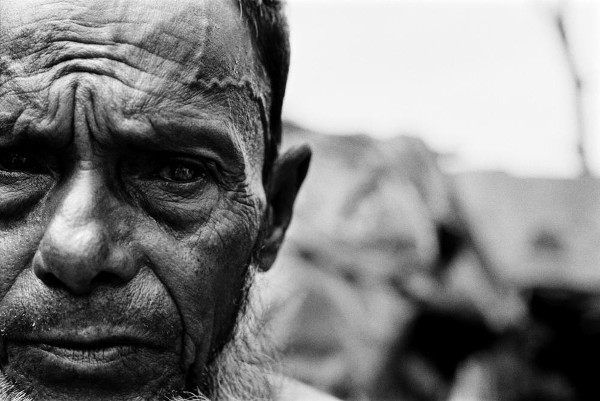
The Rohingya are a Muslim minority, originally from Bangladesh, who live in the predominantly Buddhist of Myanmar (formerly known as Burma) .

Buddhist extremists refuse to acknowledge the Rohingya and claim they are Bengalis who belong in neighbouring Bangladesh.

A New York Times short documentary broadcast this month, shows how Myanmar authorities confine the Rohingya to ‘quasi-concentration camps’ or to their own villages, with reduced/minimal access to medical care and education.

More than 230 people have been killed in religious violence in Myanmar since June 2012 and more than 140,000 have been displaced.

Central African Republic (CAR)

The CAR conflict has pitted Muslim Seleka forces against Christian Anti-Balaka militias since the overthrow of former president Francois Bozize, a Christian, by Muslim Michel Djotodia in 2012.

The two have continued to engage in tit-for-tat violence resulting in more than 2,000 deaths and hundreds of thousands of displacements since.

Thousands of Muslims have fled Christian-majority areas as sectarian violence continues to rise.

“We didn’t want the Muslims here and we don’t want their mosque here anymore either,” Christian looter Guy Richard told news agency AP after more than 1,200 Muslims had fled the capital Bangui.

China

The Uyghur people are a Turkic Muslim minority living in the autonomous region of Xinjiang, known also as East Turkestan, in China.

The Uyghurs are subjected to religious discrimination by the Chinese government.

Since the founding of the Republic of China in 1912, some Uyghurs have demanded complete autonomy from the Chinese government.

Former Chinese leader Mao Zedong launched an anti-rightist campaign in 1957, aimed at purging dissidents and critics of the government. The campaign was believed to have also targeted the Uyghur nationalists.


During the Great Leap Forward Campaign (1958-1962), hundreds of thousands of Uyghurs fled Xinjiang to Soviet Union, due to a widespread famine.

China accuses Uyghur militants of waging a violent campaign for an independent state; however, Beijing is often accused of exaggerating Uyghur’s extremism to justify its religious crackdown on the Muslim minority.

India

Muslims have been often felt persecuted in India – the world’s largest Islamic community - by the Hindu majority.

Between 50,000-200,000 Muslims were believed to have been killed in pogroms in Hyderabad in 1948, during the Partition crisis.

Since independence, India has always maintained a constitutional commitment to secularism but Muslim-Hindu conflict hasd never been far from the surface. Since then, India has witnessed sporadic large-scale violence sparked by underlying tensions between sections of the Hindu and Muslim communities.

The sense of communal harmony between Hindus and Muslims in the post-partition period was compromised greatly by the razing of the Babri Mosque in Ayodhya. The demolition took place in 1992 and was perpetrated by the Hindu Nationalist Bharatiya Janata Party (BJP).

Last month, Narendra Modi, the leader of the BJP, was sworn in as India’s new prime minister. Questions still persist over PM Modi’s role in the 2002 Gujarat riots, when up to 2,000 Muslims were killed in religious riots. Human rights groups and the media have accsued Modi, who led the the Gujarat government at the time, for inflaming the violence and not protecting the Muslim community form the mob.

Angola

In November 2013 Angola ordered the shutdown of all mosques and declared Islam illegal.

Minister of culture Rosa Cruz e Silva called Islam a “sect” which would be banned as counter to Angolan customs and culture.

Muslims account for less than 1% of the population of 19 million, while more than half of the former Portuguese colony in south west Africa subscribe to Christianity.

Clashes between the two communities are frequently reported in the local media. Muslims, many of whom migrated from west Africa and Lebanon, often face hostility from lawmakers.


http://samotalis.blogspot.com/

28 June, 2014

Exclusive - In virus hunt, Saudi Arabia suspects African camel imports

Exclusive - In virus hunt, Saudi Arabia suspects African camel imports

Camels are seen before being exported to Middle East countries, at the loading zone at the sea port in Somalia's capital Mogadishu August 3, 2013.  REUTERS/Feisal Omar

Camels are seen before being exported to Middle East countries, at the loading zone at the sea port in Somalia's capital Mogadishu August 3, 2013.

CREDIT: REUTERS/FEISAL OMAR

(Reuters) - Saudi Arabia suspects a virus that has killed hundreds of people there may have arrived in camels from the Horn of Africa, and could ban such imports until it knows more, the kingdom's chief scientist told Reuters.

Any ban on the camel trade with the region would badly hurt the already fragile economy of Somalia, which is a major livestock exporter to Saudi Arabia.

Tariq Madani, who heads the scientific advisory board of the Saudi health ministry command and control centre (CCC) - set up to handle the outbreak of Middle East Respiratory Syndrome or MERS - said scientists are currently testing camels at sea ports before authorities allow them in.

MERS was first identified in humans in 2012 and is caused by a coronavirus from the same viral family as the one that caused a deadly outbreak of SARS in China in 2003. More than 700 people in Saudi Arabia have contracted it and 292 of them have died, according to latest data from the Saudi health ministry.

"We do have suspicions that the disease may have been imported through camel trade from the Horn of Africa, but we haven't proved it yet," Madani told Reuters in a telephone interview from Jeddah.

He said the final decision on a ban on camel imports from the region lies with the agriculture ministry. Officials there could not be reached for comment but Madani said the ministry "hasn't yet released an official ban for the importation of camels", although colleagues there had told him such a move is "under consideration".

"We have always imported camels from the African Horn.... but we will stop that until we get more information on whether they are infected or not," he said.

Saudi Arabia has previously been criticised for its handling of the MERS outbreak, which public health experts say could have been under control by now if officials and scientists there had been more willing to collaborate on studies into how the virus operates and where it is coming from.

Much more scientific research is needed to nail down the source of the MERS infections in humans and exactly how it makes the leap, but preliminary studies suggest the virus's animal reservoir is likely to be camels.

Viruses frequently jump from animals into people in what are called zoonotic events - and while many of them peter out, some can develop into human epidemics.

"Since this is a zoonotic disease we are collaborating with the ministry of agriculture to answer the question of whether these camels imported from the African Horn are possible sources of infection," Madani said.


LIVESTOCK EXPORTS

Saudi Arabia is by far the biggest market for livestock from Somalia, with at least 70 percent of Somali exports going to the kingdom. The rest go mostly to other Middle East states such as the United Arab Emirates (UAE), Yemen, Qatar and Egypt.

Somalia exported about 4.7 million animals in 2013. Sheep and goats account for roughly 80 percent, followed by camels and some cattle.

Most exports go via two Gulf of Aden ports - Bossaso and Berbera - in two breakaway regions of northern Somalia, but the animals come from all over the country, with some arriving across porous borders with southern Ethiopia and northern Kenya.

Madani said that while Saudi Arabia does have some domestic camels, most of those used for meat and trade are imported from the Horn of Africa.

Lisa Murillo, an expert in virology and affiliate scientist at the Los Alamos National Laboratory in the United States, said she had analysed data on human MERS cases in the Middle East and camel imports from the Horn of Africa - and found striking correlations that cry out for further investigation.

As a result of her findings, Murillo says she has developed what she acknowledges is a "very speculative hypothesis" - that the number of MERS cases in Arabian Peninsula countries is related to the number of camels imported into those countries.

"That correlation just leaps off the page," she told Reuters in a telephone interview.

"The most important thing we need to be doing right now - outside of Saudi Arabia and the UAE - is looking for human and camel cases of MERS in the Horn of Africa - particularly in the ports of Somalia," she said. "If it turns out to be in camels there, why wouldn't it be in humans there as well?"

Madani said teams of scientists working under his leadership at the CCC were doing exactly that in Saudi.

"As we speak we are doing a study on camels imported from the Horn of Africa," he said. "We are taking samples from them in the sea ports before they are allowed in, and we're also taking samples from people handling them to test them for antibodies."


STRUGGLING SOMALIA

Murillo said data from the United Nations Food and Agriculture Organisation on national camel stocks in 2012 show there were 7 million camels in Somalia compared with 260,000 in Saudi Arabia.

Experts say that if Saudi Arabia does ban imports from Somalia, it could have a severe impact on a nation struggling to rebuild itself while an Islamist insurgency rages.

A previous Saudi ban on Somali livestock exports in 2000 - the concerns then was rinderpest and Rift Valley fever - hammered the economy before it was lifted in 2009. From 2 million head shipped in 2008, exports jumped to 3 million in 2009 and hit 4.8 million in 2012, according to an EU official.

"It would be very serious, quite devastating," Ernest Njoroge, Somalia programme officer in charge of livestock and fisheries for the European Union. "In the year 2000, there was a total ban of the livestock and that was very very devastating."

Some African traders grumble that exports are already looking weak in 2014, although the peak export season is only just starting.

Most shipments are made before the Muslim holidays of Eid el-Fitr - at the end of the fasting month of Ramadan which begins this coming weekend - and Eid al-Adha which follows a few weeks later.

Njoroge said it would become clear how the trade is doing only in about October or November.

"Most Somalis depend on livestock and when there is no export there is an economic crisis, particularly for the pastoralists and traders," said Ahmed Hussein, a livestock trader speaking to Reuters by telephone from Baladweyne, a town in central Somalia. He said business was slow.

"When livestock is exported there is circulation of money. Now since there is no export, the livestock price is down locally," he added.

Abdisalan Omar, a restaurant owner in Mogadishu, said male camels for export can sell for $700 to $900 (411-528 pounds), but go for $400 to $500 when sold for domestic consumption.


(Additional reporting by Edmund Blair in Nairobi, Abdi Sheikh in Mogadishu and Angus McDowall in Riyadh; Editing by Simon Robinson and David Stamp)

http://samotalis.blogspot.com/

27 June, 2014

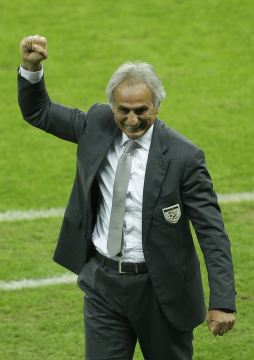
World Cup 2014: Algeria want Germany revenge for 1982 exit


World Cup 2014: Algeria want Germany revenge for 1982 exit

Coach Vahid Halilhodzic insists Algeria have not forgotten the furore around their 1982 World Cup exit as they prepare to meet Germany in the last 16.

A 1-1 draw against Russia on Thursday earned Halilhodzic's side a place in the knockout stages for the first time.

West Germany's controversial victory over Austria 32 years ago allowed both teams to progress at Algeria's expense.

"We have not forgotten," Halilhodzic said. "Everybody has been talking about Algeria and Germany from 1982."

Algeria competed at the World Cup finals for the first time in Spain in 1982, and caused an upset in their opening group game with a 2-1 win over West Germany - then the European champions.

They finished with two wins and a defeat from their three matches, which they completed before West Germany and Austria met in the final group game.

A 1-0 win for the Germans would take both sides through at the expense of Algeria, and that was how the match turned out.

Algerian officials launched a protest, claiming the match was fixed, but the allegations were never proved and the result stood. However, as a result of the controversy, the final round of World Cup group fixtures now kick-off at the same time.

Halilhodzic said. "Thirty-two years ago is a long time. I am very proud of what we have achieved tonight and we deserve to be here.

"I think Algeria played a heroic match and our qualification for the second round is perfectly deserved."


http://samotalis.blogspot.com/

Women don’t need mahram OK for travel within KSA

Women don’t need mahram OK for travel within KSA


Saudi women stand at the entrance of a shopping mall, in this November 7, 2013 file photo. (AFP)


RIYADH: ARAB NEWS
LATEST STORIES IN SAUDI ARABIA


Expanded Grand Mosque ready for Ramadan

Rise in child harassment warrants national campaign
Governor stresses need to stick to time frame for Riyadh projects
‘Security at Pakistani airports worrying’
Police thwart man’s plot to kill brother
More


Around 64 percent of Saudi women are unaware of their right to travel inside the Kingdom without obtaining the approval of their guardians, local media reported, quoting a recently published study.
Similarly, the study found that 59 percent of Saudi men were oblivious that women are allowed to travel domestically without the prior consent of guardians.
The study, which was conducted by Khadija bint Khuwailid Center for Businesswomen at the Jeddah Chamber of Commerce and Industry, was designed to measure public opinion regarding Saudi women’s participation in national development and the problems facing them in the labor market.
Around 3,000 male and female individuals above 18 years old were randomly selected from 11 cities across the Kingdom to participate in the study.
The study also found that 66 and 70 percent of women and men respectively strongly rejected the idea of women traveling without their guardian’s consent.
Meanwhile, Brig. Gen. Suleiman Al-Yahya, director-general of
the Passport Department, said the department has no intention of canceling travel permits for women.
The only exception will be made for women abroad on scholarship, he said.
Citizens living abroad will no longer need to employ paperwork agents or visit passport offices and will instead be able to use the Abshir online system.
“This online system is fully protected from hacking attempts,” he said.


The Interior Ministry, meanwhile, has promised to implement an e-linkage project between the Social Affairs, Justice and Commerce Ministries.
“Citizens find it easy to criticize system shortcomings because they are oblivious to the amount of work undertaken by the department in enhancing performance and expanding services,” he said. “The mediator phenomenon will soon disappear.”
“There are 500,000 Saudi citizens living in Egypt and 150,000 living in Kuwait,” said Ambassador Osama Al-Sanousi, undersecretary for Consular Affairs.
“The ministry, however, does not have accurate statistics about the number of Saudis living permanently in other countries because of the absence of a mechanism to monitor such figures,” he said. “As such, Saudis living abroad should register at the local embassies in the countries in which they reside.”
“In addition, Saudis living abroad should refrain from discussing sensitive topics and should only answer questions in the presence of a lawyer in the event of arrest,” he said.
“Embassies are tasked with bailing out their citizens and protecting them getting into prison,” said Al-Sanousi.


http://samotalis.blogspot.com/

$2bn fund to drive growth in Muslim world


$2bn fund to drive growth in Muslim world


Ahmad Mohamed Ali, president of the IDB Group.


JEDDAH: ARAB NEWS
LATEST STORIES IN FEATURED


FDI drops but Kingdom upbeat on investments

Al-Jasser appointed new Saudia chief
Top sports body has new head
King orders high alert to fight terror
New Dammam train schedule for Ramadan
More


A $2 billion Islamic Development Bank Infrastructure Fund II (known as the “IDB Fund II“) was launched on the occasion of the bank’s 40th anniversary, said Ahmad Mohamed Ali, president of the IDB Group.
The IDB Fund II is the largest private equity infrastructure fund dedicated to the 56-member countries of the IDB. The bank’s board of governors has reappointed Ali as its president for the next five years.
The IDB Fund II is supported by the Public Pension Agency of Saudi Arabia, the Public Investment Fund of Saudi Arabia, the Ministry of Finance of Bahrain and the Ministry of Finance of Brunei Darussalam as founding investors, with aggregate commitments totaling nearly $750 million for the first closing. A final closing with additional investors is targeted for early 2015.
The fund will have a broad sectorial focus beyond the core infrastructure sectors of power, telecommunications and transportation and will include investment in oil and gas, refinery and petrochemicals, steel and aluminum, mining, logistics and an allocation for health care, education and financial services.
The IDB Fund II is the successor to the $730 million IDB Infrastructure Fund I (the IDB Fund I), also supported by the founding investors, which achieved an IRR of 18 percent and an investment multiple of 1.7 times across signature projects such as AirAsia in Malaysia, the Saudi International Petrochemical Company (Sipchem) in Saudi Arabia and AES Oasis Ltd., with power assets in Pakistan, Oman and Jordan.
“Building on the successful track record of IDB Fund I, the IDB and founding investors are nearly tripling the size of the IDB Fund II to $2 billion,” said Ali. “The fund will mobilize up to $24 billion of aggregate financing to support the development of key infrastructure projects in IDB member countries.”


IDB and the founding investors have established ASMA Capital Partners, based in Bahrain, as a multi-fund asset management platform to manage the IDB Fund II.
The chairman of ASMA Capital is the president of the IDB Group and the vice chairman is Mohammed Al-Kharashi, governor of the Public Pension Agency of Saudi Arabia. Members of the board of directors are Abdullah Al-Ayadhi, representing the Public Investment Fund (KSA), and Sami Humaid, representing Bahrain’s finance ministry.
Mohammed Al-Kharashi said: “ASMA Capital is expected to play a significant role in assisting pension funds and other global investors seeking to deploy capital into infrastructure projects in select emerging markets for portfolio diversification and stable return.”


http://samotalis.blogspot.com/

Expanded Grand Mosque ready for Ramadan

Expanded Grand Mosque ready for Ramadan


SUPERVISING EXPANSION: Sheikh Abdul Rahman Al-Sudais, head of the Presidency for the Two Holy Mosques, inspects the Haram expansion project on Thursday. (SPA)


JEDDAH: IRFAN MOHAMMED

LATEST STORIES IN SAUDI ARABIA


Rise in child harassment warrants national campaign

Governor stresses need to stick to time frame for Riyadh projects
Women don’t need mahram OK for travel within KSA
‘Security at Pakistani airports worrying’
Police thwart man’s plot to kill brother
More


The second phase of the massive ongoing expansion project inside Makkah’s Grand Mosque is almost complete, with the first floor area for circumambulation around the House of God, known as the “mataf,” expected to be open for pilgrims during the month of Ramadan.
The worksite was inspected by Sheikh Abdul Rahman Al-Sudais, head of the Presidency of the Grand Mosque and Prophet’s Mosque Affairs, on Thursday.
“The first floor and ground floors are 100 percent ready for prayer and are fully equipped with elevators and automated stairs, while the second floor is about 80 percent ready,” Al-Sudais said.
The second phase involves the eastern side of the mataf and extends from Al-Fatah gate to the Umrah gate, where expansion work being carried out around the clock under the direct supervision of high-ranking officials from the Saudi Binladin Group, the project contractor.
The second phase, meanwhile, is slated to span 25,000 square meters, almost double the area of the first phase.
The area can accommodate up to 75,000 worshippers per hour, said a senior official.
In addition, the old passageway was dismantled and reconstructed to facilitate the movement of pilgrims inside the mataf.
Contractors will stop work for nearly four months given the huge influx of pilgrims between the Ramadan and Haj seasons.
The capacity of the mataf area is expected to increase from 50,000 pilgrims per hour to 130,000 pilgrims when the expansion is fully completed.


Costing over SR100 billion, the King Abdullah Expansion Project is designed to increase the mosque’s capacity to more than two million worshippers.


http://samotalis.blogspot.com/

Folkestone Khat Arrest Believed To Be UK First


Folkestone Khat Arrest Believed To Be UK First


A man has been arrested for possession of the now-banned stimulant khat in what police believe is a UK first.

The 20-year-old was stopped by officers based at the Channel Tunnel in Folkestone, Kent, as he attempted to board a train for Calais on Tuesday.

Kent Police said officers found about 500kg (1,102lb) of khat in pillow cases in the boot and back seat of his car.

Possessing khat became illegal in the UK on 24 June when the plant was decreed a class C drug.

Officers have seized the khat, believed to be worth at least £15,000, for analysis.

The herbal stimulant has been chewed by people in parts of Africa and the Middle East for hundreds of years.

Source BBC News
http://samotalis.blogspot.com/

26 June, 2014

26-ka Juun Maalinta Xorriyadda Somaliland: Ahmed Arwo

26-ka Juun Maalinta Xorriyadda Somaliland: Ahmed Arwo


Ahmed Arwo


Waa xuskii 54naad ee maalintii xorriyadda, maalintii gumeysigu ka huleelay dalkeen ka dib qarni uu talo xumo iyo wax qabad la'aan inagu maamulay, inagu kala qaybiyey oo uu nidaam qabiilaysan oon ka bxi lanay inoo dhigay. Waa ayaan xus iyo qaiimeyn mudan, ayaan weyn oo taariikh dahab ah leh, ayaan faan faan iyo farxadi umadeyna mideysay yar iyo weyn rag iyo dumar
.

Waxa inaga dhigay Soomaliland een Soomalida kala kaga duwannay waa maalintan inteena ku abtirsata Somaliland isukeyn keyntay, inoo yeeshay dhul xadidan, dawladnimo iyo dhaqan dhaqaale inoo gaar ah. Iyadaa inaga dhigtay ummad taariikh gooni ah iyo dabecado u gaar ah leh. Iyadaa inaga dhigaty inaynu ku dhaadano magaca Soomaliland. Iyadaa u sal ah oo dhashay halgamadii ina soo maray ee uu ugu dambeeyey kii SNM ee aynu dib u dhisnay jamhuuriyaddii labaad kolkaynu dib ula soo noqonay qaranimadii aynu ku luminay haybaddii 26ka Juun. 

26kii Juun 1960, waa dharaartii aynu gobanimada helnay, waa ayaantii aynu noqonay dal xor ah oo ka mid ah dalalka adduun weynaha, waa maalintii ay ina aqoonsadeen dalal ka badan 30. Waa ayaantii abwaan iyo hoobal tooni aanu wax la hadhin. Waa dharaartii Alle ha u naxariistee Cabdillahi Suldaan Timacadde iyo Cabdi Iidaan tiriyeen gabayada taariikhiga ah een doogoobin. 26kii Juun 1960, waxay ahayd maalin in badan la saadaalinaayey. Waxay ahayd maalin rag iyo dumar, ciroole iyo caruur loo ciyaaray, loo soo jeeday, loo xaragooday.
Waxay ahayd maalin intii dhalatay wiil iyo gabadhba loo bixiyey sitiin, dhalinyaro badanina ay ku beegeen arooskooda. Waxay ahayd maalin wiil iyo gabadhii dhalatay lagu tilmaamay cawo dhalad. Waxay ahayd maalin xisbiyada qaran, mucaarad iyo muxaafid ay gacmaha is qabsadeen. Maalin hadal macaan iyo weji furan leysku salaamay. Maalin miskiinka taakulintiisa la kala boobay. Maalin Soomaali madax kor u qaaday. Maalin kii shalay ku gumeysanaayey uu magan kuu noqday.

Waxay ahayd maalintii u horeysay ee 5ta Soomaali dhammaan wada ciiday. Waa dharartii u horeysay ee dal xor ah oo Soomaaliyeed dhashay. Haddaba waxa dadka qaar isku qaldaan maalintan qaayaha leh ee la odhan karo waa tan ugu mudan ummadda Soomaaliyeed, iyo dhibaatadii, burburkii iyo dilkii ka dambeeyey ee dhaliyey inay burburto hilowgii iyo himiladii weyneed ee midnimada shanta Soomaaliyeed. Halgamayaashii ay horseedka u ahaayeen xisbiyadii NUF, USP iyo SNL, waxay ahaayeen qaar niyad wanaagii ay u hayeen midnimada Soomaaliyeed si shuruud la,aan ah oo weliba qayb xuma ah ula mataanooba Konfurta. Lagama helin dhankooda xaqsoor wacan iyo maamul rumeyn kara hadafkii weynaa ee israaca. Waxay noqdeen laba shuraakoobay oon si cadaalad ah dheefta ay wadajirka ku heleen u sinayn. Waa cadaalad darada lagala kulmay Koonfur tan ay ka dhalatay taariikhda madow ee israaca inaga soo gaadhay ee ma aha mid loo nisbayn karo 26ka Juun iyo maalinta gobannimada Somaliland.

Bal u fiirso waxa la ciyimay in shanta Soomaaliyeed shan maalmood oo isku xigta loo diyaariyo. Waxa la gartay in Somaliland oo u horreysaa qaadato 26ka Juun, Xamarna 30ka Juun, Kowda Juulayna noqoto maalinta israaca oo marba cidda xorowdaa ay kuwa xorta ah ku soo biirto. Waxa loo daayey 27, 28, iyo 29ka Juun seddexdii aan weli xoroobin. Waxa soo raacday Jabuuti oo sidii loo qorsheeyey qaadatay 27kii Juun. Labada kalena loo jaangooyey Soomali Galbeed iyo NFD.Taas ayey ku dhisnayd hammigii iyo himmiladii is-raaco.
Waxba kaga noqonmaayo dhibtii, dilkii, dulmigii inaga soo gaadhay is-raaca, waayo weynu ka bogsanay oo manta waxaynu nahay dal xor ah oo midaysan, nabad ah oo dimuquraadi ah.


Waxa Soomali u dan ah in qolo walba halkeeda ay nabad iyo horumar ku gaadho. Waxaynu ognahay in Somalida Kenya iyo Itoobiyaba ay maanta gaadheen horumar iyo nabad. Taasi ayaa inoo xaqiijisay in nabadda iyo wadjirka inta isku dalka ihi fure u tahay horumarka. Waa inaynu ka horeysiina danta shacbiga nabadda u buka hadafka gaaban ee siyaasiga jaceylka madaxnimo dhaafsiisanaaya nolasha dadkiisa. Waa in taliska Soomaliya uu garwaaqsadaa rabitaanka Shacbiga Soomaliland sida uu u aqoonsaday doonista iyo masiirka Soomalida Itoobiya iyo kuwa Kenya, horeyna aynu u oggolaanay walaalaheen Jabuuti oo markaynu u baahannay inoo noqday garab aynu ku tiirsano iyo dhul aynu ku badbaadno.

Aan ku laabto astaamaha maalintan.26ka Juun waa maalin rajo wanaag iyo saadaal suuban la kowsatay ee waa in la mariyaa maamuuska ay leedahay oon hoos loo dhigin. Waa inay noqotaa mid qalin dahab ah lagu qoro, lana soo ban dhigo qiimaha xoriyaddu leedahay. Tani wax xidhiidha lama laha dhibaatooyinkii ka dhashay is-raaca oy sababteedu ahayd arrin inagaga timid meel aan la filayn.Yaan leysku xidhin gumeysi erigii iyo khasaarihii lagala kulmay israaca.

Waa in la xusaa ragii u soo halgamay xoriyadda abwaano, siyaasiin, odayaal iyo culumaba. Sidoo kale waa in la xusaa xisbiyadii jiray iyo giraanta taariikhda oo lagu xidhiidhiyo halgankii SNM, iyo dhammaan halgamadii ka horeeyey ee sida dastuurku sheegay ka bilaabmaayo kii Daraawiishta, iyadoo la maamuusaayo ciddii ku dhimmatay,ku-dhawacantay, kuwa ku agoonoobay iyo inta nool oo la qadariyo. Waa in ubadka loo qoraa taariikhda. Ogow cidda aan aqoon waxay shallayto ahayd ma garan karto waxay noqon berito.
.
26ka Juun waxa dhaliyey muwaadiniin gacmaha is haysta, kala xisbi ah, kala beel ah, oo wadaninimo walaalaysay. Waa lama iloobaan geesinimadii Faarax Oomaar iyo Sheekh Bashiir, halgankii seddexda xisbi ee SNL, NUF iyo USP.Waxaan la iloobayn kaalinta ay ka qaateen abwaanada Timacadde, Cabdi Iidaan, Barkhad Cas, Cabdillahi Qarshe, Guduudo, Cali Sugule iyo dhammaan Walaalo Hargeysa. Sidoo kale siyaasiinta iyo odayada ay ka midka ahaayeen Suldan Cabdillahi, Suldaan Cabdirahmaan, Garad Ali , Goodaad, Cigaal, Axmed Xasan, Michael Mariono iyo dhammaan intii halganka dheer u soo martay xoriyadda dalkeena hooyo.

Waa dharaartaan waxyeeladii dhaqdhaqnay, noqonay qaran xor ah oo ku biiray dunida xorta ah. Waa ayaanta aynu xididka u taagnay qarannimada Soomaliland. Waana iyada tan aynu u garnaqsanaa ee sharciyeynaysa qarannimadeena. 26 June 1960, rabitaanka shacbiga ayaa caydhiyey isticmaarkii Ingiris, isla rabitaanka dadweynaha ayaa sidoo kale soo celiyey kolkay fool habowday dhidib adagna u taagay qarannimada Soomaliland..

GUJI HOOS OO DHEGEYSO0 ABWAAN TIMOCADDE AHUN IYO GABAYGII CAANKA AH EE 28KA JUUN

http://www.youtube.com/watch?v=Fo0bE5t2gdg

Aan xusno oon siino qiimaha ay leedahay. 

Axmed Xasan Carwo
La-taliyaha Madaxweynaha
Dhaqaalaha, Ganacsiga iyo Maalgashiga

samotalis@gmail.com


https://www.facebook.com/aharwo
http://samotalis.blogspot.com/


http://samotalis.blogspot.com/

24 June, 2014

Education Reform in Pakistan

Education Reform in Pakistan

To combat religious extremism and sectarian violence, Pakistan must reform its education sector by boosting resources to public schools and updating the school curriculum to improve quality and remove divisive and discriminatory narratives.

Long underfunded, Pakistan's system of public education has been further devastated by militant violence and natural disasters. Passed in 2010, the eighteenth constitutional amendment mandated compulsory education for all children between the ages of five and sixteen and devolved much of the education system's management from the centre to the provinces. But more than nine million children do not receive a primary and secondary education, and quality of instruction varies widely between both genders and rural and urban areas. Madrasas and religious schools, many of which propagate religious extremism and sectarian hatred, seek to fill the gaps. In its latest report, Education Reform in Pakistan, the International Crisis Group examines the dysfunctional public education system and underlines the need to reform the curriculum and hold schools and teachers to acceptable standards.

The report's major findings and recommendations are:
  • Although its law requires Pakistan to provide free and compulsory education to all children between the ages of five and sixteen, millions are still out of school, the second highest number in the world.

  • The quality of education in the public school sector remains abysmal, failing to prepare a fast growing population for the job market, while a deeply flawed curriculum fosters religious intolerance and xenophobia.

  • Poorly regulated madrasas and religious schools are filling the gap of the dilapidated public education sector and contributing to religious extremism and sectarian violence.

  • The state must urgently reverse decades of neglect by increasing expenditure on the grossly-underfunded education system – ensuring that international aid to this sector is supplementary to, rather than a substitute for, the state's financial commitment – and opt for meaningful reform of the curriculum, bureaucracy, teaching staff and methodologies.

"Before the eighteenth amendment was passed, school curriculums reflected an overly centralised state's priorities, emphasising national cohesion – within a rigid ideological framework – at the expense of regional and religious diversity", says Samina Ahmed, South Asia Project Director and Senior Asia Adviser. "Provincial governments can now reform deeply flawed curriculums that contribute to political, regional and religious intolerance, but there is also the risk that education programs will differ radically among provinces".

"Pakistan needs to take bold steps to tackle its education crisis", says Jonathan Prentice, Acting Asia Program Director. "Millions of children are still out of school, and the quality of education for those enrolled remains poor. This is more than a question of the rights of children, vital though that is; ultimately, it goes directly to the state's ability to combat extremism. Decades of neglect can only be reversed by overhauling Pakistan's academic curriculum and education bureaucracy".

Executive Summary | Full Report PDF


Sent from my iPhone

23 June, 2014

Wedding halls shut for wild celebrations

Wedding halls shut for wild celebrations


JEDDAH: NADIM AL-HAMID

LATEST STORIES IN SAUDI ARABIA


MoH steps up health awareness drive for Umrah and Haj season

Dialogue is only way to promote harmony
50 percent of divorce cases due to compatibility issues
Meat prices to remain stable during Ramadan, says Al-Jabri
Pardoned by king, Indonesian maid returns home
More


Police patrols have recently shut down more than 15 wedding halls across the city, according to First Lt. Nawaf Al-Bouq, spokesman for the Jeddah police department.
Speaking with Arab News, Al-Bouq said the owners of the wedding venues were accused of violating safety regulations in allowing families to gunfire in celebration of their wedding ceremonies.
The spokesman explained that firing guns in the air is a potentially fatal activity, which may result in the death of bystanders.
He cited examples of fatalities caused by celebrating gunfire in the past, emphasizing the Jeddah Police Department has many times warned individuals against the dangers of joy gunfires and has since banned the practice.
“We have deployed undercover patrol cars to monitor and arrest violators. It’s imperative that we end use of firearms in public as it could lead to tragic incidents,” he said.
The governor of Makkah and the Ministry of Interior, he said, have issued strict directives regarding the matter and wedding hall owners have been explicitly prohibited from allowing such practices on their premises.
Al-Bouq underlined that penalties would be imposed against the wedding hall owners and individuals participating in the gunfire in any celebration


http://samotalis.blogspot.com/

Algeria beat South Korea to make World Cup history for Africa


Algeria beat South Korea to make World Cup history for Africa


PORTO ALEGRE, Brazil, June 22 (Reuters) - They might want to change Porto Alegre's name to Porto Algeria after the Desert Foxes' 4-2 victory over South Korea in the southern Brazilian city on Sunday.

Algeria's four goals ended a 32-year wait for a World Cup win and shot them into contention for a last 16 place for the first time in four tournaments.

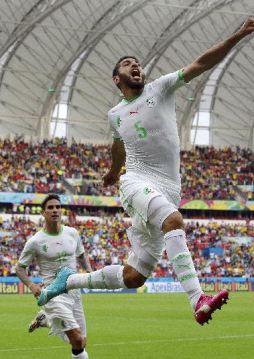
Islam Slimani, Rafik Halliche, Abdelmoumene Djabou and Yasine Brahimi all got their names on the scoresheet for Algeria who become the first African team to score four goals in a World Cup match.


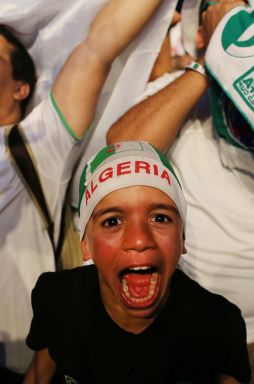
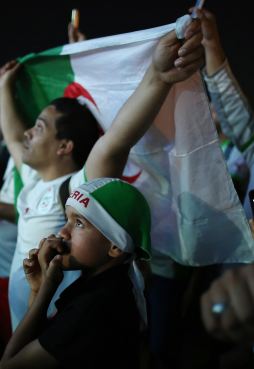
The Beira Rio stadium echoed to the chants of "1-2-3, Vive Algerie" after the final whistle from Algeria's vociferous green and white clad fans.

Wily coach Vahid Halilhodzic masterminded an impressive performance, making five changes to the side that were unlucky to lose their opening Group H game against Belgium.

"I took into account how Korea played, I wanted some fresh players, players who wanted revenge, who could worry the Korean team and make it difficult for them," he told a news conference.

"We had to dare but after each match we will get better and better and this victory after 32 years will do a lot for us. We are in high spirits," he said.


Description Toggle

World Cup Group H: South Korea 2-4 Algeria - in ...
Algeria make history as they become the first African team to score four games in a World Cup game, beating South Korea 4-2 to take a decisive step towards the last 16.


1 - 5 / 30


Algeria's fans celebrate and hold flares as they watch the FIFA 2014 World Cup football match Algeria vs South Korea on a big screen in central Algiers, on June 22, 2014. AFP PHOTO/FAROUK BATICHE...more

1 / 30
AFP
Share to FacebookShare to TwitterShare to Pinterest
Close
Previous image
Next image

The tremendous match - in which South Korea threatened to make a late comeback after a poor first-half - also fired up a group which until now had been spared the drama and thrills seen elsewhere in Brazil.

The team had played to its strengths, working in depth and counter-attacking, Halilhodzic said.

"We played an almost perfect first period. We were playing very well, very effectively, then it went down a little bit, maybe it was psychological, maybe physical, but this was a feat today."

[RELATED: Attack-minded Algeria out to exorcise the ghosts of 1982]

He conceded that Algeria sagged somewhat in the second half, allowing Korea to claw back a goal when three down, then a second after Algeria has grabbed a fourth.

"The Koreans were well organised, ready to run. Kim (Young-gwon) caused us problems but we were ready for that. We chose tactics that gave them problems. The fourth goal was a textbook goal. All the Brazilians must have been delighted by that."

Yacine Brahimi's 62nd-minute goal also set a record, making Algeria the highest-scoring African side in a single World Cup match. Remarkably, until they scored against Belgium last week, Algeria had not netted a World Cup goal for 28 years.


Algeria's fate is now in their own hands. A victory over Russia would see them through and a draw might be sufficient, depending on the result between Belgium and South Korea.

"Russia - we'll see - Russia is the favourite team but we have to fight and we have to be daring and we have to be ready to suffer. It will be complicated, but it is possible."


http://samotalis.blogspot.com/

22 June, 2014

Madaxweynaha Jamhuuriyada Somaliland Mudane Axmed Maxamed Silaanyo ayaa Maanta Qasriga Madaxtoyada Somaliland Qado sharaf ugu sameeyey Hogaanka Xisbiga iyo

Madaxweynaha Jamhuuriyada Somaliland Mudane Axmed Maxamed Silaanyo ayaa Maanta Qasriga Madaxtoyada Somaliland Qado sharaf ugu sameeyey Hogaanka Xisbiga iyo Ganacsatadii Xalinta Musharaxnimada Xisbiga dhexdiisa ku guulaystay.

Waxaana halkaasi ka hadlay Ganacsade Rashiir Ibraahim Ciise, Wasiirka Arrimaha Dibeda Somaliland isaga oo Madaxweynaha Somalilandna soo xidhay kulankaasi qado sharafta ah

HALKAN KA DHEGAYSO CODADKA MASUULIYIINTA


http://samotalis.blogspot.com/