Showing posts with label Somalia Reports. Show all posts

16 June, 2014

I. M. LEWIS AND SOMALI CLANSHIP: A CRITIQUE


Prof . Lidwien Kapteijns

Introduction
When large-scale violence occurs in Africa, initial analyses rarely go beyond characterizations of it (and, by implication, characterizations of the nature of the groups involved) as “ethnic” or “tribal.” Over time, more nuanced, historically based, and carefully contextualized analyses emerge.
Northeast African studiesThese often try to understand the complexities of, and changes in the nature of, the groups and group identities in whose name violence has been committed and suffered. Thus, in the scholarship about Rwanda, for example, conceptualizations of the labels/identity constructs of “Hutu”and “Tutsi” have become quite sophisticated, even as the classification of the violence as genocide has (justifiably) remained uncontested (Eltringham 2004; Newbury 1998). In the case of Darfur, more carefully historicized and contextualized understandings of the labels “Arab” and “Black” or “African” are emerging as we speak, and here the categorization of the violence as genocide is hotly contested and the interests of advocates of this naming are critically examined (Willemse 2005 and 2009; Mamdani 2009). However, in the case of Somalia, there has been little in-depth scholarly analysis of the violence that accompanied state collapse; as a result, the nature of the groups involved as perpetrators or victims—in this context referred to as “clans”—is too often taken at face value.
When it comes to thinking about “clan,” the field of Somali studies has been characterized by two paradigms, both of which will be discussed below. The first paradigm emphasizes clanship and “clan” (that is to say, the notion of agnation or patrilineal descent that constructs the groups called lineage, clan, and clan family) as the basic social institution and the major and enduring principle of the sociopolitical organization of Somali society. From its perspective, the principle of “clan” structures the overall system, in whose functioning it has always been and remains the major determinant. For example, according to this paradigm, Somalis may today have replaced their spears with bazookas and rocket-propelled grenades, but the basic structure of their sociopolitical system and the  function of clan in it have remained the same. I. M. Lewis developed this theoretical model in the late 1950s, as he updated the structural functionalist approaches to social anthropology of Radcliffe-Brown and alinowski by letting go of static structuralism but holding on to a modified notion of “function” (Lewis 1968, xxiv, and 1999a, 23).2 As this modified structural-functionalist approach appears to have mostly survived in Somali studies, where I. M. Lewis half a century later is still defending it, I will call it the Lewisian paradigm.
The second paradigm holds that the Lewisian perspective over emphasizes the importance of “clan” and that this overemphasis emerged in a very specific historical context, namely, that of the late-colonial consensus between British rulers and Somali subjects recorded by Lewis during his 1955–57 fieldwork. According to this second theoretical model, clanship is therefore not a basic and stable organizational and behavioral principle of Somali society but a basic principle of a particular and extremely influential way of thinking about Somali society, a way of thinking—a discourse if you will—with a very particular history and a nefarious influence in the present. As this paradigm sets out to “deconstruct” clanship as a natural, self-evident category, I will call it “deconstructive” and historical, terms to be further discussed below.3 I will briefly lay out three arguments that may help to disprove and displace the Lewisian paradigm: first, that clanship was never the only important organizational principle of Somali social organization in the past; second, that clanship is not static, given, or self-evident but acquires its meaning as it “is performed” in specific contexts; and third, that the Lewisian paradigm with its overemphasis on clanship not only has a history of which it is unaware but, because of that history, has alsocontributed to the clan discourse that continues to dominate thinking about Somalia today. This essay will review each argument in turn and then draw some provocative conclusions.
Lidwien Kapteijns
Wellesley College,
Wellesley, MA

http://samotalis.blogspot.com/

I. M. LEWIS 1930-2014: A GREAT TREE HAS FALLEN

I. M. LEWIS 1930-2014: A GREAT TREE HAS FALLEN
Prof Said S. Samatar

When an Asantehene, or king dies, the Asantes of Ghana memorialize his passing with the adage: “A GREAT TREE HAS FALLEN.” I M Lewis died–to be in a better place—on last March 14 of a heart ailment. With his exit, a mighty force was taken from the earth to let him join the multitude of departed scholar Olympians. Prolific and versatile, with a masterly and magisterial expertise on an extended range of subjects from Shaminism to social anthropology to sub-Saharan Islam to the Deanship of Somali Studies, of which he was not only the Founding Father, but also its reigning prince.
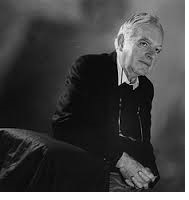
I. M. Lewis

Ioan Myrddin Lewis was born on January 30, 1930, in Glasgow (Scotland) to a Scottish mother and a Welsh father. The parents met in Iraq where the father was a journalist –- maybe an editor as well —of The Mesopotamian Times. Following marriage, the couple returned to Britain.

Ioan’s early life was spent in London, and when a boy of seven, his father died from tuberculosis, possibly on account of the gassing he sustained in WW I. The mother went back with the young Ioan to Glasgow to live with grandparents, to whom the boy was extremely attached. Ioan completed secondary and college education, respectively at Glasgow High School and University of Glasgow, where the future anthropologist majored in chemistry. With the new emphasis after WW II on scientific education in British academia, he took advantage of a grant by the Social Science Research Council, then seeking young scientists to study the social sciences with the aim of making the methods of the latter comport more closely with those of the physical sciences. He earned a Diploma and a Master’s at the Oxford Institute of Anthropology, supervised by such academic luminaries as Franz Steiner and the world- renowned E. E. Pritchard, affectionately known as E.P. by colleagues. More valuably, Oxford was also where he met the stately Ann, his future wife.

Upon leaving Oxford, Ioan was now ready to enter the working world; he took a job at Chatham House in London as a research assistant to Lord Hailey, working on “The African Survey”. On account of his supervisors’ interest in Somalia, Lewis’s passion for Somalia was ignited. And in 1955 Ioan and Ann, who he married in 1950, set out to Somalia under a grant from the Colonial Office. In Somalia, Ioan, as the phrase goes, “went native,” setting up camp among the nomads, moving with them from grazing grounds to grazing grounds, carrying out extensive research (1955-1957). Upon returning to England in 1960, Ioan completed the write- up of his research and received a PhD in Anthropology from Oxford University. The resulting work from his Somalia research was his masterpiece, A Pastoral Democracy (1961), the pioneering study that changed the face of social anthropology. Before and after the completion of his graduate research, Ioan did various stints of lectureships: at the then University of Rhodesia, University of Glasgow and University College, London.

Thereafter, he joined the faculty of the London School of Economics and Political Science in 1969. He was 39 years old, the youngest professor in Britain. Lewis’s oeuvre includes more than a dozen seminal books, dozens of book chapters and scores of razor-sharp articles. He is survived by his wife, Ann, daughters Joanna and Sally, and son, David.


Prof Said S. Samatar
Rutgers University

——————–
Dr. Samatar is a Professor of African American and African Studies, Department of History and Editor of the Horn of Africa Journal. Prof Samatar is also a regular contributor of WardheerNews.


http://samotalis.blogspot.com/

24 February, 2012

London Conference on Somalia: Communique

London Conference on Somalia: Communique
23 February 2012Full text of the Communique from the London Conference on Somalia at Lancaster House on 23 February.


1. The London Conference on Somalia took place at Lancaster House on 23rd February 2012, attended by fifty-five delegations from Somalia and the international community.

2. We met at a key moment in Somalia’s history. Somalia is emerging from the worst humanitarian crisis in the world. African and Somali troops have pushed Al Shabaab out of Mogadishu and other areas. The transitional institutions come to an end in August 2012, and the people of Somalia want clarity on what will follow. The situation remains precarious, and in urgent need of support from the international community.

3. Decisions on Somalia’s future rest with the Somali people. The Somali political leadership must be accountable to the people. The international community’s role is to facilitate Somalia’s progress and development: our strength is in unity and coordinated support to Somalia. We noted the importance of listening to and working with Somalis inside and outside Somalia, and welcomed their engagement in the run-up to this Conference.

4. The Conference focussed on the underlying causes of instability, as well as the symptoms (famine, refugees, piracy, and terrorism). We, the international community, agreed: to inject new momentum into the political process; to strengthen AMISOM and help Somalia develop its own security forces; to help build stability at local level; and to step up action to tackle pirates and terrorists.

Political

5. We agreed that the Transitional Federal Institutions’ mandate ends in August 2012. There must be no further extensions. We welcomed the agreements that chart the way towards more representative government: the Transitional Federal Charter, the Djibouti Agreement, the Kampala Accord, and the Roadmap. We welcomed the progress represented by the Garowe Principles, endorsed the priority of convening a Constituent Assembly, and emphasised that the Assembly must be representative of the views of the Somali people of all regions and constituencies, and that women must be part of the political process. In line with Garowe II, we agreed to incentivise progress and act against spoilers to the peace process, and that we would consider proposals in this regard before the Istanbul Conference in June.


6. The Conference recognised the need for the international community to support any dialogue that Somaliland and the TFG or its replacement may agree to establish in order to clarify their future relations.

7. We condemned terrorism and violent extremism, whether perpetrated by Somalis or foreigners. We called on all those willing to reject violence to join the Djibouti peace process. We agreed to develop a defectors’ programme to support those who leave armed groups.

8. We emphasised the urgency of Somalia funding its own public services, and using its assets for the benefit of the people, as well as tackling corruption. We welcomed the progress that has been made in establishing a Joint Financial Management Board to increase transparency and accountability in the collection and efficient use of public revenues, as well as international development aid, and which will help strengthen Somali public financial management institutions. A declaration by the initial members of the JFMB is at Annex A.

9. Respect for human rights must be at the heart of the peace process. We called for action to address in particular the grave human rights violations and abuses that women and children face. We emphasised that journalists must be able to operate freely and without fear. Civilians must be protected. We called on the Somali authorities to take measures to uphold human rights and end the culture of impunity. We agreed to step up international efforts including through the UN human rights architecture.

Security and Justice


10. We agreed that security and justice were essential both to a successful political process and to development. Better security could only be achieved sustainably in parallel with better justice and the rule of law.

11. We expressed gratitude to those countries whose troops had served as peacekeepers and paid tribute to the achievements and sacrifices of AMISOM and other forces. We welcomed joint planning by the UN and African Union and reiterated the importance of effective command and control. We welcomed the adoption of UN Security Council Resolution 2036, which expands AMISOM’s mandate and raises the troop ceiling. We encouraged AMISOM to ensure the protection of civilians. We encouraged partners, especially new donors, to contribute to funding for AMISOM, including through the EU.

12. We agreed that, over time, Somalis should take over responsibility for providing their own security and develop their own justice systems to deal with the threats to their security and improve access to justice. We noted that Somalis themselves must decide what security and justice arrangements they need.

13. We acknowledged the good work underway in supporting the Somali security and justice sectors. We agreed that we would build an international framework of partners in order to bring much needed coordination and focus to those efforts, underpinned by a set of principles at annex B, and working closely with the UN’s Joint Security Committee.

Piracy

14. We reiterated our determination to eradicate piracy, noting that the problem requires a comprehensive approach on land as well as at sea. We expressed our concern that hostages in Somalia are being held longer and with more use of violence. We welcomed the work of the Contact Group on Piracy off the Coast of Somalia. We also welcomed the success of international military efforts, and remain committed to such efforts with robust rules of engagement and sufficient force generation. We agreed that piracy cannot be solved by military means alone, and reiterated the importance of supporting communities to tackle the underlying causes of piracy, and improving the effective use of Somali coastal waters through regional maritime capacity-building measures. We welcomed those initiatives underway and agreed to coordinate and support such initiatives better. We called for full implementation of the Djibouti Code of Conduct and the adoption of an Exclusive Economic Zone. We look forward to reviewing progress including at the Piracy Conference in the UAE in June.

15. We welcomed the efforts of partners in industry against piracy, and called for greater take-up of Best Management Practice on ships. We welcomed current work on international guidance on the use of private armed security companies.

16. There will be no impunity for piracy. We called for greater development of judicial capacity to prosecute and detain those behind piracy both in Somalia and in the wider region and recognised the need to strengthen capacity in regional states. We welcomed new arrangements, which enable some states and naval operations to transfer suspected pirates captured at sea for trial by partners across the Indian Ocean region, and if convicted, to transfer them to prisons in Puntland and Somaliland which meet international standards. We noted the intention to consider further the possibility of creating courts in Somalia specialised in dealing with piracy.

17. We reiterated our determination to prosecute the kingpins of piracy. Recognising work already undertaken, we agreed to enhance coordination on illegal financial flows and to coordinate intelligence gathering and investigations. We noted the establishment of a Regional Anti-Piracy Prosecutions Intelligence Coordination Centre in the Seychelles.

Terrorism

18. Terrorism poses a serious threat to security in Somalia itself, to the region, and internationally. It has inflicted great suffering on the Somali population. We agreed to work together with greater determination, and with full respect for the rule of law, human rights, and international humanitarian law, to build capacity to disrupt terrorism in the region, and to address the root causes of terrorism. We agreed on the importance of disrupting terrorists’ travel to and from Somalia, and on the importance of disrupting terrorist finances, and called on countries in the region to implement the Financial Action Task Force’s recommendations on combating money laundering and the financing of terrorism. We noted that effective intelligence gathering and investigation, and support to the Somali criminal justice system, were critical to the fight against terrorism. We agreed to work with the Global Counter Terrorism Forum and other international and regional bodies to deliver this important work.

Stability and Recovery


19. We welcomed the success in some areas of Somalia in establishing local areas of stability, and agreed to increase support to build legitimate and peaceful authorities, and improve services to people living in these areas. We acknowledged the importance of creating the conditions inside Somalia for durable solutions for the displaced, that respect international laws. We agreed that such efforts should promote local and regional cohesion, and converge with the national political process.

20. We considered the implementation of the Mogadishu Recovery and Stabilisation Plan important. We agreed to expand programmes to newly-recovered areas. We would focus support on enabling the delivery of immediate and sustainable benefits to ordinary Somali people: safety and security, economic opportunities and basic services. We would promote effective and accountable local administrations, and support the resolution of disputes.

21. We agreed that all support to local areas of stability should be in accordance with the New Deal for engagement in fragile states recently adopted in Busan, and build on the stabilisation strategies prepared by both IGAD and the Transitional Federal Government. We endorsed a set of principles to guide international support to local areas of stability in Somalia (Annex C). We agreed to continue funding local stability through existing programmes, and noted the establishment of a new Stability Fund to which a number of us will contribute .

22. We agreed that Somalia’s long-term reconstruction and economic development depended on a vibrant private sector, and that both aid and diaspora finance could develop Somalia’s considerable potential in livestock, fisheries and other sectors. We noted that stability was a prerequisite for most sustainable investments in infrastructure such as electricity, roads and water systems. We looked forward to further discussion on all these issues at the Istanbul Conference.

Humanitarian

23. The Conference was preceded by a separate meeting on humanitarian issues co-chaired by the United Nations and the United Arab Emirates. Notwithstanding the end of the famine, participants expressed concern at the ongoing humanitarian crisis, and committed to providing humanitarian aid based solely on need. They agreed a set of conclusions on humanitarian issues and linking relief with longer-term recovery.

International coordination

24. We agreed to carry forward work agreed at London through the International Contact Group on Somalia (ICG), and welcomed the ICG’s decision in Djibouti to look at restructuring to become more effective. We recommended that the ICG establish working groups on the political process, security and justice, and stability and development. We noted that, within the ICG, a core group of engaged countries would drive progress in support of UN, AU and IGAD efforts.

25. We welcomed the efforts of the Special Representative of the Secretary-General and the United Nations Political Office for Somalia (UNPOS) in facilitating progress in Somalia. We also welcomed the role of IGAD and the African Union, and the support of the League of Arab States, the European Union, and the Organisation of Islamic Cooperation. We encouraged effective coordination between UN entities working on Somalia. While recognising the still challenging security situation in Somalia, we welcomed UNPOS’ relocation to Mogadishu and agreed that we would aim to spend more time on the ground in Somalia in order to work more closely with Somalis on the challenging tasks ahead.

Conclusion

26. We expressed the hope that a new era of Somali politics, supported by the international community, will bring peace to Somalia. We are determined to place the interests of the Somali people at the heart of all our actions. We looked forward to the day when the situation in Somalia would have made sufficient progress for an international conference to be held there. In the meantime, we will redouble our efforts to support the people of Somalia in their search for a better future for their country.

http://samotalis.blogspot.com/

14 February, 2012

Book Review: Getting Somalia Wrong - A History of International Misreading

Book Review: Getting Somalia Wrong - A History of International Misreading

Writing a book about Somalia has become a cottage industry of late. Countless pundits with little or no experience of the country try to reduce its extraordinarily intricate conflict to images of destruction, decay and death.

But Mary Harper’s book, “Getting Somalia Wrong: faith, war and hope in a shattered state” is a rare account of exceptional intellect, combining stellar reporting with sharp analysis. Well-organised and succinct, the book simplifies some of the most complex and primordial issues facing Somalia, such as the role of clans in a modern nation state. It also demystifies the equally complex identity of Somalis - an amalgamation of lineage-based clans with Islamic and African roots.

Living up to its title, Harper’s book shows how (and why) the international community has misread the situation in Somalia over the past 20 years. Harper recounts the U.S. and UN intervention in the early 1990s, which ended in the now infamous “Black Hawk Down” episode, where 18 members of the American Special Forces (and countless Somalis) died in an epic battle across the dusty streets of Mogadishu.

“[this] was probably the most dramatic example of getting Somalia wrong,” Harper writes. But, in fact, I think the 1993 events were just the first example of the book’s title. More than 10 years later, Washington would again misdiagnose Somali conundrums, with potentially disastrous effect.

Harper correctly observers that the U.S. made another ill-judged intervention in Somalia in 2006, when it helped organize some of the most notorious warlords into an anti-terrorism coalition. The CIA was bankrolling the Mogadishu-based alliance until a popular revolt backed a loose union of Islamic courts to oust the warlords. But instead of learning from its mistakes, Harper notes that Washington went into an anti-terrorism overdrive by essentially outsourcing a war to Ethiopia. Addis Ababa “would carry out the dirty work” of the U.S., writes Harper, and soundly crush the Union of Islamic Courts (UIC).

Harper’s book details how the defeat of the UIC had the polar opposite effect: al-Shabaab, a more militant faction within the UIC, would exploit the Ethiopian intervention to its advantage and emerge as a real threat to the U.S. and its allies. The group now controls nearly half of Somalia, and swears allegiance to al-Qaeda.

Harper traces “violent political Islam” to the “Mad Mullah,” the 19th century freedom fighter whose lacerating poetry galvanized the nation to fight against the British Empire. Many Somalis would however find Harper’s portrayal of Sayyid Muhammad Abdulle Hassan as a “violent” Islamist profoundly injuring. In the eyes of the vast majority of Somalis, he’s the foremost hero of the people. To frame him any less would conjure up a colonialist mentality.

In her book, Harper goes into great lengths to contextualize the loaded term “failed state,” which is casually applied to Somalia in the news media and popular culture. The absence of central authority since 1991, she writes, is not an appropriate yardstick to measure Somalia. To this incredibly clannish society, Harper argues that the notions of ’state’ and ‘failure’ are western misfits. “It would therefore be misleading to describe Somalia as ever having a stable, fully-functioning nation state, democratic or otherwise,” she writes.

That assertion is contentious. The academic Ali Mizrui, who is widely cited in Harper’s book, says that 1960s Somalia was the closest thing that Africa had to modern day stable and democratic state.

Unlike your average journalist, whose description of Somalia is the fait accompli gloom and doom, Harper goes out of her way to report on the vibrant civil society and business community in the country. She documents successful entrepreneurs who have helped Somalia become one of the most technologically advanced countries on the continent.

Politically, Harper also spends a great deal of her book decoupling Mogadishu, the capital city - and consistently the most chaotic corner since 1991 - from the rest of the country. She points out that clan-based polities in the northwest (Somaliland) and northeast (Puntland), among others, are self-governing with a remarkable degree of success in terms of local governance.

Somaliland, the former British protectorate, features significantly in Harpers book. She shows how this island of calm in an ocean of chaos has managed to strike a balance between traditional leadership (Guurti) and modern state systems. “Somaliland held elections that are far better than many African countries,” she correctly observes. Harper criticises the international community for ignoring these local stability initiatives by overemphasizing the importance of that most evasive of Somali institution - ‘central government. To this end, Harper suggests some type of “federalism” for Somalia, allowing local communities to exert greater control over local governance.

While Harper is correct to lash out at the international community’s idiosyncratic approach to Somalia, she hasn’t sufficiently explained the ‘federalism’ she casually refers to. Flirting with the word is deeply troubling to many Somalis who feel that the whole notion is being foisted onto them by neighboring countries, chiefly Ethiopia, which is a historical enemy. Put simply, Somalia does not have the characteristics of a federal state, such the U.S., Russia or Nigeria. Somalia is figuratively small and it’s too homogeneous to federalize. A decentralized state, much like the UK, is more apt.

In a nutshell, Harper’s book is one of the most comprehensive accounts written about Somalia in recent years. The author neatly packs so much information into a relatively small book. It’s a refreshing take on what is a deeply complex conflict.

By Abdi Aynte - Abdi Aynte is a journalist at Al Jazeera English.
http://samotalis.blogspot.com/

18 January, 2012

London Conference on Somalia: Building Momentum

London Conference on Somalia: Building Momentum
Foreign and Commonwealth Office
January 17, 2012


So far, we’ve had an overwhelmingly positive reaction to the British Prime Minister’s announcement to host a Conference on Somalia in London next month. After 20 years of sliding backwards, it’s clear – and welcomed by many – that Somalia needs a step-change in effort, both from the international community, but also Somalia’s political leaders.

This is what the London Conference is about – bringing together in London senior representatives from over 40 governments, multilateral organisations and Somali authorities to agree how the international community can step-up its efforts to help tackle the root causes and effects of the problems in Somalia.

Twenty years of civil war in Somalia have had a dramatic effect on Somalis. Somalia is the most affected by the drought in the Horn of Africa – the UK estimates that 50,000 to 100,000 people may have died in Somalia, half of them children, since famine was declared almost six months ago. The UN estimates that 250,000 Somalis remain at risk and almost 2.5 million Somalis are displaced in the country and across the region. And if that wasn’t reason enough to act, an entire generation of children – Somalia’s future – has grown up with guns, not school books. Somalia is one of the worst countries in the world to be a woman. And while some Somalis are thriving financially, not enough is being invested in Somalia’s future.

And it’s clear from my meetings with many Somalis, that the people of Somalia want change. So the London Conference is about making the most of the opportunities in front of us:

- The opportunity to support a more inclusive and representative political process when the Transitional Period ends in August 2012;

- The opportunity to help people return to Mogadishu and rebuild their lives in that city;

- The opportunity to take further action against Al Shabaab and piracy;

- The opportunity to reinforce the relative stability in areas of Somalia, such as Somaliland and Puntland and in the south.

To realise these opportunities we need more effective international and Somali leadership and a more coordinated approach focused on actions. The UK aims to act as a catalyst for this new approach.

Together with colleagues in London and in British Missions around the world, we continue to consult widely with our Somali and international partners. These consultations will continue over the next weeks.

From these early discussions, there’s growing agreement on a series of measures to support Somalia, including: providing sustainable funding for AMISOM; support for Somali security and justice sectors; agreement to what should succeed the transitional institutions in August 2012; a package of support to Somalia’s regions; a renewed commitment to collectively tackle the terrorist threat emanating from Somalia; breaking the piracy business model; a renewed commitment to tackling Somalia’s humanitarian crisis; and improved international handling of Somalia issues.

So, the momentum towards the Conference is building. We’re realistic enough to know these are complex issues that will not be solved overnight. We will need to build on and support the work of the UN, AU, NGOs and the vital role of civil society in Somali and we will require sustained political commitment and concrete action, including from Somalia’s political leaders. But what’s agreed in London will be an important step.

Please let me know what you think. Whether you agree or disagree with this emerging agenda – your comments are always welcome, either below or on Twitter using #LDNSomalia.

http://blogs.fco.gov.uk/mattbaugh/2012/01/17/london-conference-on-somalia-building-momentum/

http://samotalis.blogspot.com/

21 December, 2011

Mindesta Options First Mineral Exploration Permits Issued by Republic of Somaliland

Mindesta Options First Mineral Exploration Permits Issued by Republic of Somaliland
PRESS RELEASE


OTTAWA, CANADA, Dec 19, 2011 (MARKETWIRE via COMTEX) -- Mindesta Inc. ("Mindesta" or the "Company")MDST -10.26% wishes to announce that it has decided to focus its efforts on mineral exploration in East Africa, and in particular the Republic of Somaliland and Ethiopia, as it believes the region has very attractive geology and an improving political environment. As initial steps in executing this strategy, the Company has appointed C. Tucker Barrie Ph.D., P. Geo. as Vice President, Corporate Development and has entered into an option agreement to earn up to an 80 per cent interest in, and ultimately acquire 100% of, the first two mineral exploration permits issued by the Republic of Somaliland.

Dr. Barrie has 20 years of experience in mineral exploration with expertise in VMS and Ni-Cu-PGE deposits, as well as orogenic gold and porphyry Cu deposits. He has authored 40 publications, is an adjunct professor at two Canadian Universities, and is a recognized expert with a great deal of practical experience in the Arabia/Nubian Shield. Mindesta intends to acquire additional permits based on Mr. Barrie's extensive contacts and expertise in the region.

Option Agreement

Mindesta has entered in an option agreement with Nubian Gold Corporation ("Nubian"), a privately owned Ontario company, which holds title to two 2,000km2 mineral exploration permits, Arapsyo and Qabri Bahar, which are the first two ever issued by the Republic of Somaliland. Under the option agreement, Mindesta can earn a 50% interest in both permits by incurring total exploration expenditures of $2 million within two years and can increase its interest to 80 per cent by completing a bankable feasibility study. Mindesta is required to make an upfront cash payment of $100,000 to Nubian as compensation for expenses incurred, and the first $750,000 of exploration expenditures represents a firm commitment. Mindesta also has the option to acquire all of Nubian's remaining interest in the permits at fair market value at any time after incurring the first $750,000 of exploration expenditures.

The Nubian Shield encompasses parts of Saudi Arabia, Egypt, Sudan, Eritrea and Somaliland and is host to many major mineral deposits including Bisha in Eritrea, Sukari in Egypt, and five gold/base metal mines in Saudi Arabia that are owned and operated by Ma'aden Gold, the state mining company. Somaliland has over 30,000km2 of exposed Precambrian rocks. Extensive sampling and mapping by the British, US and Russians in the 1970s identified a number of areas that are anomalous in gold, copper, lead, zinc and nickel. Nubian's permits cover the most prospective areas and it initiated a stream sediment, prospecting and sampling program in September, 2011 to define potential drill targets. Results are expected in the first quarter of 2012. The program is being supervised by Remi Bosc who has 15 years of experience as a mineral exploration, resource and mining geologist in Europe, Africa and south-east Asia. He started his career with the French Bureau of Geological and Mining Research ("BRGM") and was project geologist during the discovery of the Tasiast deposit in Mauritania.

Gregory Bowes, CEO of Mindesta stated that: "Our announced plan to distribute Mindesta's investment in Northern Graphite Corporation to shareholders by way of a pro rate dividend in kind closes one chapter in the Company's history and the option agreement with Nubian is the beginning of another. While the new strategy is not without risk, the Company has achieved first mover status in an area of the world which we believe has very attractive geology and an underappreciated political situation. After the record date for the dividend, Mindesta plans to raise additional financing for its exploration activities and will investigate seeking a listing in Canada subject to the completion of all corporate and regulatory requirements and approvals."

Gregory Bowes, CEO and a director of Mindesta, is a major shareholder of Nubian and therefore the option agreement with Nubian represents a related party transaction. The transaction was approved by all of the independent directors of the Company with Mr. Bowes abstaining from voting. The independent committee approved the transaction following a review of, among other things:

1. A geological report by Mr. Tucker Barrie who visited the permits and who is a Qualified Person under NI 43-101.

2. A budget and work program proposed by Mr. Remi Bosc who visited the permits and is a Qualified Person under NI 43-101.

3. Similar joint venture agreements relating to early stage exploration projects in Africa.

The potential acquisition of the balance of Nubian's interest in the permits would be subject to a fairness opinion and to a shareholder vote.

About Somaliland

The Republic of Somaliland is located on the Red Sea between Djibouti to the west, Somalia to the east and Ethiopia to the south. Somaliland is a former British colony that gained its independence in 1960 and became a member of the United Nations. Somaliland subsequently agreed to join Italian Somaliland, in an informal partnership that was never ratified by their respective parliaments, to form the greater "Somalia". Following the collapse of the Somalia government in 1992, Somaliland withdrew from the partnership and reasserted its independence. While the rest of the world has not yet officially recognized Somaliland's "re-independence", the Company anticipates this will happen based on the fact that Somaliland has held three free, fair, and non-violent elections, it jails pirates and extremists, and it is one of the few functioning democracies in Africa and the Middle East.

About Mindesta

Mindesta is a junior exploration company that trades on the OTCBB and is an SEC registrant current on all 10k and 10Q filings. The Company has approximately 8.9 million shares outstanding.

This press release does not constitute an offer to sell or the solicitation of an offer to buy securities in any jurisdiction.

This press release contains forward-looking statements, which can be identified by the use of statements that include words such as "could", "potential", "believe", "expect", "anticipate", "intend", "plan", "likely", "will" or other similar words or phrases. These statements are only current predictions and are subject to known and unknown risks, uncertainties and other factors that may cause our or our industry's actual results, levels of activity, performance or achievements to be materially different from those anticipated by the forward-looking statements. The Company does not intend, and does not assume any obligation, to update forward-looking statements, whether as a result of new information, future events or otherwise, unless otherwise required by applicable securities laws. Readers should not place undue reliance on forward-looking statements.

NO REGULATORY AUTHORITY HAS APPROVED OR DISAPPROVED OF THE CONTENTS OF THIS RELEASE.


http://samotalis.blogspot.com/

14 December, 2011

Madaxweyne Siilaanyo Oo dhaqan-geliyay sadex xeer oo ay Goleyaasha Baarlamaanku ansixiyeen


Madaxweyne Siilaanyo Oo dhaqan-geliyay sadex xeer oo ay Goleyaasha Baarlamaanku ansixiyeen

Xeerka doorashada Goleyaasha deegaanka iyo Madaxtooyada iyo xeerka diiwaan gelinta codbixiyeyaasha.....

Madaxweynaha Somaliland Md. Axmed Maxamed Maxamuud (Siilaanyo) ayaa maanta soo saaray dhaqan geliyay sadex xeer oo kala ah Xeerka Nidaamka ururadda/ axsaabta, Xeerka doorashada Goleyaasha deegaanka iyo Madaxtooyada iyo xeerka diiwaan gelinta codbixiyeyaasha. 

Waxaana sidaasi lagu sheegay war saxaafadeed uu soo saaray Afhayeenka Madaxtooyadda Cabdilaahi Maxamed Daahir (Cukuse), kuwaasi oo u dhignaa sidan:- 

“Madaxweynaha JSL, Mudane. Axmed Maxamed Maxamuud (Siilaanyo) ayaa Maanta Dhaqan-geliyey Wax ka Bedelka iyo Kaabista Xeerka Nidaamka Ururada iyo Asxaabta Siyaasadda Xeer Lr. 14/2011. 

Madaxweynuhu :- 

Markuu Arkay: Qodobka 90aad ee Dastuurka Jamhuuriyada Somaliland, 
Markuu Helay: Go’aanka Golaha Wakiilada JSL ee Go’aan Lr. GW/KF-16/549/2011, ee Ansixinta wax ka bedelka iyo Kaabista Xeerka Nidaamka Ururadda iyo Axsaabta Siyaasadda; 
Markuu Arkay: Qodobka 75aad ee Dastuurka Jamhuuriyada Somaliland 

Wuxuu soo saaray:- 

Dhaqan-galka wax ka Bedelka iyo Kaabista xeerka Nidaamka Ururada iyo Asxaabta Siyaasadda ee Jamhuuriyada Somaliland ee Xeer Lr. 14/2011 ee Qodobadan hoos ku xusan:- 

Qodobka 3aad, Faqradiisa 6aad, Xarfaha B,T,J.X 
Qodobka 4aad, farqadiisa 1aad 
Qodobka 4aad, Farqadiisa 3aad 
Qodobka 5aad, Farqadiisa 2aad 
Qodobka 5aad, Faqradiisa 3aad, xarafka J 
Qodobka 11aad, Farqadiisa 4aad 
Qodobka 23aad, Farqadiisa 2aad iyo 
Qodobka Cusub oo ah Qodobka 29aad.” 

Dhinaca kale, waxa Madaxweynaha Somaliland uu dhaqan geliyay xeerka doorashada Goleyaasha deegaanka iyo Madaxtooyadda, waxaanu wax ka bedel ku sameeyay qodobo ku jiray xeerkaasi, waxaanu qoraalka madaxweynuhu u dhignaa sidan:- 

“Madaxweynaha JSL, Mudane. Axmed Maxamed Maxamuud (Siilaanyo) waxa uu maanta Dhaqan-geliyey Wax ka Bedelka iyo Kaabista Xeerka Doorashooyinka Golayaasha Deegaanka iyo Madaxtooyada Xeer Lr. 20/2011 Lifaaq 3aad. 

Madaxweynuhu :- 

Markuu Arkay: Qodobka 90aad ee Dastuurka Jamhuuriyada Somaliland, 
Markuu Helay: Go’aanka Golaha Wakiilada JSL, ee Go’aan Lr. GW/KF-16/551/2011, ee Ansixinta wax ka Bedelka iyo Kaabista Xeerka Doorashooyinka Golayaasha Deegaanka iyo Madaxtooyada Xeer Lr. 20/2011 Lifaaqa 3aad; 
Markuu Arkay: Qodobka 75aad ee Dastuurka Jamhuuriyada Somaliland. 

Wuxuu soo saaray:- 

Qodobka 22aad oo ah habka doorashada Golayaasha Deegaanka; 
Qodobkan oo ahaa habka liistada waxaa laga dhigay oo loo Bedelay sidan:- 
Xisbi/Urur kasta oo doonaya in uu ka qayb-galo doorashada Golayaasha Deegaan, waa in uu komishiinka Qaranka u gudbiyo liiska musharaxiinta uu u xulay inay uga tartamaan doorashada oo degmaysan, kaas oo ku salaysan tirada kuraasida degmo kasta loo xadiday, una qoran si taxane ah, waana in komishinku siiyaa musharax kasta Astaan u gaar ah. 
Kuraasta Degmo-doorasho, waxaa Axsaabtu/Ururadu ku kala helayaan habka saami qaybsiga (Proportional Representation System) ee kuraasida iyo codadka xisbi/Ururkasta ka helo Degmadaas, iyadoo uu xisbiga/Ururkuna ay musharaxiintiisu ku kala guulaysanayaan sida ay u kala codbadan yihiin. 
Musharaxiinta ku guulaysan waaya doorashada Deegaanka waxay noqonayaan kayd, iyadoo loo kala qaadanayo sida ay u kala codbadan yihiin, marka xubin ama xubne ka mid ah Golaha Deegaanku uu baneeyo xilka. 

Qodobka 33aad Faqradiisa 4aad 
Qodobkan 33aad Faqradiisa 4aad oo ahaa qofka isu taagaya doorashada Golayaasha Deegaanka waa in aanu/aanay Da’diisu/Dadeedu ka yaraan 35-Jir sannadka doorashada 
Waxaa loo bedelay qodobka sidan:- 
Qofka isu taagaya doorashada Golayaasha Deegaanka waa inuu/inaay Da’diisuDa’deedu ka yaraan 25-jir sannadka Doorashada.”Dhinaca kale, Madaxweynaha Somaliland waxa uu dhaqan geliyay xeerka xeerka diiwaan gelinta codbixiyeyaasha xeer No: 37/2007 
“Madaxweynaha JSL, Mudane. Axmed Maxamed Maxamuud (Siilaanyo) waxa uu maanta Dhaqan-geliyey Wax ka Bedelka iyo Kaabista Xeerka Diiwaangelinta Codbixiyeyaasha Xeer Lr. 37/2007 Lifaaq 3aad. 

Madaxweynuhu :- 

Markuu Arkay: Qodobka 90aad ee Dastuurka Jamhuuriyada Somaliland, 
Markuu Helay: Go’aanka Golaha Wakiilada JSL ee Go’aan Lr. GW/KF-16/550/2011, ee Ansixinta wax ka bedelka iyo Kaabista Xeerka Nidaamka Ururadda iyo Axsaabta Siyaasadda; 
Markuu Arkay: Qodobka 75aad ee Dastuurka Jamhuuriyada Somaliland 

Wuxuu soo saaray:- 

Dhaqan-galka wax ka Bedelka iyo Kaabista xeerka Diiwaangelinta Codbixiyeyaasha ee xeer Lr 37/2007 Lifaaqa 3aad oo ah. 
Diwaangelintii hore ee 2008-kii laga qabtay Dalka JSL waa la laalay. 
Doorashooyinka soo socda ee Golayaasha Deegaanka oo kaliya ayaa lagu galayaa diiwaangelin la’aan. 
Ka hor Doorashoyinka Golaha Wakiilada iyo Madaxtooyada waa in Dalka JSL, lagu qabtaa Diiwaangelin Cusub. Oo Doorashooyinka Golaha Wakiilada iyo Madaxtooyada lagu gala. 
Waxa la laalay Qodobka Ku cad Xeerka Doorashooyinka Xeer Lr. 20/2001, wax ka bedelka (Kuna suntan Qodob Cusub. 
Waxa halkan lagu laalay qodob kasta oo ka hor imanaya faqradahan lifaaqan ee (1,2,3,4).”


http://samotalis.blogspot.com/

26 November, 2011

FACTBOX-Foreign military incursions in Somalia

 FACTBOX-Foreign military incursions in Somalia

Nov 25 (Reuters) - Ethiopia is standing by to bolster forces in Somalia to stretch Islamist rebels targeted by a Kenyan military incursion. Here are details of foreign interventions in the anarchic Horn of Africa country over the last 20 years.

* 1990s
August 1992 - The first contingent of U.N. troops under the United Nations Operation in Somalia, or UNOSOM, arrives to monitor a ceasefire in Mogadishu after the fall of dictator Mohammed Siad Barre, overthrown the year before. In December the United Nations authorises member states to form the Unified Task Force (UNITAF) led by the United States to deploy troops to deliver humanitarian aid. UNITAF sends in some 37,000 troops.

May 1993 - A second U.N. force, UNOSOM II, takes over from U.S. troops. On June 5, 23 Pakistani soldiers arekilled in fighting with warlord Mohammed Farah Aideed's forces. The U.N. mission suffers a fatal blow soon afterwards when 18 U.S. Rangers sent to hunt down Aideed are killed in Mogadishu.

- Remaining U.S. forces withdraw and UNOSOM II follows in March 1995, leaving local warlords to fight on. Some 150 U.N. personnel were killed during the mission.

* 2006-2010

June 2006 - Islamist militia loyal to the Somalia Islamic Courts Council seize Mogadishu after defeating U.S.-backed warlords.

December 2006 - With tacit U.S. approval, Somalia's neighbour Ethiopia sends in troops to defend the interim government. The Ethiopian force advances rapidly, taking Mogadishu and driving the Islamists to Somalia's southern tip.

Early 2007 - AMISOM, an African Union peacekeeping force, deploys, comprised of Ugandan and Burundian troops, with main responsibility for keeping the interim authority, the Transitional Federal Government, in power.

January 2009 - Ethiopian troops withdraw, leaving Islamist al Shabaab rebels in control of much of southern and central Somalia.


* 2011


Mid-October - Kenya deploys troops into Somalia to pursue rebels it blames for a series of kidnappings on Kenyan soil and frequent assaults on its security forces in its North Eastern border province. Al Shabaab had pulled most of its fighters out of Mogadishu in August, resorting to suicide attacks and guerrilla-style tactics against AMISOM troops.

October 29 - Kenya's military chief says it will end its Somalia campaign only when it is satisfied it has stripped al Shabaab of its capacity to attack across the border. Al Shabaab, intent on imposing a strict version of Islamic sharia law in Somalia, vows revenge against Kenya and to bring the "flames of war" to its neighbour.


Nov. 21 -- Residents say al Shabaab has begun withdrawing from at least two rebel enclaves in central Somalia after an incursion by hundreds of Ethiopian troops.

- Addis Ababa denies that its forces have entered Somalia, but local residents and elders say scores of Ethiopian vehicles ferrying troops and weapons have moved at least 80 km (50 miles) into the country. (Reporting by David Cutler, London Editorial Reference Unit; editing by Mark Heinrich)
http://samotalis.blogspot.com/

23 November, 2011

Unemployment Fuels Youth Exodus From Somaliland

Unemployment Fuels Youth Exodus From Somaliland

Hargeisa — A high unemployment rate in the self-declared independent Republic of Somaliland, especially among school-leavers and university graduates, has fuelled an increase in migration, with hundreds of young people embarking every month on a perilous journey to Europe through the Sahara Desert, officials said.

"In the months of August, September and October, about 3,500 young men and women from Somaliland went through Ethiopia, to Sudan, then to Libya and on to cross the Mediterranean Sea on their way to western Europe," Abdillahi Hassan Digale, chairman of the Ubah Social Welfare Organization, who works for the International Office for Migration (IOM), told IRIN.

According to Somaliland's National Development programme - which was launched in October - total employment (comprising self-employment and paid employment) among the economically active population is estimated at 38.5 percent for urban areas and 59.3 percent for rural and nomadic areas. The weighted average national employment rate is estimated at 52.6 percent.

Unemployment among the youth, which stands at 75 percent, is much higher than the average. Unofficial estimates show that at least 65-70 percent of Somaliland's 3.5 million people are younger than 30.

A study carried out in December 2010 by the Somaliland National Youth Organization (SONYO), with Oxfam-Novib, indicated that out of 800 people interviewed, only 25 percent were employed.

"On the issue of employment, participants were asked if they had any type of employment, paid or unpaid; 75 percent indicated that they had none," according to the study.

"This was, in a way, to be expected because youth between the ages of 15-22 could still be in school or university... Only 25 percent of the youth stated that they had some employment. Some 43.1 percent of the employed group were engaged in business, 40.6 percent were employed in the private sector, whereas 14.4 percent were employed in the public sector. Of those employed, 77 percent were confident that they had job security."


The study identified the business sector as the biggest employer of the youth, noting, however, that the sector was not well formalized or regulated.

Each year, hundreds decide to try their luck against all odds, by getting to the shores of Europe, crossing continents, deserts and dangerous seas

"The youth who worked for this sector were mostly unsatisfied with the remunerations they received for the work they did; 69.1 percent of the unemployed youth had been unemployed for more than three years despite the fact that 53.2 percent of them had skills for different trades," the study indicated. "Lack of employment opportunities prevents them from putting their energies and creativity to good use and thereby fulfilling their ambitions. This leaves them with a sense of frustration and hopelessness that drives some of them to take desperate measures.

"Each year, hundreds decide to try their luck against all odds, by getting to the shores of Europe, crossing continents, deserts and dangerous seas. Most of them do not make it and many perish on the way."

Idleness

According to the study, lack of sports and recreational facilities, venues for cultural activities as well as opportunities for internships and doing voluntary work increase the youth's desperation and feeling of alienation.


During election campaigns in 2010, many young people supported the now ruling party KULMIYE (Solidarity), because one of its campaign platforms was job creation for the youth and free primary education.

In his acceptance speech after the 20 June 2010 elections, President Ahmed Mohamed Mohamoud Silanyo said: "The winners are our young generation who will never undertake illegal immigration and will never die in the Mediterranean Sea in search of a better life and employment."

In a statement on 25 October, Labour and Social Affairs Minister Ilhan Mohamed Jama said the government had taken certain measures to ensure the youth had better access to work, in particular, issuing a directive to employers to give priority to citizens. He said there were many foreigners working in Somaliland yet they did not have work permits.

The ministry has since set up a team to monitor illegal workers in Somaliland.

"We have now nominated a monitoring team to register the foreign workers in Somaliland and to assess their status, because our mandate is to give job opportunities to our citizens," said Abdil-Kadir Da'ud, director of the ministry's Labour Department. "Only 40 foreign workers are registered with our ministry but the exact number will be known upon completion of our monitoring.

"We have also urged international aid agencies to advertise job vacancies in Somaliland locally and we have notified them that we will not accept [the] hiring of foreign workers for vacancies that Somalilanders can do."

Zainab Ali Mohamed, chair of Marwo Youth Organization, said: "About 104 international NGOs and UN agencies are now working on different projects in Somaliland; but instead of seeking locals to help in implementing the programmes for which they source funds from donors, about 60 percent of their staff are foreigners. This has had a negative impact on Somaliland youth, many of whom are left with no choice but to leave the country in search of a better life."

However, some local NGOs say illegal migration by Somaliland youth decreased in October, compared with August and September 2011.

Ubah's Hassan said youth migration decreased in October due to increased awareness-raising campaigns by IOM and its Mixed Migration Program partners.

[ This report does not necessarily reflect the views of the United Nations ]

http://samotalis.blogspot.com/

14 November, 2011

Kenya’s Political Failure in Southern Somalia

Kenya's Political Failure in Southern Somalia

By: Dr. Michael A. Weinstein
Monday, November 14, 2011

Kenya's military operation in Somalia is a warning sign for the Somali people of the most probable political future that they will undergo: the partition of the territories of post-independence Somalia into a group of weak authorities that are beholden to neighboring states (Ethiopia and Kenya) that act for their own interests and as proxies for great external powers (United States, Western European states, and, increasingly, China).

 For the first time since the collapse of SiadBarre's dictatorship in 1991, there is a strong possibility that "Somalia," which has existed in political limbo for twenty years, with decisions on its political organization on hold and deferred, will take on a more settled political definition. That settlement would be imposed by external powers using the tactic of divide and rule to create dependent client states, loosely based on dominant clans inhabiting Somalia's regions. It is obvious that were that scenario to eventuate it would spell the end of any possibility that the Somali people could regain their self-determination and be able to defend their own interests on the international stage.

 The partition of post-independence Somalia would not mean the end of the Somali people. Regardless of political organization, Somalis would continue to acknowledge one another as Somalis, as distinct from other peoples and ethnic groups. Somalis would simply lack an organ for articulating and asserting their interests. That, of course, would systematically disadvantage them in the competitive world of international politics. Partition would be a form of neo-colonialism. It would mean that the Somali people would be permanently weakened and they would not make the decisions determining their fate. Loss of self-determination is not death; it is dependency.

The Kenyan military operation is, to repeat, a warning sign of what is likely to come; as it has worked out thus far, the operation is not clearly an exercise in partition, it simply tends in that direction – but that is due to Kenyan incompetence rather than to Somali resolve. The basic dynamic remains in place.

The Geo-Political Dimension of Kenya's Operation

 The most frustrating feature of Kenya's military operation from the viewpoint of analyzing it is the Kenyan government's lack of clarity in defining the operation's geo-political aims. At different times, from different officials, and sometimes in the same statement, the aim of the operation is said to be to secure Kenya's borders, to create buffer zones in Somalia around its border,and to effect regime change in the regions of southern Somalia by eliminating the administrations of the Islamist Harakat al-ShabaabMujahideen (H.S.M.). Only the third alternative would involve (and necessarily so) Kenya in creating a political organization for the south, which it does not appear to be ready or able to do. Yet, Kenya keeps promising to press on to Kismayo, H.S.M.'s nerve center.

 What seems to be the case is that Kenya has the maximum aim of carving out a client statelet for itself in southern Somalia and the minimum aim of border security, and that its operative aims fall between the two extremes, varying day by day depending on how the operation is faring. The maximum aim is Kenya's wish (partition); the minimum aim is the last eventuality before failure. Nairobi does not seem to have figured out what it can reasonably expect to get with the resources it is willing to expend, which – if true – indicates that the operation is ill-conceived.

 The lack of clarity and focus in Kenya's geo-political aims shows that its operation was premature, that it failed to formulate a coherent political plan for southern Somalia, and, more importantly, did not do the work necessary to bring together the Somali political factions in the south that oppose H.S.M. Nairobi has put itself in the position in which the United States found itself after it invaded Iraq, with all the political work left to do on the ground. Yet Nairobi is not Washington: Kenya does not have the resources of a super-power.

It is not to be expected that Kenya will come anywhere near realizing its maximum aim, yet it is worthwhile considering Nairobi's dream as indicative of the underlying tendency shaping Somalia's political future.

 On October 30, the Kenyan newspaper The East African published a suggestive article based on "diplomatic and intelligence sources" about the grand strategy of Somali's neighboring states. The first step of the strategy would be to create three "areas of influence" in the central and southern regions that would provide "buffer zones" for Ethiopia and Kenya. One area of influence would comprise most of central Somalia and would fall under Ethiopian control, another would cover most of the south and would be in Kenya's charge, and the third would comprehend Mogadishu and adjacent areas, and would be controlled by the African Union peacekeeping mission, AMISOM. Each of the areas of influence would be governed by Somali clients as a "semi-autonomous state" that could become part of a "federal Somalia" at some later date. That is what partition would look like.

 The second step of the strategy escapes into fantasy. All "liberated areas" would be turned over to AMISOM, a move that would require that the United Nations Security Council (U.N.S.C.) increase the mission's forces to 20,000 from the current 8-10,000 (and that the Western "donor"-powers pay for the expanded force). Finally, AMISOM would "hand over a pacified Somalia" to the U.N. That is all very unlikely to happen (to say the least) – it would be partition under ideal conditions for Ethiopia and Kenya. The "donor"-powers have not bought into it, nor has the U.N. Kenya is faced with more immediate and messy problems.

Kenya's role in the grand strategy is to organize a "Jubbaland" state controlling the deep south – the Gedo, Middle Jubba, and Lower Jubba regions. According to the East African, the Kenyan government had not decided who would front for it. Among the contenders are Kenya's protégé, Mohamed Gandi, who leads the Azania state backed by Nairobi and Paris; Sh. Ahmed Madobe, the head of theRasKamboni organization that broke with H.S.M. and opposes it; and local officials and forces affiliated with Somalia's Transitional Federal Government (T.F.G.), which has formal international backing. Kenya is working with all three groups, but has done nothing to reconcile them. According to the East African, Kenya's intelligence establishment is behind Azania, whereas Kenya's military is behind the RasKamboni organization, which can "raise an army."

On November 7, Great Britain's Guardian newspaper published a strategy article similar to the East African's piece. According to the Guardian's sources, the Azania forces, which were most dependent on Kenya and were its favorites, had "not lived up to expectations" and were opposed by Ethiopia, because of Azania's clan base – the Ogaden, which populate Ethiopia's Somali region and harbor an insurgent movement against Addis Ababa. The demotion of Azania, according to the Guardian, leaves Kenya with the Marehan clan and the RasKamboni organization. The Guardian added that in order to avoid having to get caught in the web of clan and factional politics, Nairobi was hoping that AMISOM would deploy to Ksmayo and that Kenya would join the peacekeeping mission.

 The East African and Guardian articles indicate that Kenya will not be capable of executing a partition strategy due to Nairobi's political incompetence – its failure to deal with southern Somalia's factionalization (if that is possible for an external actor to accomplish). That failure became evident when the T.F.G. resisted the "Jubbaland" project and apparently succeeded in rolling it back.

The T.F.G. Resists Kenya

From the outset of Kenya's operation in mid-October it was clear that Nairobi had not prepared a political strategy to accompany the military mission. On October 18, the Nairobi Star reported that Kenya had trained administrators to take over "liberated towns." That did not prove to be the case. On October 19, Kenyan army spokesman Lt. Nyagah told the press that Kenya was leaving the towns it captured in the hands of "T.F.G. forces and local administrations." According to Nyagah, Nairobi had no intention of occupying southern Somalia, but only wished to "flush out" H.S.M.

 It also appeared that Nairobi had failed to inform the T.F.G. of its operation beforehand and, consequently, had not gained the T.F.G.'s cooperation. Whatever the reason was for Nairobi's lapse, the T.F.G., which formally represents all the territories of post-independence Somalia (although it effectively controls almost none of them), stood to lose the most from partition in the south, which would create a statelet challenging the T.F.G.'s representation.

By October 17, T.F.G. officials were opposing Kenya's operation as a violation of Somali sovereignty. Somalia's U.N. ambassador, Omar Jamal, for example, called the operation "a serious territorial intrusion." On the other hand, Nairobi found backing on the ground from T.F.G.-allied forces in the south; military commander, Abdi Yusuf, said that "Kenya is fully supporting us militarily."

Expressions of opposition to Kenya's operation by T.F.G. officials spurred Nairobi to send a delegation to Mogadishu led by foreign minister, Moses Wetang'ula, and defense minister, Yusuf Haji, to gain approval for and cooperation with the operation from the T.F.G. After Kenya's delegation met with the T.F.G.'s president, Sh. Sharif Sh. Ahmad, the two sides issued a joint communiqué on October 18, in which the T.F.G. appeared to acquiesce in the operation.

The agreement, however, did not hold; on October 24, Sh. Sharif came out against Kenya's "military incursion," telling Nairobi that its training of and logistical support for anti-H.S.M. Somali forces was welcome, "but not your army."

Sh. Sharif's statement created a diplomatic problem and embarrassment for Kenya, which quickly asked for "clarification" of the T.F.G.'s position towards the operation. On October 26, the T.F.G.'s defense minister, Hussein Arab Isse, issued a "clarification statement" in which the T.F.G. denied that there had been any agreement allowing Kenyan forces into Somalia," but said that the two sides had now agreed on "cooperation in undertaking coordinated security and military operations spearheaded by T.F.G. soldiers trained by the Kenyan government." The T.F.G. also said it would appoint a "joint security committee to work with Kenya."

 The "clarification statement" did not give Nairobi the endorsement that it wanted from the T.F.G., yet, on October 26, Nairobi went to the U.N.S.C. to justify its operation, claiming that it had acted "in direct consultation and liaison with the T.F.G. in Mogadishu," which appears to have been anything but the case. Also on October 26, the U.S. State Department said that Washington did not "encourage the Kenyan government to act nor did Kenya seek our views."

With domestic Somali and international actors distancing themselves from the operation, Nairobi made another effort to get the T.F.G. on board in a meeting between T.F.G. prime minister Abdiweli Gas and Kenya's prime minister RailaOdinga that resulted in a new communiqué, the core of which was an expression of the T.F.G.'s support for the operation in return for Kenya's assent to the T.F.G.'s leadership of operations with Kenyan support.

 (It must be said that nobody expects Kenya to surrender control of its operation to the T.F.G.; the communique's provisions serve the political purpose of subordinating Kenya to the T.F.G. in a purely formal sense. That is sufficient, however, to block a Kenyan attempt at partition.)

After the communiqué was issued, Odinga stated that Nairobi did not support "the creation of an autonomous region in Jubbaland; we support the creation of local administrations." Partition appeared to have been taken off the table, for the time being. It remains to be seen what might replace H.S.M. – if, indeed, it is displaced – except "local administrations." Nairobi has been proved to have had no operative political strategy.

Conclusion

As it looks ever less probable that the U.N.-managed "transition" of Somalia to a permanent constitutional state will succeed, the alternative remains partition, balkanization, cantonization.

Kenya's operation in Somalia might have been the beginning of the partition process had it not been for Nairobi's political incompetence. In a perceptive analysis on October 31, the Indian Ocean Newsletter put it succinctly: Nairobi had succeeded in rubbing the "nationalism of some T.F.G. leaders the wrong way," and "had not convinced the West that its aims are realistic."

In terms of realizing its geo-political interests, Nairobi acted prematurely. It did not have a political order in place to take over from H.S.M. and, as an alternative to that, it did not gain the cooperation of the T.F.G. Nairobi also did not get the "donor"-powers on board, failing to realize that they have not yet abandoned the "transition" process in favor of partition.

Balkanization will become operative when and if the "donor"-powers definitively give up on a state embracing the territories of post-independence Somalia, or most of them – perhaps excluding Somaliland.

 Kenya's operation is a geo-political warning sign of partition, not the thing itself. Nairobi acted against the "transition" process and its "roadmap." It isolated itself diplomatically and did not win whole-hearted support anywhere. It had no operative political plan. It did everything wrong politically. Nairobi cannot hope to provide a political formula for southern Somalia. Presumably, there will be another day.

________________________________
Report Drafted By: Dr. Michael A. Weinstein, Professor of Political Science, Purdue University in 

13 September, 2011

Ill Winds Blowing in the Horn of Africa


American Complicity in the Somali Humanitarian Disaster

Ill Winds Blowing in the Horn of Africa

by DAVID MODEL
“Nobody cares about Somalia, even if we die in our millions” Abdirahman Ali, a Somali 29-year old father of two, bemoaned in despair as he witnessed the death and suffering of his people.
Drought, famine, starvation, disease and war have been the unrelenting scourge of Somalia for many years.  Few are aware of the cataclysm which has an iron grip on the people of Somalia and even fewer understand that this is not just a natural disaster but one for which the United States bears significant responsibility.
According to Amnesty International: “The mortality rate for children under five in Somalia is estimated at 200 per thousand, an increase since 2010; there is one nurse or midwife and .5 medical doctors per 10,000 people.  The UN estimates that the number of people in humanitarian and food crisis in Somalia increased from two million to 2.4 million, representing 32 per cent of the Somali population in the first half of 2011.  One in every four children is estimated to be acutely malnourished.  The UN further reported in June 2011 that the number of people in food crisis in Somalia increased to 2.85 million.”
Successive American administrations, beginning with Jimmy Carter have coveted the potential for oil based on a number of geological surveys which indicate that there are substantial untapped reserves of oil in the Somalia Peninsula.  They also covet unrestricted access to strategic ports in the Indian Ocean and Red Sea, military installations abandoned by the USSR and a subservient government in Mogadishu.  In pursuit of these objectives, the U.S. has supported whichever group offered the optimal opportunity to achieve these goals, notwithstanding their human rights record.
Somalia gained its independence in 1960 and was considered a model democracy for Africa until tribal internecine warfare erupted and was finally squelched when Siad Barre took over as military dictator and President in 1969.
When Somalia’s Cold War ally, the USSR, abandoned Barre in 1977, America transferred its support from Ethiopia to Somalia and supplied Barre with weapons, military training and economic aid despite his egregious human right’s record.  In 1982, the U.S. supplied Barre with $14.3 million in military assistance.  American military assistance consisted of antitank weapons, air defense guns, small arms and ammunition.  In the following years, the U.S. gave military aid to Somalia totalling $21.2 million in 1983, $24.3 in 1984, $80 million in 1985, $40 million in 1986 and 37.1 million in 1987 (Library of Congress).
Barre’s rule was characterized by murder, persecutions, jailing and torture of political opponents and dissidents, relying on his National Security Service, Red Berets and American weapons to control and destroy any opposition to his regime.  Finally, domestic resistance led to the formation of rebel groups who succeeded in overthrowing him in 1991.  According to the UN’s Development Programme: “The 21-year regime of Siad Barre had one of the worst human rights records in Africa.”
In reaction to Barre’s persecution of their clan, the Hawiye formed The United Somali Congress (USC) in 1988 and were mainly responsible for Barre’s removal from power in 1991.  By that time, government ministries and institutions, schools and health facilities ceased to operate.
After Barre’s defeat, a clan-based civil war ravaged the country while Ali Mahdi and Mohamed Aidid battled for control of the government.  Aidid was not considered a viable candidate by the West due to a suspicion that he would not serve their interests.
By 1992, a war-torn and drought-ridden Somalia resulted in a deluge of refugees who fled to neighbouring countries.  An estimated 500,000 fled to Ethiopia, 300,000 to Kenya, 65,000 to Yemen and 100,000 to Europe.
After the defeat of Barre, the USC formed a provisional government with Mahdi serving as president.  Aidid opposed the rule of Mahdi and formed his own wing of the USC.  Opposition groups clashed with Mahdi protesting that they had not been consulted in the formation of the government.
The lack of a strong central government and the civil war resulted in Security Council Resolutions 733 and 746 authorizing a coalition of UN peacekeepers, UNITAF, to intervene, led by the U.S.  Its mandate was to ensure the distribution of humanitarian aid for famine relief and the establishment of peace.
In addition to these tasks the United States had another agenda which consisted of a mission to capture Aidid who had challenged the presence of UN and U.S. troops in Somalia.
On October 3, 1993, President Clinton ordered a force of Army Rangers and Delta Force operators to locate and capture Aidid resulting in a battle in Mogadishu that claimed the lives of 19 Americans and hundreds of Somali citizens.
Throughout the remainder of the 1990s, conflict and strife between rival warlords and their factions created chaos and exacerbated the humanitarian disaster.
In October 2004, Somali warlords in Kenya formed the TFG with funding from the CIA who feared that an Islamic government might gain control of Somalia, a very strategically located country.  The TFG with Abdullah Yusuf as its leader, formed the government in Somalia in the same year and was recognized internationally as the official government of Somalia.
Recognizing their inability to gain control of much of the country, their corruption and general incompetence, the U.S. government could only maintain them in power until they were defeated by an Islamic group, called the Union of Islamic Courts, in 2006.
A number of Islamic Sharia Courts were established in the chaos of the 1990s to administer justice in an attempt to maintain law and order.  In 2000, eleven of these courts united in an effort to become a political force and formed the Union of Islamic Courts (UIC) with an agenda to eradicate clan rivalry and restore peace to Somalia. The UIC’s popularity and strength grew and by 2006, they controlled Mogadishu and the majority of Southern Somalia, forcing the warlords who controlled the TFG into retreat.
The UIC established a conservative Islamic state while squashing clan rivalry in order to promote stability and order.
Bush and his administration were not about to tolerate an Islamic government in Somalia for the ostensible rationale that it might harbour terrorist elements but, in reality, the U.S. was determined to gain control of Somali oil resources and strategic location.
The Bush administration planned an attack on Somalia through its proxy, Ethiopia but, at the same time, American forces were involved in the assault on the UIC along with US Navy warships and AC-1130 gunships which they used to shell “suspected” insurgents in villages near the Kenya border.  The purpose of the invasion was to bring about regime change installing the more American-friendly government-in-exile of President Abdullah Yusuf and the TFG.
Ethiopia’s U.S.-supported invasion of Somalia deepened an already devastating humanitarian crises to an egregious state of horror, suffering and death.   It triggered a civil war between UIC, Al-Shabaab, the radical wing of UIC, Ethiopian forces and the forces of the TFG.
Ethiopian forces indiscriminately shelled civilian areas in the capital and moved from house to house kidnapping hundreds of men who were transported by the truckload to unknown destinations.  Many citizens of Mogadishu sought refuge in the outskirts of the city where they lacked water food and shelter and where they were vulnerable to contracting cholera which was reaching epidemic proportions.
Exacerbating the crisis, America’s Joint Special Operations Command conducted clandestine operations from an air strip in Ethiopia.  In addition, U.S. attempts to bomb Al-Shabaab strongholds resulted in the deaths of innocent civilians.
According to UN estimates 600,000 people became refugees in 2007 and 800,000 in 2008.  Amnesty International reported on the horrific human rights abuses suffered by the refugees including killings, wounding and attacks on homes, schools and hospitals.  Recruiting of children by the TFG forces was detailed by Amnesty International in a report which reveals that: “The recruitment of children of armed groups is rife, and Somali refugees have described cases of individuals who have been killed, captured or threatened with death and forced to flee for opposing recruitment.”
UIC forces were losing city after city and by December 28, 2006, they were forced to abandon Mogadishu.  The moderate members of the ICU sought refuge in Eritrea and Djibouti where they formed the Alliance for the Re-Liberation of Somalia (ARS) in 2007.  Al-Shabaab, the radical wing, remained in Somalia to fight Ethiopian and TFG forces.
In January 2009, the TFG and ARS reached a unity agreement in Djibouti under the auspices of the UN after which the Ethiopian government withdrew from Somalia.  Following the agreement, parliament was expanded to include members of the ARS and Yusuf resigned as president.  Sheikh Sharif Sheikh Ahmed of the ARS was voted in as the new president.
Despite the new coalition government, which now included former members of the UIC, al-Shabaab continued their war against the TFG and against the African Union Mission in Somalia (AMISON) which was created by the African Union.
In February 2011, AMISON and the TFG launched an offensive to drive Al-Shabaab from the capital but Al-Shabaab had gained control over most of the towns in Southern and Central Somalia.   Militias in Somalia supported by Ethiopia attacked towns controlled by Al-Shabaab in Southern Somalia.
As of June 11, 2011, the ongoing warfare has precipitated further humanitarian crises as 1.46 million people have been internally displaced and 750,000 have become refugees.
Clearly drought, famine and corrupt leaders contributed significantly to the humanitarian crisis but the intervention of the United States incalculably magnified the degree of suffering and death sustained by the people of Somalia.  Supporting Barre, the TFG and Ethiopian invasion  to advance American interests  has been very costly to innocent civilians in Somalia.
David Model is a Professor of Political Science and International Affairs
Seneca College, Toronto, Ontario.
http://samotalis.blogspot.com/