Showing posts with label Muslim World. Show all posts

20 May, 2015

Somalia's Shabaab condemns 'savage Buddhists'

Mogadishu - Somalia's al-Qaeda-affiliated Shabaab militants on Wednesday condemned Myanmar's "savage Buddhists" and urged Southeast Asia's Muslims to come to the aid of Rohingya Muslim boatpeople.
In a rare statement on an issue outside the Horn of Africa region, the Shabaab told Muslims in Bangladesh, Malaysia, Indonesia and Thailand to "take the pivotal role in alleviating the suffering of the Muslims in Myanmar".
"At the hands of the savage Buddhists, thousands of Muslims, including many women and children, have fled their homes and are desperately trying to reach the shores of safety, their only crime being their adherence to Islam," the Islamist group said.
"Take matters into your own hands, help your Muslim brothers and know that this is a religious obligation upon you for which you will be held fully accountable in front of Allah on the day of judgement," it added.
"Welcome them, open your hearts to them before you open your homes and give shelter to the fleeing Muslims. Mobilise men, money and resources to defend the honour of the persecuted Muslims and repel the savage attacks of the polytheists," the Shabaab said.

http://samotalis.blogspot.com/

29 April, 2015

King Salman names Mohammed bin Naif as new Crown Prince


Custodian of the Two Holy Mosques King Salman. (SPA)

ARAB NEWS


Riyadh-Wellington trade, security ties see new zeal

Qassim toll rises to 9
US dispatches destroyer after Iran seizes ship
Warning: Critical shortage of cybercrime experts
Jets wreck runway as Tehran defies blockade
More


Custodian of the Two Holy Mosques King Salman named Mohammed bin Naif as Crown Prince on Wednesday in a Royal Decree.
King Salman made a number of major changes across a number of government positions including that of Crown Prince Muqrin who was relieved of his position, upon his request.
The Royal Decree also named Defense Minister Mohammed bin Salman as the Deputy Crown Prince, second in line to the Saudi throne.
Other changes saw veteran Foreign Minister Saud Al-Faisal stepping down from his post for health reasons but continuing as a cabinet minister as well as becoming a special adviser to the king.

Saudi Ambassador to the United States Adel Al-Jubeir will assume the role of Saudi Arabia's Foreign Minister.
Saudi Aramco Chief Executive and President Khalid al-Falih takes over the reins at the Ministry of Health after the previous minister was sacked earlier this month.
Adel Fakeih, who was tasked with increasing the number of Saudis in the Kingdom's workforce, leaves his position as Labor Minister to become the Economy Minister. Fakeih will be replaced by Mofarrej Al-Haqbani.
The Saudi Royal Court's new chief has been named as Hamad bin Abdulaziz Al-Suweilem.

http://samotalis.blogspot.com/

06 March, 2015

Nagaland: Angry mob raids Dimapur Central Jail, lynches 35-year-old rape accused alleged to be ‘Bangladeshi infiltrator’


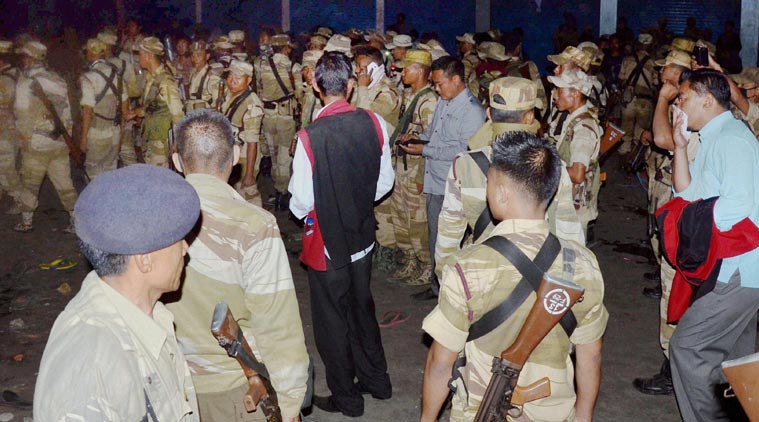
Security personnel at the site after the mob dragged out the rape accused out of Dimapur district jail and lynched in Dimapur, Nagaland on Thursday. (source: PTI)
Written by Samudra Gupta Kashyap | Guwahati | Updated: March 6, 2015 2:20 pm


A mob in Nagaland barged into the Dimapur Central Jail on Thursday afternoon, dragged out a rape accused and lynched him. Police said the mob overpowered jail security, tied up the man and dragged him for seven kilometres, thrashing him along the way. By the end, he succumbed to his injuries.

Later in the evening, curfew was imposed in Dimapur town following incidents of arson. “The situation is grim. The rape accused is said to be an illegal Bangladeshi infiltrator,” Nagaland DGP L L Doungel, who rushed from Kohima to Dimapur, said. He added that a few arrests had been made.

The victim has been identified as 35-year-old Syed Farid Khan, a small-time trader who dealt in scrap and used motor cars. The incident triggered a backlash against Bangladeshi immigrants, with houses and shops run by them coming under attack.

RELATED
Abducted Dimapur Schoolboy Freed
As Traders Protest,Nagaland Wakes Up To Extortion Menace
To Avoid Rape,Stop Dressing ‘Indecently’: Naga Women’S Body

Incidentally, the state has been in the grip of an agitation over the issue of illegal immigrants for the past two weeks.

According to reports, despite Section 144 being imposed in Dimapur since Wednesday evening, the Naga Students’ Federation (NSF) and some other local groups called a rally on Thursday to protest against the alleged rape. In the afternoon, a mob rushed to the jail, broke open the gates by overpowering the security personnel on duty. Khan was stripped, tied up and dragged to City Clock Tower area — being kicked and pelted with stones along the way.

Khan was accused of raping a student of a local women’s college on February 24. The NSF and other groups had earlier demanded that he should not be granted bail.

When police turned up to remove Khan’s body, the mob started pelting stones, injuring several personnel. The police then resorted to lathi charge and opened fire. The mob also set an Indian Reserve Battalion bus on fire.

The mob then headed to Purana Bazar area, where the rape-accused had his shop, and reportedly set several shops and houses on fire.

Nagaland Chief Minister T R Zeliang, who is in New Delhi, called up senior ministers and officers, following which a government statement was issued asking people to show restraint. As visuals of the lynching started doing the rounds, the state government requested the media not to share them — in a bid to prevent any more violence.

“Many ugly, objectionable pictures are already on social media, but the traditional media, which is available more widely, has been requested to be more sensitive and apply self censorship to help mitigate the possible ramifications,” the appeal read.
http://samotalis.blogspot.com/

19 February, 2015

Saudi Arabia and the Muslim Brotherhood: a conditional return


Saudi Arabia and the Muslim Brotherhood: a conditional return
Muhammad Al-Sadiq


Saudi Foreign Minister Prince Saud Al-Faisal


The recent statements made by Saudi Foreign Minister Prince Saud Al-Faisal in which he said, "Our problem is not with the Muslim Brotherhood per se but with a small faction of the group and our concern that they will not pledge allegiance to a higher power", gave the Brotherhood renewed hopes that they might be able to return to the kingdom and the neighbouring Emirates after a campaign was launched against them to ensure that they do not gain a seat in power where possible.

Over the course of the last week, there have been many media leaks regarding the kingdom's decision on how to classify the Muslim Brotherhood and these statements have given the movement a renewed sense of hope after it was leaked that Abdel Fatah Al-Sisi had described the Gulf states as a group of "half-states". Sisi went on to lament that the Gulf states had so much money that their wealth was "as abundant as rice" and went on to emphasise that his relationship with them was a "give and take" relationship.

With Saud Al-Faisal's new statements, the question that everyone seems to be asking is what will the renewed relationship between Saudi Arabia and the Muslim Brotherhood look like and what are the Kingdom's terms for the group's rehabilitation. We must keep in mind that the Gulf states have already placed the Muslim Brotherhood on their list of terrorist groups and that the group's dynamic in the Arab world has largely changed post Arab Spring. Yet, it is important to note that the relationship between the Muslim Brotherhood and the Kingdom of Saudi Arabia is one that has its own long-standing history.

The history of the relationship between the Muslim Brotherhood and Saudi Arabia dates back to the group's establishment with Sheikh Hassan Al-Banna, who had developed a strong relationship with the kingdom in order to take advantage of the Hajj season, which Al-Banna was keen to attend every year. However, the relationship changed in the middle of the 1950s when the group clashed with the common opponent, Gamal Abdel-Nasser. After members of the group attempted to assassinate Abdel-Nasser, the Egyptian government forced many of the Brotherhood's members into jail while others fled to the Saudi Arabia, which provided them with a safe haven. In fact, the kingdom at the time, allowed Brotherhood members to control some of the state's institutions, such as religious and educational affairs, and provided them with the opportunity to strengthen their economic ties, create their own companies and even granted some of the group's leaders Saudi citizenship.

But the pure nature of this relationship was negatively affected by a series of regional circumstances, among them being the Muslim Brotherhood's decision to support the Iranian Revolution under the leadership of Ayatollah Khomeini. Soon after came the Gulf War to add more fuel to the fire. The then Iraqi President Saddam Hussein invaded Kuwait and set his sights on the country's borders with the kingdom and it was at this point that the Muslim Brotherhood announced its allegiance to Saddam Hussein on the basis that it rejected King Fahad's decision to allow American and foreign troops to enter the country. This marked the first moment in history where the Muslim Brotherhood had visibly mobilised against the kingdom and in response to this declaration, Saudi Arabia considered the Muslim Brotherhood to be a group that was not thankful for the many favours that had been done for them.

Certainly, the nature of the relationship was a "give and take relationship" for just as Saudi Arabia allowed the Muslim Brotherhood to operate within its territory through its official and semi-official institutions, the group also crystallised a political religious ideology that it was able to use as a steel arm against the kingdom's and its own political opponents both at home and abroad. There is nothing preventing the Muslim Brotherhood from returning to the heart of the kingdom so long as it agrees to abide by certain terms of a political re-positioning.

We must bear in mind the greater regional circumstances that are occupying the minds of the Saudi Arabia as many of the country's leaders are concerned with fighting ISIS, and with the growing Iranian presence as well as US-Iranian rapprochement. There is also the issue of the increasing chaos in Yemen. In light of all these situations, it is impossible for us to expect that the kingdom will re-consider its foreign policy; however, the Muslim Brotherhood will have to meet certain conditions if it wants to make a comeback in the kingdom and if they want to survive in the Gulf at large.

This article was first published in Arabic by alaraby.co.uk


http://samotalis.blogspot.com/

11 February, 2015

Saudi Gazette | British Muslims protest Charlie Hebdo caricatures

British Muslims protest Charlie Hebdo caricatures
Mon, 09 Feb 2015 13:38:42 AST
Saudi Gazette | LONDON — Thousands of British Muslims protested against caricatures in French satirical magazine Charlie Hebdo, in a demonstration near the office of Prime Minister David Cameron on Sunday.

The crowd marched to Downing Street holding signs reading "Charlie and the abuse factory", "We love Prophet Muhammad (peace be upon him) more than our lives", and "To insult is not freedom".

Speakers addressed the protest and held communal prayers, before representatives delivered a petition signed by over 100,000 British Muslims to Cameron's office.

The petition describes caricatures as "an affront to the norms of civilized society". — AFP

30 January, 2015

Saudi King Salman cements hold on power

Saudi King Salman cements hold on power

Two sons of late King Abdullah relieved of responsibilities and heads of intelligence and other key agencies replaced.Two sons of the late King Abdullah relieved of their responsibilities in the shake-up by King Salman [Reuters]


Saudi Arabia's new King Salman bin Abdulaziz al-Saud has cemented his hold on power with a government shake-up.

Thursday's changes saw two sons of the late King Abdullah relieved of their responsibilities, and the heads of intelligence and other key agencies replaced alongside a cabinet shuffle.

High-level officials from the Ports Authority, the National Anti-Corruption Commission and the religious police were among those let go.

The new appointments came a week after Salman acceded to the throne following the death of Abdullah, aged about 90.

Salman also reached out directly to his subjects on Thursday. One of his more than 30 decrees ordered "two months' basic salary to all Saudi government civil and military employees", the Saudi Press Agency (SPA) said.

Students and pensioners got similar bonuses.

"Dear people: You deserve more and whatever I do will not be able to give you what you deserve," Salman said later on his official Twitter account.

He asked his citizens to "not forget me in your prayers".

SPA said Salman "issued a royal order today, relieving Prince Khalid bin Bandar bin Abdulaziz al-Saud, chief of general intelligence, of his post."

General Khalid bin Ali bin Abdullah al-Humaidan became the new intelligence chief, holding cabinet rank.

Separate decree

The change comes after authorities in Saudi Arabia last year blamed suspects linked to the Islamic State of Iraq and the Levant (ISIL) group for shooting and wounding a Dane, and for killing minority Shia Muslims.

A separate decree said Prince Bandar bin Sultan, a nephew of Abdullah, was removed from his posts as secretary-general of the National Security Council and adviser to the king.

Prince Bandar was the kingdom's ambassador to the US for 22 years until 2005, before moving to Saudi Arabia's Security Council.

Two sons of Abdullah were also fired: Prince Mishaal, governor of the Mecca region, and Prince Turki, who governed the capital Riyadh, according to the decrees broadcast on Saudi television.

Another of Abdullah's sons, Prince Miteb, retained his position as minister in charge of the National Guard, a parallel army of around 200,000 men.

Salman, 79, a half-brother of Abdullah, named a 31-member cabinet whose new faces include the ministers for culture and information, social affairs, civil service, and communications and information technology, among others.

Ali al-Naimi, oil minister; Prince Saud al-Faisal, foreign minister; and Ibrahim al-Assaf, finance minister, stayed in the cabinet of the world's leading oil exporter.

A 50 percent fall in global oil prices since last June has left Saudi Arabia projecting its first budget deficit since 2011, but government spending is set to continue.

Salman merged the ministries of higher education and education, naming Azzam bin Mohammed al-Dakheel to head the super-ministry.

Saudi Arabia is trying to improve its basic education system and has built more universities as it seeks to diversify its oil-dependent economy.

Stock market regulator

Another decree replaced the chief of the country's stock market regulator, ahead of a mid-year target for opening the Arab world's largest bourse to foreign investors.

Hours after Abdullah died on January 23, Salman appointed his son, Prince Mohammed bin Salman, as defence minister.

Prince Mohammed bin Nayef, the powerful interior minister, became second in line to the throne, while Deputy Crown Prince Muqrin, 69, was elevated to king-in-waiting.

Muqrin would reign as the last son of the kingdom's founder, Abdulaziz bin Saud, leaving Mohammed bin Nayef as the first of the "second generation", or grandsons of Abdulaziz.

In March 2014, Abdullah named Muqrin to the new position of deputy crown prince with the aim of smoothing succession hurdles.

The appointment of Prince Mohammed bin Nayef helps to solidify control by Salman's Sudairi branch of the royal family.

Their influence had waned under Abdullah.

Saudi Arabia is the birthplace of Islam and home to the holy cities of Mecca and Medina.

Along with other countries in the Gulf, Saudi Arabia has joined a US-led air campaign against ISIL that has seized parts of Syria and neighbouring Iraq.

Source: AFP
http://samotalis.blogspot.com/

26 January, 2015

Turkish President Erdoğan launches projects in Somalia under tight security


Turkish President Erdoğan launches projects in Somalia under tight security


MOGADISHU - Agence France-Presse


Turkey's President Recep Tayyip Erdoğan, center, and Somalia President Hassan Sheikh Mohamud, second left, with their wives, attend the cutting of the tape for the new airport terminal in the capital Mogadishu, Sunday Jan. 25, 2015. AP Photo

Turkish President Recep Tayyip Erdoğan visited the Somali capital of Mogadishu yesterday, under tight security to launch Turkish-sponsored development projects including an airport terminal.

Hundreds of soldiers and police officers had shut down much of the capital’s streets, where on Jan. 22 five people were killed in a suicide attack on a hotel housing the Turkish delegation in Mogadishu.

Somalia’s Al-Qaeda-affiliated Shebab rebels – who are fighting to overthrow the country’s internationally-backed government – said they carried out the bombing, the latest in a string of attacks by the group against high-profile targets in Mogadishu.

Erdoğan praised the “major developments” seen in Somalia, after he was welcomed at the new Turkish-renovated airport by his counterpart, Somali President Hassan Sheikh Mohamud.

Turkey is a major investor in Somalia, including carrying out a series of major construction projects in a city left devastated by over two decades of war, and now undergoing a major building boom.
Mohamud praised Turkey’s “prominent, exemplary role” in Somalia, where unlike most nations, Turkish citizens live and work outside heavily fortified compounds.

“Turkey did not hold back, waiting for stability before it invested. Instead, it invested to achieve it,” Mohamud said.

“Where other international partners chose to plan their interventions from elsewhere, Turkey put its people on the ground in Somalia.”

Erdoğan last visited Mogadishu in 2011 as the then prime minister, the second major leader to visit the city in years, a few months after Uganda’s Yoweri Museveni.

Erdoğan had originally planned to visit Mogadishu on Jan. 23, but postponed the trip to attend the funeral of Saudi Arabia’s King Abdullah.

The visit to Somalia ends Erdoğan’s Horn of Africa tour, which has included visits to Ethiopia and Djibouti, a key port on the Gulf of Aden and the entrance to the Red Sea.

Both countries contribute troops to the more than 20,000-strong African Union force in Somalia, which is battling the Shebab.

January/25/2015


http://samotalis.blogspot.com/

30 December, 2014

Turkey to sponsor all Gaza children who lost their fathers in latest war

The Turkish Red Crescent Society announced on Monday that it would sponsor all the Palestinian orphans who lost their fathers in the latest Israeli war on the Gaza Strip.


While in the office of the Palestinian minister of social affairs, the director of the Turkish Red Crescent in Gaza Arda Tarhan said to journalists: "We are here to sign the protocol for a project to distribute Zakat funds for 1905 orphans whose fathers were killed in the recent Israeli war."

Tarhan said that the implementation of this project would be in cooperation with the Palestinian ministry of social affairs, noting that each orphan would receive $102 each month.

Deputy Social Affairs Minister Yousef Ibrahim said that this money would lessen the suffering of the children who lost their fathers.

According to the ministry, the latest Israeli war on Gaza left 2,000 children orphaned.


http://samotalis.blogspot.com/

09 October, 2014

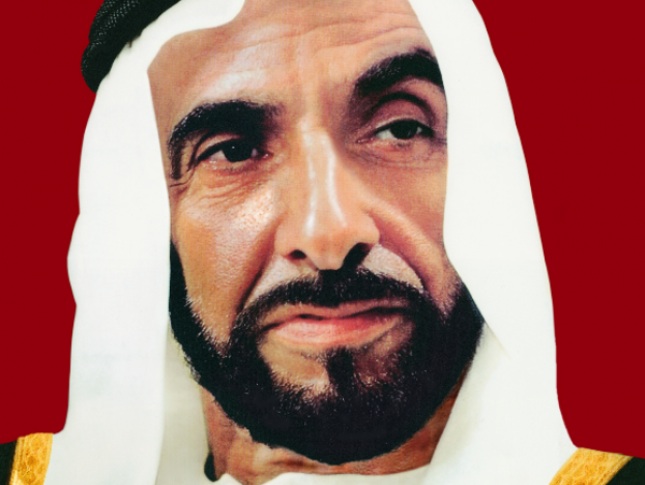
7 Things World Leaders Should Learn From Sheikh Zayed

7 Things World Leaders Should Learn From Sheikh Zayed

sheikhzayed
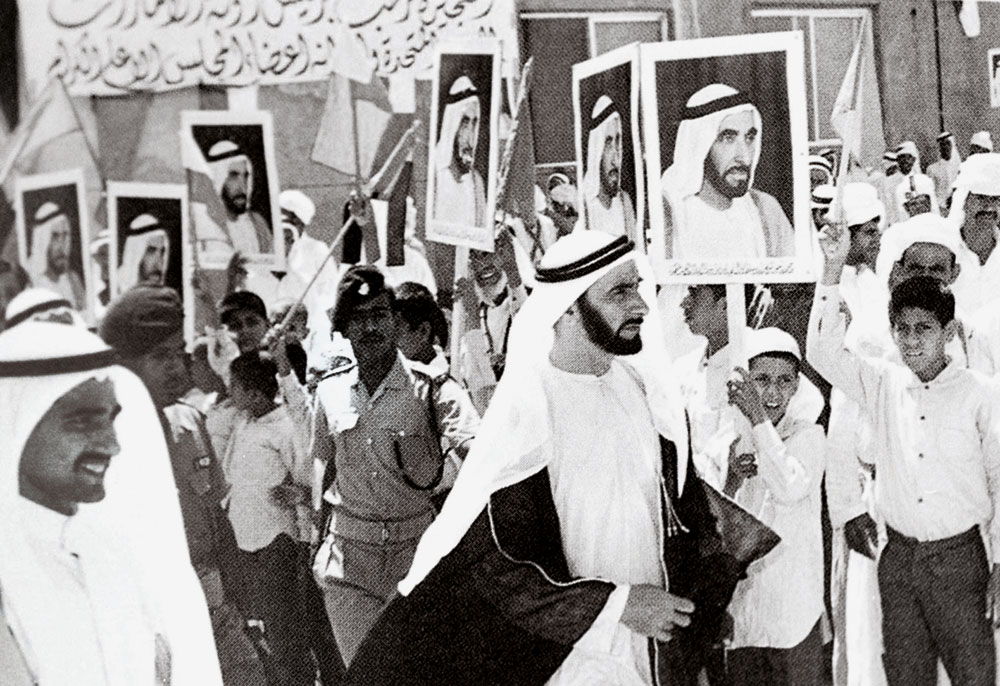
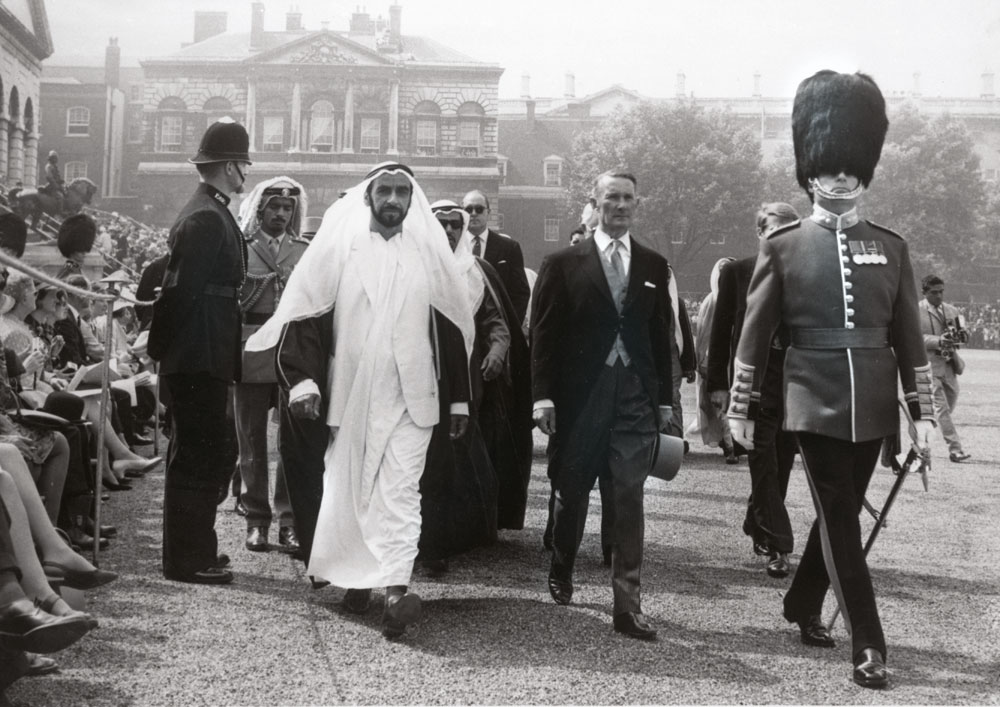
Thanks to the integrity and vision of Sheikh Zayed and his successors, in short of half a century, the UAE has taken the world by storm.
“If only [country] were like this,” is a phrase we hear a lot in the UAE. We think a few of the world’s “leaders” could learn a few things from this great man.


1. Vision


sheikhzayedvision
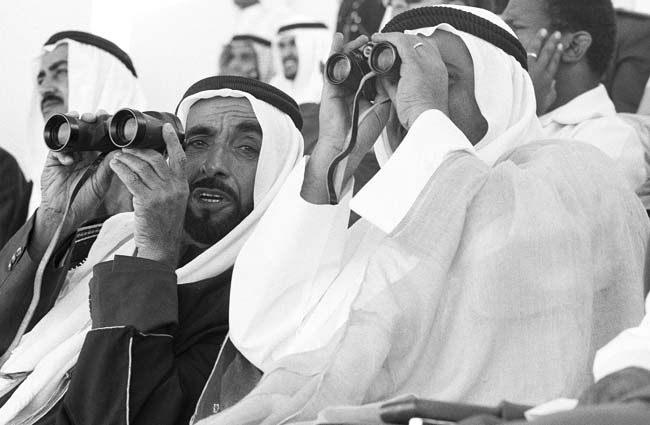
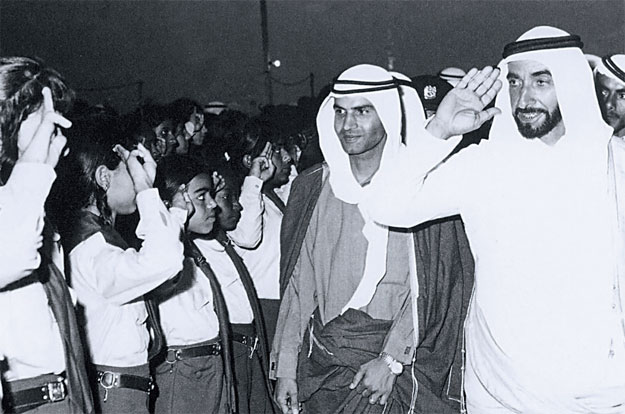
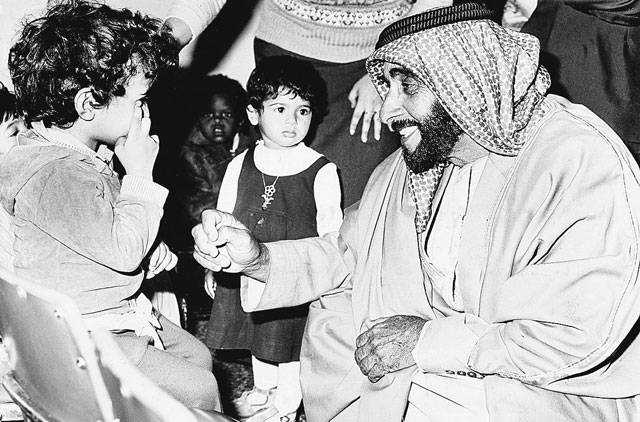
Sheikh Zayed bin Sultan Al Nahyan, also known as the “Father of the Nation”, ruled Abu Dhabi from 1966 to 2004 and was the first President of the United Arab Emirates. Sheikh Zayed took his love and respect for traditional values, the environment and transformation and applied it to the nation. He personally funded the first modern school. He had a vision for the UAE, uniting it as one and pushing international limits in all industries.


2. Put your country first


sheikhzayedcountryfirst
No one can deny that the UAE is where it is today because Sheikh Zayed put the UAE’s best interests first. Unlike many corrupt leaders, Sheikh Zayed’s initiatives were always for the nation. HRH (High Royal Highness) took a Bedouin desert land and transformed it into one of the biggest hubs of the world. Where there was no water, they put water. Where there was sand and beach, they created man-made islands. The impossible was made possible to put the UAE on the map.


3. Love and respect your people


sheikhzayedpeople
The UAE takes care of its own. Whether it’s housing, education or a laptop, the government makes sure its citizens are in good hands. Have you ever noticed the lack of Emirati residents around the world? They go home, that’s why. There’s almost zero brain drain in the UAE. There is so much love and respect towards citizens that expat residents feel the love, too. They even spread love and joy through initiatives like #MyDubai and #HappyDubai. When your country takes care of you, you take care of the country.


4. Foreign Relations


sheikhzayedforeingrelations
The world doesn’t mess with the UAE. They’ve managed to place themselves in a powerful position that is both respected, a little intimidating and yet liked. Sheikh Zayed made sure that the UAE stands up for its beliefs in the global forum, while maintaining positive diplomatic ties.


5. Tolerance


sheikhzayedtolerance
It’s not uncommon to find a woman in a short skirt and tank top walking next to another in a abaya and veil. Most often than not, they keep to themselves and don’t judge each other. To each his own. Sheikh Zayed and his successors have welcomed expats from around the world who have made the UAE their home. As long as they’re respecting the culture, everyone’s tolerant of the other.


6. Respect for Rules


sheikhzayedrespect
Every country has rules and everyone country has those who break them. What’s strange though, is that people are terrified to break the rules in the UAE. They don’t mess around: You’re either put in jail or deported. The best part is, people don’t want to be sent home (or go to jail), so they behave.


7. Humility


4002008153
The Emirati royal family is ballin’. We all know that. Between islands and cruiseline yachts, they’re rolling in riches – but you would never feel it. Their humility is contagious. Sheikh Zayed was known for his humble generosity, as are his successors.
Sheikh Mohamed Bin Rashid Maktoum of Dubai has been seen eating a casual lunch in DIFC, inviting those around him.
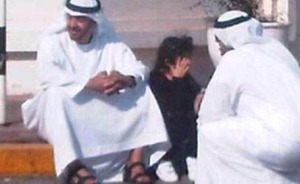
sheikhSheikh Mohammed bin Zayed, the crown prince of Abu Dhabi was spotted sitting next to a little girl on the curb who was lost until her father came to pick her up. He had offered to drive her home but she said she wasn’t allowed to talk to strangers, so he parked down right beside her on the curb and waited with her.


Sheikh Zayed is honored all over the UAE and there’s no doubt as to why. He was a phenomenal leader, may he rest in peace.
The world’s leaders should take note!


Read more: 7 Things World Leaders Should Learn From Sheikh Zayed http://scoopempire.com/7-things-world-leaders-learn-sheikh-zayed/#ixzz3FdSAoDJU
Follow us: @ScoopEmpire on Twitter | ScoopEmpire on Facebook


http://samotalis.blogspot.com/

08 October, 2014

Afghan executions: Five hanged for Paghman gang-rape


Afghan executions: Five hanged for Paghman gang-rape

An Afghan woman holds a placard reading in Darri "Be executed" during a protest against a high-profile gang rape case that shocked the capital Kabul, in Herat, Afghanistan, 08 September 2014The rapes, which happened near Kabul in August, caused outrage

Related Stories

Five Afghan men convicted of gang-raping four women have been executed in a case that sparked national outrage.
Officials say the men were hanged at Pul-e-Charkhi prison east of Kabul. A sixth man convicted of unrelated crimes was also hanged.
The authorities ignored last-minute appeals for clemency from rights groups who said the convictions were unsafe.
Violence against women in Afghanistan is rife but correspondents say cases rarely attract this much attention.
Many Afghans had demanded the death penalty. Correspondents say that given public opinion, there was little chance of the sentences not being carried out.
Afghan police officers take positions before the execution of six men sentenced to death at a jail in Kabul, Afghanistan, Wednesday, Oct. 8, 2014.There was tight security outside Kabul's main prison
"The court's verdict has been implemented and all the convicts have been executed - five from the Paghman case, plus Habib Istalifi, who was head of a notorious kidnapping gang," the attorney general's chief-of-staff Atta Mohammad Noori told AFP news agency.
Former President Hamid Karzai signed the death warrants on his last day in office. There was no word from new President Ashraf Ghani, who took over in September.
The 23 August rapes took place at night at a popular picnic spot in Paghman district near Kabul as the women were returning to the capital with their families from a wedding.
The attackers - armed and some dressed in police uniforms - tied up the men in the group and dragged the women from their cars before raping them.
There was a chorus of outrage. Many campaigners in Afghanistan - where women who are raped sometimes find themselves accused of adultery and punished - even wanted the executions to go ahead, correspondents say.
One of four female victims of a gang-rape attends a court hearing in Kabul, Afghanistan, 07 September 2014.One of the women who was raped is seen here giving evidence in court
But critics say the legal process was rushed - the televised trial took only two hours. One defendant said he had been tortured into confessing.
The UN's High Commissioner for Human Rights expressed "grave concerns" that hanging the men would not deliver justice to them or their victims. International human rights groups also criticised Mr Karzai for calling for the men to be hanged even before they were tried.
Amnesty International called the hangings an "affront to justice".
The five were originally sentenced to death for armed robbery along with two other men. The other two, who were not convicted of rape, later had their death sentences commuted to life in prison.
In a separate case, police said they had been pursuing Habib Istalifi, the sixth man to be hanged for crimes unconnected to the gang rape, for the past 10 years.
"He was head of a major crime gang involved in several cases of kidnapping and armed robbery," Hashmat Stanekzai, a Kabul police spokesman, told the BBC. "He was involved in several murders of vehicle drivers."
Capital punishment is relatively rare in Afghanistan.
Since the Taliban were ousted in 2001, hundreds of people have been sentenced to death but Mr Karzai signed warrants for the execution of just 30, BBC correspondents say.

http://samotalis.blogspot.com/

06 August, 2014

Baroness Warsi wants end to UK complicity in Israeli war crimes

Baroness Warsi wants end to UK complicity in Israeli war crimes
Shazia Arshad


Baroness WarsiThis morning Baroness Warsi took the brave and courageous decision to resign from the British government over its policy on the current conflict in Gaza. After writing to the prime minister, she tweeted "With deep regret I have this morning written to the Prime Minister & tendered my resignation. I can no longer support Govt policy on #Gaza."


Baroness Warsi' s resignation comes in the wake of Ed Miliband's comments last week when he said that the prime minister was "in the wrong" on his position on Gaza and that his silence was "inexplicable". It is not just from the Labour opposition that the prime minister has been facing difficulties, his own MPs have been applying further pressure. Last week Conservative MP Margot James, PPS to William Hague (former Foreign Secretary) said: "I ask that the government rethinks policy towards the conflict in Israel and the Palestinian territories."

As pressure builds around Cameron, Warsi has taken the decision to resign from the government as she feels she can no longer support the position on Gaza. In her letter to the prime minister she said that she "always said that long after life in politics I must be able to live with myself for the decisions I took or the decisions I supported. By staying in Government at this time I do not feel I can be sure of that." Her principled stand was further explained in an interview with Mehdi Hassan where she explained: "the British Government can only play a constructive role in solving the Middle East crisis if it is an honest broker, and at the moment I do not think it is."

Baroness Warsi's summation of Britain's position as an honest broker is perhaps one of the most honest comments to come from a (now former) government minister since the current conflict in Gaza erupted. Despite the continued devastation and huge destruction being caused to the Gaza Strip and its population there has been little attempt by the British government to stand up to Israeli aggression. Indeed, behind the scenes reports have been circulating that Foreign Office officials have been unhappy with the government's position on Israel and Palestine for some time and Warsi's resignation seems to confirm this. The reality is that there are deep stirrings within the British establishment over the UK's role in the Middle East, clearly many people are unhappy with the UK's current position. As it is, the UK continues to pursue a foreign policy which suggests it puts other interests before its commitment to international law and human rights.

Indeed, in her resignation letter Warsi noted that "as the Minister with responsibility for the United Nations, the International Criminal Court and Human Rights I believe our approach in relation to the current conflict is neither consistent with our values, especially our commitment to the rule of law and our long history of support for International Justice."

Baroness Warsi went one step further in her interview with Mehdi Hassan for the Huffington Post and called for the UK to introduce an arms embargo. It seems now that there are more and more Conservatives who are no longer willing to watch in silence as the UK becomes complicit in Israeli war crimes. Baroness Warsi has put her principles before her career, paving the way for many others to do the same.


http://samotalis.blogspot.com/

05 August, 2014

Baroness Warsi quits as Foreign Office minister over Gaza

Baroness Warsi quits as Foreign Office minister over Gaza


Foreign Office minister Baroness Warsi has resigned from the government, saying she can "no longer support" its policy on Gaza.

She wrote on her Twitter feed that she was leaving with "deep regret".

Lady Warsi, who was previously chairman of the Conservative Party, became the first female Muslim cabinet minister when David Cameron took office in 2010.

She grew up in Dewsbury, West Yorkshire, and worked as a solicitor before entering politics.

Lady Warsi was demoted from the cabinet to a middle-ranking Foreign Office post in 2012. She was made minister for faith and communities at the same time.

She wrote on Twitter on Tuesday: "With deep regret I have this morning written to the Prime Minister & tendered my resignation. I can no longer support Govt policy on #Gaza."

One of five daughters of Pakistani immigrants, Lady Warsi studied at Leeds University, later working for the Crown Prosecution Service before setting up her own legal practice.

http://samotalis.blogspot.com/

27 June, 2014

Women don’t need mahram OK for travel within KSA

Women don’t need mahram OK for travel within KSA


Saudi women stand at the entrance of a shopping mall, in this November 7, 2013 file photo. (AFP)


RIYADH: ARAB NEWS
LATEST STORIES IN SAUDI ARABIA


Expanded Grand Mosque ready for Ramadan

Rise in child harassment warrants national campaign
Governor stresses need to stick to time frame for Riyadh projects
‘Security at Pakistani airports worrying’
Police thwart man’s plot to kill brother
More


Around 64 percent of Saudi women are unaware of their right to travel inside the Kingdom without obtaining the approval of their guardians, local media reported, quoting a recently published study.
Similarly, the study found that 59 percent of Saudi men were oblivious that women are allowed to travel domestically without the prior consent of guardians.
The study, which was conducted by Khadija bint Khuwailid Center for Businesswomen at the Jeddah Chamber of Commerce and Industry, was designed to measure public opinion regarding Saudi women’s participation in national development and the problems facing them in the labor market.
Around 3,000 male and female individuals above 18 years old were randomly selected from 11 cities across the Kingdom to participate in the study.
The study also found that 66 and 70 percent of women and men respectively strongly rejected the idea of women traveling without their guardian’s consent.
Meanwhile, Brig. Gen. Suleiman Al-Yahya, director-general of
the Passport Department, said the department has no intention of canceling travel permits for women.
The only exception will be made for women abroad on scholarship, he said.
Citizens living abroad will no longer need to employ paperwork agents or visit passport offices and will instead be able to use the Abshir online system.
“This online system is fully protected from hacking attempts,” he said.


The Interior Ministry, meanwhile, has promised to implement an e-linkage project between the Social Affairs, Justice and Commerce Ministries.
“Citizens find it easy to criticize system shortcomings because they are oblivious to the amount of work undertaken by the department in enhancing performance and expanding services,” he said. “The mediator phenomenon will soon disappear.”
“There are 500,000 Saudi citizens living in Egypt and 150,000 living in Kuwait,” said Ambassador Osama Al-Sanousi, undersecretary for Consular Affairs.
“The ministry, however, does not have accurate statistics about the number of Saudis living permanently in other countries because of the absence of a mechanism to monitor such figures,” he said. “As such, Saudis living abroad should register at the local embassies in the countries in which they reside.”
“In addition, Saudis living abroad should refrain from discussing sensitive topics and should only answer questions in the presence of a lawyer in the event of arrest,” he said.
“Embassies are tasked with bailing out their citizens and protecting them getting into prison,” said Al-Sanousi.


http://samotalis.blogspot.com/

$2bn fund to drive growth in Muslim world


$2bn fund to drive growth in Muslim world


Ahmad Mohamed Ali, president of the IDB Group.


JEDDAH: ARAB NEWS
LATEST STORIES IN FEATURED


FDI drops but Kingdom upbeat on investments

Al-Jasser appointed new Saudia chief
Top sports body has new head
King orders high alert to fight terror
New Dammam train schedule for Ramadan
More


A $2 billion Islamic Development Bank Infrastructure Fund II (known as the “IDB Fund II“) was launched on the occasion of the bank’s 40th anniversary, said Ahmad Mohamed Ali, president of the IDB Group.
The IDB Fund II is the largest private equity infrastructure fund dedicated to the 56-member countries of the IDB. The bank’s board of governors has reappointed Ali as its president for the next five years.
The IDB Fund II is supported by the Public Pension Agency of Saudi Arabia, the Public Investment Fund of Saudi Arabia, the Ministry of Finance of Bahrain and the Ministry of Finance of Brunei Darussalam as founding investors, with aggregate commitments totaling nearly $750 million for the first closing. A final closing with additional investors is targeted for early 2015.
The fund will have a broad sectorial focus beyond the core infrastructure sectors of power, telecommunications and transportation and will include investment in oil and gas, refinery and petrochemicals, steel and aluminum, mining, logistics and an allocation for health care, education and financial services.
The IDB Fund II is the successor to the $730 million IDB Infrastructure Fund I (the IDB Fund I), also supported by the founding investors, which achieved an IRR of 18 percent and an investment multiple of 1.7 times across signature projects such as AirAsia in Malaysia, the Saudi International Petrochemical Company (Sipchem) in Saudi Arabia and AES Oasis Ltd., with power assets in Pakistan, Oman and Jordan.
“Building on the successful track record of IDB Fund I, the IDB and founding investors are nearly tripling the size of the IDB Fund II to $2 billion,” said Ali. “The fund will mobilize up to $24 billion of aggregate financing to support the development of key infrastructure projects in IDB member countries.”


IDB and the founding investors have established ASMA Capital Partners, based in Bahrain, as a multi-fund asset management platform to manage the IDB Fund II.
The chairman of ASMA Capital is the president of the IDB Group and the vice chairman is Mohammed Al-Kharashi, governor of the Public Pension Agency of Saudi Arabia. Members of the board of directors are Abdullah Al-Ayadhi, representing the Public Investment Fund (KSA), and Sami Humaid, representing Bahrain’s finance ministry.
Mohammed Al-Kharashi said: “ASMA Capital is expected to play a significant role in assisting pension funds and other global investors seeking to deploy capital into infrastructure projects in select emerging markets for portfolio diversification and stable return.”


http://samotalis.blogspot.com/

10 May, 2014

Lawyer for doctor in Bin Laden case quits over security

Lawyer for doctor in Bin Laden case quits over security
Dr Shakil Afridi is serving a 23-year jail term
Related Stories
Bin Laden doctor's sentence reduced
Profile: Shakil Afridi
Q&A: Bin Laden raid doctor Shakil Afridi speaks out

The lawyer for a doctor accused of helping the US find Osama Bin Laden has told the BBC that he has quit the case after receiving death threats.

Lawyer Samiullah Afridi also cited US pressure on Pakistan for the release of Dr Shakil Afridi as another reason for his decision.

Dr Afridi is accused of using the cover of a door-to-door vaccination campaign to help the US find Bin Laden.

Pakistan was not informed of the 2011 raid which killed the al-Qaeda leader.

Samiullah Afridi told the BBC that his life had been under threat since he took up the case two years ago.

Mr Afridi - who is not related to Dr Afridi - was reported to have left Pakistan in December last year because of safety fears.

He said that militants had now given him a deadline to choose the "right way", by which they meant to leave the case.

"I took the case on humanitarian grounds, but now I have to look for my own life, it is more important" he said.

He also said US pressure on Pakistan to release the doctor was "inappropriate" and was hindering the case.

In addition, he said Washington's continued refusal to release Dr Aafia Siddiqui - a US citizen of Pakistani origin jailed for alleged links to al-Qaeda - was also "creating hurdles".

Mr Afridi, one of four lawyers representing the doctor, said he had "no option" but to quit the case.US pressure

Dr Shakil Afridi was convicted of alleged ties to militant groups and sentenced to 33 years in jail by a tribal court in 2012.

The sentence was widely seen as punishment for his alleged role in the Bin Laden raid, which he denies.

His jail term was reduced by 10 years by a court in Peshawar earlier this year, after pressure from the US and the doctor's relatives.

However, he still faces a separate trial in which he is explicitly accused of colluding with the CIA.

US special forces entered Bin Laden's compound in Abbottabad and shot him before flying the body out of Pakistan and burying it at sea.

The raid was acutely embarrassing for Pakistan and the episode plunged relations with Washington to a new low.

More on This Story

Related Stories
Bin Laden doctor's sentence reduced15 MARCH 2014, ASIA
Profile: Shakil Afridi11 SEPTEMBER 2012, ASIA
Q&A: Bin Laden raid doctor Shakil Afridi speaks out11 SEPTEMBER 2012, ASIA
Jailed Bin Laden doctor refuses to stay silent07 DECEMBER 2013, ASIA
Was 'Bin Laden doctor' a pawn?24 MAY 2012, ASIA


http://samotalis.blogspot.com/

11 April, 2014

The Obama administration must hold Egypt’s rulers to the standards of democracy


The Post’s View
The Obama administration must hold Egypt’s rulers to the standards of democracy


By Editorial Board,

SECRETARY OF State John F. Kerry has made clear that he is eager to certify that the Egyptian regime of Gen. Abdel Fatah al-Sissi is “taking steps to govern democratically,” as Mr. Kerry is required to do by law before military aid to Egypt can be fully resumed. But Mr. Kerry conceded a few weeks ago that the generals “need to help us help them . . . by implementing some of the reforms that we’ve been talking to them about with respect to inclusivity, journalists, some of the arrests and so forth.”

Unfortunately for Mr. Kerry, Gen. Sissi — who recently announced that he will be a candidate in a presidential election next month — doesn’t appear inclined to be helpful. On Monday, an Egyptian court upheld three-year sentences for three of the country’s best-known political prisoners. Ahmed Maher and Mohammed Adel are founding members of the April 6 movement, a secular liberal group that led the demonstrations that brought down the regime of Hosni Mubarak in 2011; Ahmed Douma is another young pro-democracy activist. All three were convicted of protesting a law that bans public demonstrations not sanctioned by the government, a repressive statute, imposed by the military regime, that both Egyptian and foreign human rights groups say is at odds with Egypt’s constitution.


Washington Post Editorials

Editorials represent the views of The Washington Post as an institution, as determined through debate among members of the editorial board. News reporters and editors never contribute to editorial board discussions, and editorial board members don’t have any role in news coverage.

Read more

Numerous Egyptian civilian leaders who supported Gen. Sissi’s coup in July against the elected government of Mohamed Morsi, including his nominal opponent in the upcoming election, had called on the regime to pardon the three democrats and repeal the protest law. Instead, the government is preparing even tougher legislation. According to Egyptian news reports, thecabinet has approved two newcounterterrorism” laws that would legally define terrorist acts as including “preventing educational institutions from carrying out their work” — aimed at student protests — and “undermining the public order.”

The regime also is still persecuting the journalists to whom Mr. Kerry obliquely referred. Three Al Jazeera staffers, including citizens of Australia and Canada, have been jailed since Dec. 29 and are on trial for aiding a “terrorist group,” which is how the regime defines Mr. Morsi’s Muslim Brotherhood. Human rights groups believe more than 16,000 people, including Mr. Morsi, have been detained by the regime ;more than 1,000 have been arrested under the anti-protest law.

The State Department issued a couple of statements deploring these developments. OnMonday, it said the sentences for Mr. Maher, Mr. Adel and Mr. Douma run “counter to the Egyptian government’s commitment to fostering an open electoral environment and a transition process that protects the universal rights of all Egyptians.” Yet senior administration officials remain intent on issuing the certification following the presidential election because the legal language approved by Congress refers to the holding of elections.

That shouldn’t be possible — nor should it be tolerated by Congress. As Sen. Patrick J. Leahy (D-Vt.) said in January, “ If the military continues its repressive tactics, arresting democracy activists, and does not hold free and fair elections, the certifications will not be possible and U.S. aid will be cut off.” Mr. Kerry — and Gen. Sissi — must be held to that standard.

Read more about this issue:

Jackson Diehl: America chooses the wrong allies in Egypt

Marina Ottaway and David Ottaway: Egypt is not moving toward democracy

The Post’s View: Egypt shows no sign of turning toward democracy

The Post’s View: The White House’s empty words on supporting Egyptian democracy

The Post’s View: Egypt’s military shows it is no friend of freedom

http://samotalis.blogspot.com/

31 March, 2014

Turkish PM claims landslide election win

Turkish PM claims landslide election win

Erdogan's AKP gets more than 45 percent of votes in local polls seen as a vote of confidence amid graft allegations.

Leaked recordings allegedly document corrupted actions of Erdogan and his family members [Reuters]


Turkey's ruling party has claimed victory in the critical local elections that took place amid corruption allegations, damaging security leaks and online bans that have shaken Turkish Prime Minister Recep Tayyip Erdogan's government.

Addressing his supporters late on Sunday after the results were revealed, Erdogan said he would "enter the lair" of his enemies and make them "pay the price" for plotting his downfall. "Those who attacked Turkey got disappointed," he said.

The elections were widely seen as a vote of confidence for the rule of Erdogan and his supporters celebrated the victory throughout the night.

Erdogan's Justice and Development Party (AKP) got 45.6 percent of the votes as the main opposition Republican People's Party (CHP) scored 27.9 percent and the Nationalist Movement Party (MHP) held 15.2 percent as 98 percent of the votes were counted at Monday noon, semi-official Anatolia news agency said.

According to the agency, in Istanbul, Turkey's largest city and financial capital, the AKP held 48 percent of the votes, while the CHP got 39 percent.

The AKP also won the capital Ankara with 44.7 percent of the votes followed by the CHP with 43.8 percent.

In the Aegean province of Izmir, the country's third largest city, the CHP scored a comfortable win with 49.5 percent as AKP got 35.9 percent of the votes.

Over 99 percent of the votes were counted in all three cities.

Particularly, Ankara's results were a source of confusion throughout the night and the morning as CHP's Mensur Yavas and the AKP's Melih Gokcek, the current mayor, both declared victories multiple times.

Both the CHP and AKP blamed various media outlets with manipulation on results and called on their members not to leave ballot boxes they had been monitoring.

'AKP delivers it promises'
The AKP, which has ruled the country since 2002, came to power amid a major financial crisis and an environment of corruption. It received 38.8 percent of the votes in the last local elections in 2009 and 49.9 of the votes in the parliamentary elections in 2011.


There are no other parties apart from AKP and no leader apart from Erdogan that can get this country out of its difficulties.

Mustafa Hayir, AKP supporter


Erdogan established the AKP in 2001 with a wide-range support attracting centre-right voters, religious conservatives and some of the pro-democratisation liberals.

He lost the support of the Turkish liberal scene for the most part in the last couple of years.

"I have voted for AKP because of it actually works and delivers services. The government’s services are important for me. AKP delivers what they promise," Bedri Ucar, a 32-year-old receptionist from central Istanbul, told Al Jazeera.

"There are no other parties apart from AKP and no leader apart from Erdogan that can get this country out of its difficulties. For me the most important thing is existence and integrity of the state," said Mustafa Hayir, a 35-year-old supermarket employee from the conservative Istanbul neighbourhood of Yeni Sahra.

Ayberk Tekcan, a 38-year-old driving instructor from Maltepe on Istanbul's Asian side, believes the ruling party acts in line with its own interests, not Turkish citizens'. "Erdogan is a corrupted politician using religion as a tool. Therefore, I voted for the CHP. The AKP won the elections by fraud. I want a government that does not abuse my country," he told Al Jazeera.

Selin Sahin, a veterinary from the predominantly secular Istanbul district of Kadikoy, said she voted for the CHP just to stand against the AKP.

"It is really dire that the AKP did not lose votes despite all this happening, particularly the corruption allegations and online bans. Many people see Erdogan like a prophet. We have a serious problem in Turkey and I am not hopeful. Erdogan is going to tighten its dictatorship."

The CHP portrays Erdogan as a corrupt "dictator" clinging to power, but not struggling for the country's welfare.

Online leaks

The prime minister frequently accuses his opponents of being "traitors" because of tens of anonymous Internet postings of recorded conversations that allegedly document corrupted actions of him, his family members and his aides. Erdogan denies the claims.

The tensions in the country increased further in recent days by the leaking of a recording of a top-level security meeting.

In the recording confirmed by the government, the intelligence chief, foreign minister and military commanders discuss a possible armed intervention in Syria. The Turkish intelligence chief, Hakan Fidan, talks about staging a fake attack on Turkish soil from Syrian soil in order to start an operation on Syria.


Inside Story discusses blocking of Twitter in Turkey


Following the launch of corruption investigations and raids in December targeting businessmen with links to the government and sons of ministers, Erdogan has reshuffled thousands of employees from the Turkish judiciary and police.

The prime minister said that those behind the investigations were trying to form a "state within a state" or "parallel state" blaming the movement of Fethullah Gulen, United States-based Turkish cleric, whose followers are apparently highly influential in Turkey's police forces and judiciary.

According to Nihal Bengisu Karaca, a pro-government columnist for national HaberTurk newspaper, the government has faced illegal alliances trying to undermine its power that have no place in democratic politics.

She told Al Jazeera: "Although claims that would normally shake a government have been revealed through illegal recordings, the Turkish public have seen the danger of this organisation [the movement of Gulen] and perceived this as a more serious danger than the corruption allegations. Therefore they support the prime minister."

Cengiz Aktar, a professor of international relations and senior scholar at Istanbul Policy Center, believes that following the elections, Erdogan did not make a statement embracing the Turkish society as a whole.

"He said that Turkish democracy is even better than European democracies. This means that he is not going to take any steps for improvement in areas like democratisation and freedom of speech. He is happy with what is going on in Turkey," Aktar said.

Online bans

Turkey has recently blocked YouTube and Twitter, and has reportedly intercepted various Domain Name Systems after the leaks have been shared on the two online platforms.

Ankara says that Twitter has been blocked because it has not carried out court orders to remove some content from the platform while the YouTube has been banned over the security leaks.


Listening Post discusses online bans in Turkey


It is unclear who recorded the leaked conversations and posted them on YouTube and Twitter - though officials point a finger at Gulen’s movement.

Many analysts say that the movement of Gulen and AKP used to be allies in the past in their struggle against Turkey's politically dominant military.

Nowadays, Erdogan describes the movement as a "terrorist" organisation in an "alliance of evil" with major opposition parties.

Aktar believes that the government is not going to let the judiciary to investigate the corruption allegations. "This creates a serious legitimacy problem. In the modern world, it is not possible for a democratic government to keep its power like nothing happened," Aktar told Al Jazeera.

On the other hand, Karaca said that the Turkish public did not want the AKP government to brush the corruption allegations under the carpet.

"They want the suspected government members to be cleared of these claims regardless of their support for the government."


http://samotalis.blogspot.com/

27 March, 2014

Democracy Support in Turkey’s Foreign Policy

Democracy Support in Turkey’s Foreign Policy
Senem Aydın-Düzgit, E. Fuat Keyman
ARTICLE MARCH 25, 2014
SUMMARY
Ankara’s attempts to make democracy promotion a focus of its foreign policy have had only limited success, in part because Turkey is losing credibility as a democratic model.


Turkey is a newcomer to democracy promotion. Until the mid-2000s, democracy mainly figured into Turkish foreign policy as part of debates with the West, in particular the European Union, on Turkey’s own democratic transition and consolidation. Ankara’s domestic democratic record was and continues to be an important issue in its relations with Western democracies. The country remains an EU candidate, and ongoing accession negotiations mean that its internal political developments are under close EU scrutiny.

But increasingly, democracy has also become a central issue in Turkish foreign relations with the non-Western world. Turkey has started to focus on democracy promotion at two distinct levels, simultaneously trying to position itself as a model of democracy in its neighborhood and attempting to advance reform in other countries by funding democracy assistance projects. Ankara has been more successful at some of these endeavors than others, but overall it has come up against substantial challenges in its attempts to further integrate democracy promotion into its foreign policy.
A NEW FOCUS ON DEMOCRACY

In the past few years, Turkey has provided substantial amounts of international aid, and much of this money has been earmarked for democracy assistance. In 2012, it provided $3.4 billion worth of aid to 121 countries across the globe, which included numerous projects to foster democratic and governance-related reform.1According to the 2013 Global Humanitarian Assistance Report, Turkey—with a budget of $1 billion for humanitarian assistance—ranked as the fourth-largest humanitarian aid donor in 2012, after the United States, the EU, and the United Kingdom. This figure amounted to 0.13 percent of Turkey’s national income in that year. These numbers represent a substantial increase from Turkey’s previous aid and democracy assistance contributions.

The history of democracy promotion efforts in Turkish foreign policy can be traced back to the immediate aftermath of the Cold War. In the 1990s, the annual amount of Turkish official development assistance was $80–90 million. Between 1992 and 1996, Turkey allocated almost 87 percent of this aid to countries in Central Asia and the Caucasus, where Ankara was trying to enhance its economic and political influence. This figure dropped to 40 percent after 1997 as attention shifted to reconstruction in the Balkans following the ethnic conflicts in Bosnia and Kosovo.2Some assistance to these regions was dedicated to fostering democratic development.

However, the makers of Turkish foreign policy have traditionally refrained from using the rhetoric of “democracy promotion,” instead emphasizing national sovereignty and nonintervention. This noninterventionist stance stems from Turkey’s close relations with a number of authoritarian regimes in its larger neighborhood as well as from the country’s concerns about Kurdish nationalism within its own borders.

Noninterventionism remained a hallmark of Turkish policy even after 2002, when the Justice and Development Party (AKP) came to power during the country’s general election and brought substantive changes to Turkey’s foreign relations and its role in the region. The AKP government altered the place of democracy promotion in Turkish foreign policy at both the macro and micro levels. The macro level refers to the role that democracy plays in Turkey’s general foreign policy line as well as to Turkey’s potential to be a model of democracy for its wider neighborhood. The micro level is that of democracy assistance projects carried out by the various institutions of the Turkish state. While Turkey has been losing influence and credibility at the macro level, democracy assistance at the micro level has progressed considerably.
THE BIG PICTURE: A MODEL DEMOCRACY?

In terms of the macro-level role democracy plays in Turkey’s foreign policy, the AKP’s election was a crucial turning point. The party’s ascent to power became a test case of whether Islam and democracy could be compatible. The moderately Islamist AKP was a splinter party of the Welfare Party, a more overtly Islamist political party that had been ousted from power by the military in the so-called postmodern coup of February 28, 1997.

In its first term, the AKP focused primarily on Turkey’s EU accession process, passing a series of crucial domestic democratic reforms that eventually led to the opening of accession negotiations in 2005.

The period in which the AKP came to power in Turkey was also the time of the Iraq war, which substantially changed dynamics in the Middle East. As the United States in particular came to attach more importance to democratization in the region, the Turkish experience with democratic consolidation under the AKP emerged as a possible model for other Middle Eastern countries. Various AKP policy initiatives sought to promote the idea that Turkey could serve as an example of a successfully democratizing country for other states in the region. To that end, Turkey increased civil society contacts and exchanges with its neighbors through a liberalized visa regime, enhanced economic and trade relations, and created scholarship programs for students from the Middle East and the Balkans to study in Turkey. The increasingly transnational activities of Turkish civil society organizations and businesses—and even Turkish soap operas, widely watched across the region—further contributed to strengthening Turkey’s soft power and visibility in its neighborhood.3

However, the supposed attractiveness of the “Turkish model” masked the reality that the AKP’s initial foreign policy line at the macro political level in fact de-emphasized democratic concerns. The party’s motto, “zero problems with neighbors,” reflected its desire to use Turkey’s Ottoman legacy and its socioeconomic ties to the region to rekindle relations and avert tensions with both democratic and nondemocratic partners in the Middle East. Within this framework, Turkey initiated new dialogues with countries such as Iraq, Iran, and Syria as well as with the Kurds in Northern Iraq.

This policy was no longer tenable after the onset of the Arab Spring, which radically changed Turkey’s foreign policy calculations. Although Ankara initially hesitated on whether or not to support the burgeoning democracy movements, particularly in Libya and Syria, it eventually aligned itself with the popular revolts.

Still, Turkey continues to enjoy close relations with a number of its nondemocratic neighbors. It refrains from bringing up democracy and human rights concerns with some of these regional partners, including Azerbaijan and the Gulf states.

In addition, the Turkish government has used strong rhetoric to criticize the Alawite regime of Syrian President Bashar al-Assad, which has given rise to the perception that the Sunni AKP government in Turkey is a sectarian actor. This development has prompted severe doubts about the impartiality of Turkey’s discourse on democracy in the region. While Turkey was careful not to project the image of being a sectarian actor in the initial stages of the Syrian conflict, the government abandoned this caution as Assad clung to power. The AKP has also used anti-Shia discourse to discredit its domestic opposition, which has further exacerbated this problem.

The Turkish government’s response to the July 2013 military coup in Egypt that overthrew Mohamed Morsi, the country’s Muslim Brotherhood–backed president, also eroded its image as an impartial actor. Turkey was highly critical of the coup and expressed strong support for the Muslim Brotherhood both at home and abroad. Its backing of Morsi’s government and subsequent outrage at his ouster appeared to many to be more an act of solidarity by the AKP with the Muslim Brotherhood than a principled stance in favor of liberal democracy. The AKP seemed to be drawing direct parallels to its own historical struggle against the Turkish military and the secularist establishment. But Turkish citizens who expressed caution about the country’s strong engagement in the Egyptian crisis were quickly branded by the government in Ankara as undemocratic coup supporters.
THE MICRO LEVEL: TURKISH DEMOCRACY ASSISTANCE

Although Turkey’s commitment to nonintervention prevents it from having an institutionalized democracy assistance policy like those of the United States or the European Union, Ankara under the AKP has emerged as a major international donor of development aid, including governance and democracy assistance. The volume and scope of Turkish democracy assistance (as well as of development and humanitarian aid) rapidly expanded in the 2000s. This shift was driven by several factors, including the AKP government’s ambition to spread Turkey’s soft power throughout the post-Ottoman space. In addition, the AKP’s long tenure—it has led the country’s government for three consecutive terms—guaranteed substantial policy consistency, and the growing Turkish economy strengthened the government’s capacity to implement its foreign policy vision.

The Turkish institution that comes closest to resembling Western democracy promotion organizations is the Turkish Cooperation and Coordination Agency (TIKA). TIKA was initially established in 1992, but the volume and geographicscope of its assistance have grown significantly since 2004.4 TIKA currently has program coordination offices in 30 countries and provides aid and assistance to 100 nations, mainly in Central Asia, the Caucasus, the Balkans, Eastern Europe, and East and South Asia as well as increasingly in the Middle East and Africa. Between 2002 and 2012, TIKA spent seven times more in Central Asia and the Caucasus than it did between 1992 and 2002 and eleven times more overall. In 2012, the top three recipients of TIKA assistance were Somalia, Palestine, and Afghanistan.5

TIKA’s annual budget now varies between $700 million and $1 billion. In 2012, 93.8 percent of this budget was dedicated to “social infrastructure and services,” of which 6.9 percent was spent on promoting administrative or governance reform and supporting civil society and 29.7 percent went to improving education.6 These activities typically include projects on strengthening central or local governments, capacity building for NGOs and schools, and training for members of the judiciary, the police force, and the diplomatic service. Roughly 90 percent of all TIKA projects are coordinated directly between the Turkish government and the recipient country and can thus be considered bilateral assistance programs.

Other Turkish ministries also undertake international projects in this realm. The Ministry of International Affairs has sponsored initiatives to train police in Afghanistan, Iraq, and several African states; the Ministry of Justice has undertaken projects to train members of the judiciary and parliamentarians in Afghanistan and Iraq; and the Ministry of Education has provided assistance for capacity building and curriculum development in schools abroad.

In addition, the Turkish government funds a number of development and humanitarian projects that at times go hand in hand with democracy assistance because socioeconomic development can be considered an important building block of democratization. Since 2008, TIKA has donated nearly $100 million in emergency aid to Iraq. In 2011 alone, Sudan received $21.33 million of humanitarian assistance through TIKA. Afghanistan has so far received over $30 million from TIKA for two prominent provincial reconstruction teams in Wardak and Jawzjan that are assisting Afghan authorities in the fields of healthcare, education, and agricultural development and providing training for members of the judiciary, the police force, and district governors.7 Two hundred and twenty experts and advisers from the Turkish Ministries of Education, Health, Agriculture, and Interior as well as from the Presidency of Religious Affairs were deployed to Afghanistan along with a special police operations team to help with implementation.
LIMITATIONS OF TURKISH DEMOCRACY SUPPORT

The substantial increase in Turkey’s democracy promotion efforts at the micro level stands in sharp contrast to the loss of credibility the country has suffered at the macro level. And Turkey’s shortcomings at the macro level may do more than prevent it from serving as a democratic model for the region—they may also undermine the effectiveness of Turkey’s democracy assistance efforts at the micro level.

The first such shortcoming is the tension between democracy support and Turkey’s regional economic and security interests. This challenge, visible in the government’s silence on democracy-related concerns in some of its regional partners, makes it difficult for Turkey to project a democratic image.

A second substantive limitation at the macro level is democratic stagnation within Turkey itself. Turkey’s democratic reform process stalled in 2005 and has since been reversed by increasingly authoritarian moves on the part of the governing party. The recent draft law on the High Council of Judges and Public Prosecutors put forward by the AKP, which aims to bring the judiciary under increasing executive control, exemplifies this negative trend. The massive antigovernment protests at Istanbul’s Gezi Park in June 2013 demonstrated public dissatisfaction with the state of Turkish democracy, and the government’s violent crackdown on the protesters showed how little domestic dissent it is willing to tolerate. The current state of Turkish democracy thus raises severe doubts about whether the country can serve as a positive example for its larger neighborhood.

In addition, Ankara’s relations with the EU are at a stalemate, which further hampers Turkey’s ability to serve as a democratic model. It was largely the country’s close cooperation with the EU and the prospect of full accession that made it an attractive example of regional democracy in the first place.

Another limitation concerns the contradiction between Turkey’s democracy rhetoric at the macro level and its democracy promotion policies at the micro level. Turkish policymakers engaged in democracy assistance at the micro level repeatedly highlight that Turkey deliberately stays away from “nation building”—that is, imposing its own political institutions and culture on others. Instead, it focuses on “state building,” where the goal is to foster good governance, administrative reform, and capacity building in recipient countries. To this end, Turkey does not attach political conditions to its assistance programs. Yet in certain instances, such as during the Syrian crisis and in the wake of the July 2013 Egyptian coup, Turkey has conveyed the image of a sectarian actor that prioritizes identity-based concerns over broader state-building ideals.

In a similar vein, the policies and priorities of the AKP have increasingly become conflated with Turkish foreign policy. For example, the AKP has put considerable effort into building the capacity of political parties in the Middle East, but it has not always been clear whether this support is part of Turkish foreign policy or represents party-level assistance to like-minded partners. In the case of Egypt, this confusion has raised suspicions of partisan allegiances and alienated those Egyptians outside the Muslim Brotherhood’s circles.

And at the micro level, despite the advances of the past few years, a number of policy-related challenges and limitations hinder Turkey’s implementation of democracy assistance projects. For instance, there is little collaboration between different government offices, which often undermines the effectiveness and sustainability of democracy policies. Policymakers emphasize that they prefer bilateral engagement in democracy assistance projects, which they see as more effective at delivering tangible results than multilateral mechanisms that can result in a one-size-fits-all prescription. However, this approach also has disadvantages, such as poor coordination and coherence. In addition, in the delivery of assistance programs Turkey must contend with problems related to the limited level of expertise among personnel, the absence of reliable monitoring and evaluation mechanisms, and language constraints.

The question of inclusiveness in democracy promotion policies has also proved problematic for Turkey. The AKP has tended to exclude liberal and secular NGOs from the state’s official democracy promotion efforts, instead privileging organizations with religious values that mirror its own. This pattern is a reflection of Turkey’s own internal tensions between religious and liberal identities.

These tensions are now posing serious challenges for Turkey’s incipient profile in the field of democracy support. While the AKP government has succeeded in making democracy a focus of Turkey’s foreign policy, at least at the micro level, serious issues remain. Until it addresses these shortcomings, Turkey’s efforts at democracy promotion will remain limited.

Senem Aydın-Düzgit is associate professor and Jean Monnet Chair in the Department of International Relations at Istanbul Bilgi University. E. Fuat Keyman is director of the Istanbul Policy Center and professor at Sabancı University.


http://samotalis.blogspot.com/