31 August, 2010

SOMALIA: Mogadishu fighting cuts food supplies

SOMALIA: Mogadishu fighting cuts food supplies

NAIROBI, 30 August 2010 (IRIN) - As the latest round of fighting in the Somali capital enters its eighth day, traders and civil society activists warn of food shortages due to the closure of many businesses and markets across the city, increasing pressure on the already food-insecure population.

 Residents in parts of Mogadishu are trapped and unable to access food supplies and services, civil society sources said on 30 August.

 "Many people, particularly in the north of the city and parts of the south, where the fighting has been heaviest, have been stuck in their homes for the past eight days; they have run out of food, water and other essentials and have no access to any help," Asha Sha'ur, a civil society activist, told IRIN.

 The areas most affected are Hodan, Hawlwadaag, Wardhigley (south Mogadishu) and Cabdicasiis, Shibis and Boondheere districts (north Mogadishu).

 "Even those with money are unable to go out and buy what they need because of the constant shelling. They have little choice except to wait and hope that the violence around them ceases."

 However, the majority affected are poor people who buy what they need on a daily basis: "They don't have the means to buy in bulk and store at home." She warned that without a respite, many people "will simply die in their homes".

 Trapped

 Mahamud Haji, a resident of Siigaale area, Hodan district, one of the most contested areas, told IRIN that he and his neighbours had been prisoners in their homes for eight days. "Even the ambulances could not reach us. Some of those wounded died because we could not get them to hospital," he said. He said they were restricting themselves to one meal a day.

 Ali Mohamed Siyad, chairman of Mogadishu's Bakara market traders, told IRIN the current fighting had been among the worst the city had seen, forcing many people to close their businesses.

 "We cannot get food from the port into the market and we cannot provide the retailers in the neighbourhoods. What is happening is taking a heavy toll on those who depend on the markets for a living and those who depend on them for food," he said. "It would not surprise me if people have already run out of food."

 Displaced and desperate

 In recent months, Mogadishu has been a battleground for troops loyal to the government of the western-backed President Sheikh Sharif Ahmed, with the African Union force, and armed opposition groups, chief among them Al-Shabab, which now controls much of the south and centre of the country.

 A local journalist told IRIN the current fighting was the worst the city had seen since May 2009, when Islamist insurgents mounted an offensive aimed at overthrowing the government. That offensive displaced more than 100,000 people.

 According to the UN Refugee Agency (UNHCR), since 5 July some 36,000 people have been displaced.

 "About 15,700 have been displaced within the city, while 20,400 managed to leave the city," said Roberta Russo, UNHCR-Somalia spokeswoman.

 "The level of despair of the innocent men, women and children living in Mogadishu is extreme. Most of the people remaining there simply don't have the means to escape from what they describe as hell."

 She said women who managed to flee the city "told me that many don't even have the means to bring their loved ones wounded by the fighting to hospital, nor to bury them once they die".

 Injuries increase

 Medical sources told IRIN the number of injured seeking help was growing daily.

 Ali Muse, who runs the city's ambulance service, told IRIN his teams had collected 69 bodies and more than 213 wounded from various parts of the city in the past seven days. Almost all were civilians.

 "We are receiving many families, including very small children," said Mohamed Yusuf, director-general of Madina Hospital, adding that most of the injuries were shrapnel wounds.

 He said the hospital had sufficient drugs to deal with the influx but manpower and fuel were increasingly becoming a problem.

 Yusuf said he had been working for more than seven days with little or no rest. He said the generators powering the hospital were working 24 hours a day "and we are very short of fuel. If we don't get enough fuel we may not be able to help those who need surgery."

 ah/mw[END]

UN EXPERTS URGE GREATER SUPPORT TO BRING GLOBAL PACT ON DISAPPEARANCES INTO FORCE

UN EXPERTS URGE GREATER SUPPORT TO BRING GLOBAL PACT ON DISAPPEARANCES INTO FORCE
New York, Aug 30 2010 10:10AM
The United Nations experts tasked with assisting families determine the fate or whereabouts of disappeared relatives is urging States to define enforced disappearances as a crime and to help bring the international treaty dealing with this scourge into force.

The International Convention on the Protection of All Persons from Enforced Disappearances, which was adopted by the General Assembly in 2006, has been signed by 83 countries and ratified by 19 so far. It needs just one more ratification before it can enter into force.

In a <"http://www.ohchr.org/EN/NewsEvents/Pages/Media.aspx?IsMediaPage=true">statement to mark the International Day of the Disappeared, which is observed today, the <"http://www2.ohchr.org/english/issues/disappear/index.htm">UN Working Group on Enforced or Involuntary Disappearances urged States that have not yet signed and/or ratified the convention to do so as soon as possible.

The treaty defines an enforced disappearance as the arrest, detention, abduction or other form of deprivation of liberty by the State followed by a refusal to acknowledge the deprivation of liberty or the concealment of the whereabouts of the disappeared person.

The Working Group also urged the international community to continue promoting and supporting the Declaration on the Protection of All Persons from Enforced Disappearance, which was adopted in 1992.

In addition, the five-member body is urging States to define enforced disappearance as a separate and autonomous criminal offence and to bring domestic legislation in line with the declaration.

"This would significantly contribute to the prevention and eradication of this odious practice," the group stated.

Describing enforced disappearances as "a scourge which must be eradicated," Jeremy Sarkin, Chair-Rapporteur of the Working Group, said greater efforts are needed to deal with the problem.

"By employing enforced disappearances as a tactic, governments instil fear and terror into the populace. It creates confusion and panic in the society. Victims' families may not even attempt to seek information about their loved ones out of fear that they will suffer a similar fate," he said.

The Working Group, which was set up in 1980, strives to establish a channel of communication between the families and the governments concerned, to ensure that individual cases are investigated, with the objective of clarifying the whereabouts of persons who, having disappeared, are placed outside the protection of the law.

In addition to Mr. Sarkin, the Group is comprised of Ariel Dulitzky of Argentina, Jasminka Dzumhur of Bosnia and Herzegovina, Olivier de Frouville of France, and Osman El-Hajjé of Lebanon.

HEALTH NEEDS OF FLOOD-HIT COMMUNITIES IN PAKISTAN REMAIN HIGH – UN

HEALTH NEEDS OF FLOOD-HIT COMMUNITIES IN PAKISTAN REMAIN HIGH – UN
New York, Aug 30 2010  4:10PM
Providing health services to millions of people affected by the massive flooding in Pakistan remains a priority for humanitarian agencies, as a large numbers of those affected by the disaster continue to seek treatment for diseases such as diarrhoea, skin infections, respiratory problems and malaria, the United Nations health agency says.

Medical needs have been rising even as assessments indicate that some 400 of the more than 1,000 health facilities in flood-affected districts have been damaged or destroyed by floodwater, the UN World Health Organization (<"http://www.who.int/en/">WHO) reported in an update released yesterday.

According to the latest epidemiological data, some 3.7 million people are reported to have received some form of medical treatment between 29 July and 23 August. Of those, 500,000 were cases of acute diarrhoea, 517,000 involved acute respiratory infections, there were 693,000 cases of skin infections and 94,000 suspected cases of malaria.

The number of suspected malaria cases is rising in Balochistan and Sindh provinces, compared to Khyber Pakhtunkhwa and Punjab, according to WHO.

UN spokesperson Martin Nesirky told reporters in New York that it could take months before the clinics and health centres, schools and other public infrastructure destroyed by the massive floods can be restored. Most of those affected are also not expected to regain their capacity to support themselves any time soon, Mr. Nesirky added.

In a related development, the heads of three UN agencies will separately visit Pakistan this week to review ongoing humanitarian work among flood-affected communities.

Those travelling to the country are Anthony Lake, Executive Director of the UN Children Fund (<"http://www.unicef.org/">UNICEF); Josette Sheeran, the Executive Director of the UN World Food Programme (<"http://www.wfp.org/">WFP); and Irina Bokova, the Director-General of the UN Educational, Scientific and Cultural Organization (<"http://www.unesco.org/new/en/pakistan-flood-response/">UNESCO).

WFP reported that it has reached over 2.5 million of the flood-affected people with food rations during the past month. The agency will begin delivering 1,500 metric tons of rice per day this week, it added.

Meanwhile, the UN Office for the Coordination of Humanitarian Affairs (<"http://ochaonline.un.org/">OCHA) said that the $459 million response plan for Pakistan has now received $291 million in commitments and an additional $21 million in pledges.

The head of the UN Environment Programme (<"http://www.unep.org/">UNEP), Achim Steiner, has donated a $70,000 international leadership prize awarded to him to the Pakistan flood emergency response.

Mr. Steiner was awarded the 2010 Tällberg Foundation prize at a ceremony in Stockholm yesterday for "principled pragmatism" and "leadership that walks the talk".


He said he had "been deeply touched not only by the scale of the disaster but also the extraordinary efforts of local communities and organizations in mobilizing relief efforts while support from the international community was being deployed."

Mr. Steiner said will immediately transfer the funds to the Sarhad Rural Support Programme – a national non-governmental organization (NGO) which has mobilized flood relief and rehabilitation effort for the affected communities in Khyber-Pakhtunkhwa.

30 August, 2010

Somalia has a role model for success on its doorstep

Somalia has a role model for success on its doorstep

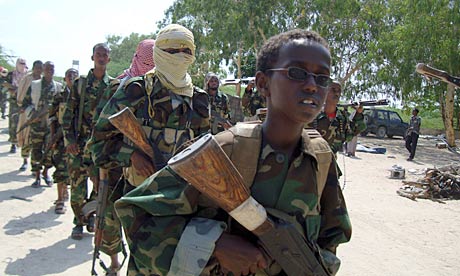
A young boy leads al-Shabab fighters on military exercise in northern Mogadishu, Somalia
Torn between violent extremists and a puppet government, Somalia could look to Somaliland for a lesson in nation building

Ioan Lewis
guardian.co.uk, Thursday 26 August 2010 14.00 BST
Article history

A young boy leads al-Shabab fighters on military exercise in Suqaholaha neighborhood in northern Mogadishu, Somalia. Photograph: Farah Abdi Warsameh/AP

The escalating war for control of what is left of Somalia, between the al-Shabab extremists and the African Union puppet "transitional federal government", offers little hope of peaceful resolution. Al-Shabab is now deeply entrenched and, with the help of foreign jihadists, virtually controls all southern Somalia.

However contentious, their viciously anti-feminist interpretation of fundamentalist Islam brooks no opposition and is consequently far from popular, even outlawing watching sports contests and football on television. More significantly, it also strikes at the roots of traditional Sufi Somali Islam with its cults of local and international, saints whose graves are now regularly desecrated. This is very much in the uncompromising spirit of Salafi Saudi Arabia which serves as al-Shabab's model of correct Muslim behaviour and, more importantly, provides the money that feeds its Somali enthusiasts. It thus has a very strong grip on the impoverished young Somali males who constitute the principal foot soldiers carrying al-Shabab's banner and are, in effect, mercenaries.

Somali society is extremely fragmented along kinship lines and, to a degree most foreign observers fail to appreciate, lacking in political centralisation. The familiar African chiefs are largely absent in this highly individualistic world where the individual's loyalties are a matter of competing blood-ties. Such bonds cut across membership of al-Shabab whose leaders, however, tend to belong to the Hawiye clan-family, based in central southern Somalia. The Somali historian Said Samatar aptly described their predecessors, the Union of Islamic courts, as a "fragile coalition of clans wrapped in an Islamic flag to look respectable"; al-Shabab similarly relies heavily on kinship ties to maintain solidarity and confront its enemies.

The underlying loyalties here are, as is usual in the Somali world, fluid and readily subject to fission. External pressures, especially from non-Islamic sources, normally provoke internal solidarity. This, of course, is a major reason why external force, intended to replace al-Shabab by less extreme forms of Islam, will almost certainly fail. Indeed, radical change in the al-Shabab regime is only likely to be achieved by subtle internal initiatives and the problem would be how to design and implement these. The perceived oppressive character of al-Shabab provides abundant opportunities for currents of Somali disaffection to grow and multiply.

A very important local factor will be the positive demonstration effect provided by the existence of the adjacent Somaliland Republic. Although largely officially ignored by the UN and OAU, this state based on the former British Somaliland Protectorate had initially joined Somalia, but in 1990, at the climax of the collapse of dictator Mohamed Siyad Barre's brutal regime,broke away to reassert its independence. Despite being regarded in Somalia as a sort of phantom limb, with virtually no external help, this state has built itself up by a remarkable series of internal peace agreements and democratic consolidation to its current situation as a functioning democracy. This has been achieved by local self-help and without the massive international effort devoted, with such striking lack of success, to restoring governance in Somalia.

Somaliland has just had its second successful presidential election (and changed president in a peaceful process validated by international observers). Its people are Somalis like their kinsfolk in Somalia, but by a judicious combination of traditional and modern politics, have successfully established a viable modern government and associated institutions. Despite internal and external pressures and with fewer economic resources than Somalia, these have demonstrated remarkable viability and have, so far, been blessed by an impressive degree of political stability. Its time now to learn from Somaliland's success and see how to emulate it.

Guddiga Joogtada ee Wakilada oo Cadayey Inay u Yeedhi Doonan Afar Wasiir oo ku Jira Xukumada Written by Jamhuuriya

Guddiga Joogtada ee Wakilada oo Cadayey Inay u Yeedhi Doonan Afar Wasiir oo ku Jira Xukumada
Written by Jamhuuriya
  

Guddiga Joogtada ee  Wakilada oo Cadayey Inay u Yeedhi Doonan Afar Wasiir oo ku Jira Xukumada Silanyo

Guddida joogtada ah ee wakiillada

Hargeysa (QRN)- Guddiga joogtada ah ee Golaha Wakiillada Somaliland, ayaa sheegay inay u yeedhi doonaan afar wasiir oo ka tirsan xukuumadda madaxweyne Siilaanyo, si wax looga weydiiyo arrimo khuseeya shaqada ay qaranka u hayaan.

Saddex mudane oo ka tirsan Guddida Joogtada ah ee wakiillada oo kala ah Md. Bashiir Sheekh Xuseen Tukaale, Md. Xaashi Xuseen iyo Md. Xamse Maxamed Gaadaweyne oo shalay si wada jir ah shirjaraa'id ugu qabtay xarunta Golaha Wakiillada, waxay caddeyeen inay golaha uga yeedhi doonaan wasiirada maaliyada Eng. Maxamed Xaashi Cilmi, arrimaha gudaha Dr. Maxamed Cabdi Gaboose, xannaanada xoolaha Dr. Axmed Xaashi Oday iyo wasiirka boosaha iyo isgaadhsiinta.

Md. Xaashi Muuse oo ka hadlayey wasaaradaha ay u yeedhi doonaan iyo waxyaabaha ay kala hadli doonaan waxa uu yidhi; "Wasaaradda xanaanada xoolaha waxaannu kala hadli doonaa maxjaradan midba maalin layska furanaayo iyo kii hore ee jiray ee aan sharciga ahayn," ayuu yidhi Md. Xaashi Muuse, waxa kale oo uu xusay inay u yeedhi doonaan wasaarada boosaha iyo Isgaadhsiinta, isla markaana kala hadli doonaan isgaadhsiinta badda hoosteeda marta iyo nidaamka khadka telefoonada, isaga oo xusay inay wasaaradda arrimaha gudahana ay kala hadli doonaan arrimaha amniga iyo halka ay wax u marayaan, sidoo kalena Wasaaradda Maaliyadana waxaay kala hadli doonaan arrimaha daymo adag oo ay la wareegeen.

Xildhibaan Xaashi Xuseen oo arrintaa ka hadlaaya waxa uu sheegay "Wasaaradda Maaliyada waad ogtihiinoo wasiirku muddo bil ah ayuu hayey, dhibaatooyin badana meesha wuu ugu tagay, wadankiina waynu ka war haynaayo lacag la'aanba ka jirta.

Daymo waa la sheegaayey ilaa dhawr iyo labaatan malyan ah, waxaasoo dhan baanu doonaynaa inaanu xogogaal u noqono oo aanu ka waraysano wasiirka halka ay ku danbeeyeen iyo sababta keentay lacag la'aantan mushaharooyinkii shaqaalaha ilaa maanta aanay haynin.

Maatna waxaynu galnay wakhti cusub, waxaananu doonaynaa inaanu wax walba saxno, isla markaana ay goloyaasha dawladu isla jaan-qaadan, marwalbana wax laysku ogaado ummaddana marwalba xogogaal u noqoto xaaladu halka ay marayso, waxaananu u yeedhi doonaa Salaasada, Arbaca iyo Khamiista toddobaadka soo socda."

Jamhuuriya

Should Somaliland allow the formation of a unionist party?


Should Somaliland allow the formation of a unionist party?
By Bashir Goth
August 28, 2010
 

Ludicrous idea, isn't it? How can I suggest such a treacherous idea when I am known as an unflinching advocate for Somaliland's independence and sovereignty? How could I dare even to utter the ugly U-word which I have denigrated so forcefully and irrevocably in many of my writings?  I can see jaws dropping with bewilderment, devoted readers unbelievably double checking the source, and some of those already besotted with cynicism against the loyalty of clans on the fringes of Somaliland jumping to conclusion as soon as they see the title without reading any further and saying with a great sense of satisfaction: "Hey, gotcha? We knew all along that he was a unionist in disguise?"  Likewise, I can see also unionist "Somalilanders" getting ecstatic about my rebellious approach. 

Before anyone jumps to any conclusions, I would like to point out that Somaliland has chosen democracy as its system of government. And democracy entails equality and freedom for all citizens. Under the tree of freedom come its many branches such as freedom of speech, freedom of assembly and freedom of religion. Under the umbrella of this system of democracy and freedom comes also one's right for dissent among many other rights. Any tax paying citizen should have the right to challenge the political system and be able to express his/her political opinion in a peaceful way. Democracy is not only about conformity, or herd mentality, or even about seeing only different shades of the existing system; but it is also about calling for dismantling the existing system and taking the nation's destiny to a completely different direction if need be. It is therefore the right of every citizen to demand and promote the political system he/she sees as suitable for the country. 

If the Kulmiye government opens the gate for the creation of many political parties as the party's leadership promised during the election campaign, I can envisage many parties carrying different ideologies and diverse political orientations coming to the political scene. Other than the plethora of clan-based parties that will choke the party pipeline, one can anticipate the arrival of some ideology- based parties such an Islamic party, a secular party, a liberal party, a social-democratic party and most probably a communist party.  With the onset of such unfettered democracy I don't see why it should still be a taboo to create a unionist party, demanding Somaliland's reunification with Somalia.

In Somaliland today there is a strange and unfounded fear of anyone expressing an opinion for union. Strange because Somaliland has adopted democracy as a political system and democracy is indivisible. You cannot deny citizens to demand their democratic rights to hold and express opposing views; and unfounded because the people of Somaliland have made their choice to abandon the union and reclaim their sovereignty with their own free will. Therefore to punish and criminalize people for calling or publicly advocating for the Somali union is an insult to the intelligence of the people of Somaliland. If anything, it shows insecurity and paranoia about the sustainability of the Somaliland project. 

The absurdity is that any Somali from anywhere in the world, particularly Somalis from Ethiopia, Djibitouti, Kenya and even Somalia can enter, stay and do business in Somaliland, but Somalilanders who happened to have participated in the politics of Somalia cannot attend even the burial of their own relatives in Hargeisa, Borama, Buroa or any other place in Somaliland. Somalis who hold high political posts in Ethiopia, Kenya and Djibouti are welcomed in Somaliland even though they uphold their respective governments' official position of rejecting the recognition of Somaliland, but Somalis who hail from Somaliland by birth are treated as criminals and thrown into prison if they step on the soil of their homeland and are not even allowed to visit their ailing mothers.  Their only crime is that they oppose the secession of Somaliland. This makes Somaliland democracy and freedom a cruel joke, at least to the families of the victims of such an absurd reality.

And finally, here is the beef.  Yes, I am a firm believer in Somaliland's sovereignty and independence and will remain a staunch advocate for its recognition. The people of Somaliland underwent great suffering and yet still found the courage and willpower to invest a priceless amount of energy, time and wisdom in creating a country from scratch and establishing such an admirable model of democracy in Africa. And despite its lack of recognition, I want to see Somaliland determined to uphold its constitutional democracy and hopefully one day be a guiding light for African countries as well as others professing democracy yet denying their citizens basic rights. Obviously, neither I nor any sound human being would like to see Somaliland's achievements go up in flames for someone's fantasyland dreams, but I also strongly believe that Somaliland has attained a high degree of political maturity to democratically and peacefully challenge and defeat anyone that confronts its legal rights at the ballot box. Hence, I resent seeing my beautiful Somaliland that stands on unshakeable democratic pillars, behaving like a banana republic by incarcerating and denying its citizens the exercise of their political rights. And that includes allowing the minority unionist individuals to raise their voice and form their own party. We all know that such dissenters do not stand a chance of winning any votes, but giving them a political platform may contribute to deflating their argument and saving their lives from dying in the hellfire of Mogadishu.


Bashir Goth
Email: bsogoth@yahoo.com


THE LAST TEN NIGHTS OF RAMADAN

THE LAST TEN NIGHTS OF RAMADAN


Ahmed Arwo


As we are in the last ten days of Ramadan which includes the Night of Power (Laylatul Qadr), we have to reflect on their virtue and spiritual assets. There are many fictions and fabrications in relation to this night specifically and to the last ten days of Ramadan in general. There are stories about surprise encounters of saints and prophets in disguise, mostly as beggars in the most detesting and disgusting shape and clothing. There are others who celebrate the greatness of this night in worldly festive mood with music and dance, similar to the Christmas, and even distribute surprise gifts to children and poor families, in a manner near to that of Father Christmas.


I do not want to indulge myself into innovations and misinterpretation of this glorious night, lest I may distract those of weak hearts from this special night full of Allah's mercy and forgiveness. May Allah make us those who endorse this night in prayer and dikr, as prescribed by Allah and his Messenger. Let us commit ourselves to commemorate this ten nights in accordance to the conduct of the Prophet and his companions.


The following article by one of the greatest scholars of Islam, Sheikh Salman al-Aodah (may Allah reward him his mercy in respect of his unreserved efforts in spreading the correct principles and practices of Islam), will guide us to the proper way of honouring last ten days of Ramadan. The article is posted in its authenticity and entirety, without any change in shape and form from www.islamtoday.com.


Sheikh Salman al-Aodah said:-


The last ten nights of Ramadan are very special. The first of these nights occurs on the eve of the 21st day of Ramadan. In other words, it is the night that commences after the completion of the 20th day of fasting. Sometimes there are only nine nights, whenever the month of Ramadan lasts for only 29 days. Nevertheless, they are still traditionally referred to as "the last ten nights".

The last ten nights of Ramadan are very special. These are the nights that the Prophet (peace be upon him) would spend in constant worship. Among these nights is Laylah al-Qadr – a night more blessed than a thousand months.

The Prophet (peace be upon him) used to single these nights out for worship and the performance of good deeds. He would exert himself in worship during these ten nights more than any other nights of the year.

`Â'ishah tells us: "During the last ten nights of Ramadan, the Prophet (peace be upon him) would tighten his waist belt and spend the night in worship. He would also wake up his family." [Sahîh al-Bukhârî (1920)]

`Â'ishah also says: "I had never known Allah's Messenger (peace be upon him) to read the entire Qur'ân in a single night, or to spend the whole night in prayer up until the morning, or to spend a whole month in fasting – except in Ramadan." [Sunan al-Nasâ'î (1641) and Sunan Ibn Mâjah (1348)]

When we say that the Prophet (peace be upon him) spent the whole night in worship, we should qualify it. This is because he would spend some time eating dinner, partaking of his pre-dawn meal, and other similar activities. However, he would spend most of the night in worship.

Waking Up the Family


`Â'ishah informs us that the Prophet (peace be upon him) used to wake up his family during the last ten nights of Ramadan. Indeed, he used to wake up his wives for prayer throughout the year, but that was so that they could pray for a small fraction of the night.

We know this, because Umm Salamah relates that the Prophet (peace be upon him) woke her up one night and said: "Glory be to Allah. What has been sent down of trials during this night? What has been sent down of treasures, so that the denizens of the bedchambers will be awakened? O Lord! To be clothed in this world by naked in the Hereafter." [Sahîh al-Bukhârî (1074)]

During the last ten nights of Ramadan, the Prophet (peace be upon him) would wake up his wives to pray for a much longer portion of the night than during the rest of the year.

Exerting Oneself in Worship


`Â'isha tells us: "The Prophet would exert himself in worship during the last ten nights more than at any other time of the year." [Sahîh Muslim (1175)]

The great jurist, al-Shâfi`î declares: "It is Sunnah for one to exert greater efforts in worship during the last ten nights of Ramadan." [al-Majmû` (6/397)]

When `Â'ishah tells us that the Prophet (peace be upon him) would "tighten his waistbelt", she is speaking figuratively. The phrase means to set about to devote oneself fully and wholeheartedly to the task at hand.

Seeking Out Laylah al-Qadr


One of the greatest distinctions of these ten special nights is that one of them is Laylah al-Qadr – the Night of Decree. This is the greatest night of the year – better than a thousand months. This means that a Muslim can earn more rewards on Laylah al-Qadr than he would if – excluding this special night – he were worship his Lord for eighty-four years straight. This is one of the immense favors that Allah has bestowed upon the Muslim community.

Ibrâhîm al-Nakha`î says: "Good works performed on this night are better than those performed consistently for a thousand months."

Abû Hurayrah relates that the Prophet (peace be upon him) said: "Whoever spends Laylah al-Qadr in prayer, believing in Allah and seeking His reward, will be forgiven all of his past sins." [Sahîh al-Bukhârî (1802) and Sahîh Muslim (760)]

Belief in Allah, in this hadîth, means not only to believe in Allah, but to believe in the reward that we are promised for observing prayer on this night.

Laylah al-Qadr
is on one of the odd nights. `Â'ishah relates that Allah's Messenger (peace be upon him) said: "Seek out Laylah al-Qadr in the odd nights during the last ten nights of Ramadan." [Sahîh al-Bukhârî (1913) and Sahîh Muslim (1169)]

It is most likely one of the last seven odd nights. Ibn `Umar relates that Allah's Messenger (peace be upon him) said: "Look for it in the last ten nights. If one of you falls weak or unable to do so, then he should at least try on the seven remaining nights." [Sahîh Muslim (1165)]

The most likely candidate for Laylah al-Qadr is the 27th night of Ramadan. This is indicated by the statement of `Ubayy b. Ka`b: "I swear by Allah that I know which night it is. It is the night in which Allah's Messenger (peace be upon him) ordered us to observe in prayer. It is the night on the eve of the 27th of Ramadan. Its sign is that the Sun will rise in the morning of that day white without exuding any rays." [Sahîh Muslim (762)]

A Muslim should seek out this special night by spending the last ten nights of Ramadan engaged in various acts of worship. These include reciting the remembrances of Allah, reading the Qur'ân, and begging Allah's forgiveness.

It is best for us to strive hard on all ten nights, because the Prophet (peace be upon him) said: The way we "look for" Laylah al-Qadr is by engaging in extra worship.

When the Prophet (peace be upon him) said: "Look for it in the last ten nights" he did not mean that we should literally "look for" signs and indications that distinguish Laylah al-Qadr from other nights. The things that distinguish Laylah al-Qadr from other nights are part of the Unseen.

Allah says: " Surely We revealed it on a blessed night. Surely We ever wish to warn (against evil) – On this night, every wise matter is made distinct." [Sûrah al-Dukhân (3-4)]

Allah says: "Laylah al-Qadr is better than a thousand months. The angels and the Spirit descend therein, by the permission of their Lord, with every decree. (This night is) peace, until the rising of the dawn." [Sûrah al-Qadr (3-5)]

These are the ways in which Laylah al-Qadr is special. They are not things that we can see with our eyes. No one after the Prophet (peace be upon him) can see the angels.

Observing a Retreat in the Mosque (I`tikâf)


Observing a retreat in the mosque is of the best things we can do during the last ten nights of Ramadan. `Â'ishah tells us: "The Prophet (peace be upon him) used to observe a retreat in the mosque during the last ten nights of Ramadan up until he died. His wives continued to observe this practice after his death." [Sahîh al-Bukhârî (1922) and Sahîh Musli (1172)]

The practice of i`tikâf is a strongly recommended act. It is defined as remaining in retreat in the mosque for the express purpose of worship. The purpose of doing so is to devote one's heart exclusively to Allah. The person engaging in i`tikâf keeps this intention close to mind and seeks Allah's blessings. He should not forget the reason why he is observing this retreat.

A person observing i`tikâf does not leave the mosque except for what is absolutely necessary (like going to the bathroom). While in the mosque, he should busy himself with the remembrance of Allah. He should make sure to offer the remembrances of the morning and evening and the prescribed remembrances for the five daily prayers. He should perform all of the Sunnah prayers and all other recommended prayers, like the Duhâ prayer. He should read as much of the Qur'ân as he can.

He should spend less time eating and sleep as little as possible. He should avoid unnecessary talk. However, he should engage in advising his fellow Muslims and in enjoining them to truth and to patience.

Generosity


It is encouraged for us to be extra generous during the last ten nights of Ramadan, without being extravagant or ostentatious in our giving. Ibn `Abbâs relates that: "Allah's Messenger (peace be upon him) was the most generous of all people in doing good, and he was at his most generous during the month of Ramadan. Gabriel used to meet with him every year throughout the month of Ramadan, so the Prophet could recite the Qur'ân to him. Whenever Gabriel met with him, he became more generous than a beneficial breeze." [Sahîh al-Bukhârî (1902) and Sahîh Muslim (2308)]

Al-Nawawî states [al-Majmû` (6/398)]:

Generosity and open-handedness are strongly encouraged in Ramadan, especially during the last ten nights. By doing so, we emulate the example of Allah's Messenger (peace be upon him) as well as of our Pious Predecessors. Also, this month is noble, and good works carried out in this month are more blessed than they are at any other time. Also, during this month, people are preoccupied with fasting and worship, and this distracts them from their livelihood, so they might need some assistance during this time. END.


Let us pray for peace in our homeland and that of all Muslims.


Ahmed Arwo

samotalis@gmail.com

Dhurdihii siyaasadda ayaa laga fadhiyi la'yahay beryahan, Sheekadan argagixisada ciddii leh ha lala doonto, dalkan meel kuma lehe!!


 Dhurdaha bahalka la yidhahdo, oo cayayaan yaryar ahi kuma qaninnio laakiin raaxada ayuu kuu diidaa isaga oo dhegahaaga iyo indhaha iyo sanka aan ka fogaan oo ku meereyesta. Sidoo kale beyahan somaliland dhurdihii siyaasadda ayaa laga fadhiyi la' yahay. Waxa aynu soo doorannay hoggaan cusub oo isaguna Dalka u Dhisay Dawlad kooban oo tayo leh, waqti run ahaan lagu dhalliilona aan haddi aynu caqli hadleyno.
 
Waxa labaatankii sannadood ee inna dhaafey soo jirey oo la soo qabatimay in Dig dig iyo Afminshaarnimo , wax lagu kala macaasho.Dawladdan maantuna, waxa ay mar keliya gam ka siisay wax la caadeystey oo la soo qabatimay muudadii Dalku mugdiga ku jirey. Sad bursi beeleed oo soo jireen ahaa, Nin jecleysi Mas'uul , hawl-fududeyn odey dhaqan, lagu abaabulo kuwo magacyo beelo ama bulsho ku hadla laguna deedafeeyo siyaasado Dawladeed ama mas'uuliin mamul.
 
Waxa aan la yaabey, sheekada Argigixisada ee rag moodaya in ay macno sameynaayaan, Ummadda somalilandse, cadaawad tii ugu xumeyd ku soo qaadey, in aanay gallad kala tgeyn naftooda daciifka ah ha u sheegaan. Dr. Maxamed Cabd Gabbose, Injineer Maxamed Xaashi Cilmi ,Xirsi Cali Xaaji Xasan iyo sheekh khaliil Midna in aanu ahayn waxa ay doonayaan in ay ku dhjiyaan Ma qabaneyso haba yaraatee. Mudane Maxamed Hasghi oo ka mid ah asaasayaashii Ururkii Halganka ee SNM wax ka badan 12 sano ayuu joogey Addis oo Mas'uuliinta itoobiya wey taqaan. Dr. Gabboose waa aqoon yahan oo aqoonta ayaa lagu eryanayaa. Saddexdii xasadku eryanayey ayuu ku jiraa. Nin Cilmi leh oo Dadku intifaacsanayaan cilmigiisa, Nin maal leh oo sir iyo caadba Alleh dartii ula baxaya, Nin qaadi ah oo sidii uu Alleh amrey, insaf u sameynaya.
 
Waxaan leeyahay, waxyaabo ragonimo laga deyoo badan, kuwan waqtigu kaga lumey heekada argagixisada ee ay ku rinjiyeynayaan xubno, golaha wasarada ku jira, adeer ma qabaneyso'e ciddii lahayd la doonta!! Somaliland haddii ay wax hamuum ah u qabto kuwan, kamay xidhaten xuduuddeeda, manay xidhxidheen Argagixiso. Taliskii Nabadsugidda ee Lagag adkaadey Doorashada iyo qirinqiirkii uu ka tegey ayaa waxan ku hadaaqaya uu nolol dheeraanta ka dhiganayey ee wax nuxur ah oo ku jiraa ma jiro. Dawladdani wey soconeysaa oo hano-qadeysaa waayo, rabitaanka dadka ayey ku timid. Ninku isugu sheekeya in uu been la soo dhoob-dhoobey faafinteeda ku ridi karona ,habeen muu jiin.
 
Argagixiso haddii ay naf leedahay koonfur bay wax gelin lahayd.Somaliland waxay u taagan tahay in ay dalkeeda iyo ummadaha adduunkaba kala tacaasho xag-jirnimada. Waxase Taariikh soo jireen ah, in mar kasta oo dalkan9i guul ka gaadho xaalad jirta markaas, ay jiraan habro saar leh oo uu ku kaco haddey maqlaanba somaliland Guukleysatey, Waxan aanu maqleynaana waa tii uune ma idin la tahay in aan dhiilku daadan illeyn hore ayaa loo yidhio, karis xun iyana wax ku la' oo gaxaadhatada ayaa ka gubata'e.
 
Sheekada raqiiska ah ee xishoodka daran ha ka waantowdo Bulhadu oo aan rajeynayo in loo fhmo sida ay danta guud ku jirto.
 
Dr.Cali Cabdi Muxumed. 


“Guddidii Loo Saaray Dayntii Cawil Way Soo Celiyeen Arintii.....

"Guddidii Loo Saaray Dayntii Cawil Way Soo Celiyeen Arintii, Laakiin Wali Arin Dhamaatay Maaha Hawshaasi, Waana Arin Baadhitaan Danbe U Baahanaysa"

Wasiirka Maaliyada Eng. Maxamed Xaashi


Hargeysa, August 27, 2010 (Haatuf) – Wasiirka Maaliyada Somaliland, Eng. Maxamed Xaashi Cilmi ayaa sheegay in guddidii loo saaray dayntii Wasiirkii hore Ee maaliyada Mr. Cawil uu sheegay in lagu leeyahay Wasaarada Maaliyada ay soo celiyeen, isla markaana aanay ahayn arin dhamaatay.

Maxamed Xaashi waxa kale oo uu sheegay in isbedelka ku yimid lacagta doolarka ay tahay wax caadi ah oo mar marka qaar marna kor u kaco marna hoos u dhac ku yimaado.

Wasiirka Maaliyadu waxa uu sidaasi ku sheegay Waraysi uu xalay khadka Telefoonka uu kual yeeshay Wargeyska Haatuf, waraysigaasina waxa uu u dhacay sidan:-

S: Ma ku talo jirtaan xukuumad ahaan in aad is waafajisaan Doolarka iyo Miciishada kala socda ee aan wada socon?

J: Horta Doolarku mar mar uu iska kaco iyo mar uu hoos u dhacaaba way jiraan, hada waxa iskhilaafkooda keenaya waxa weeyi, waxa aad hada inooga dhoofa xoolaha nool ee aynu u iibgeyno Caalamka, markaa waxa farabatey doolarkii, Baddiina wali may furmid oo doonyihii way maqan yihiin wali, kolkaa xaalado badan oo caynkaas ah ayaa jira taas ayaana keenaysa isbadbadalka doolarka.

S: Waxa dhacday bishii dhawayd in aad shaqaalaha dawlada qaarkood musharaharkii ay Somaliland-ta ku qaadanayeen aad ku siiseen Doolar arimahaas maxaad tafaasiil naga siinkartaa?

J: Arintaasi way jirtaa, shaqaalaha aanu mushaharka Doolarka ku siinayna waa kuwa bariga ee aanay lacagteenu gaadhin, waayo shaqaalaha dawlada ee deegaanadaas aanay lacagteenu ka socon wax kale oo lagu siiyaa musharka ma jiraan.

S: Waxa nagu maqaala ah, in aad cashuurtii dawlada ee awal lagu qaadi jiray doolar aad ka wada dhigteen Shiling Somaliland, arimahaas maxaa ka jira?

J: Figrad sidaas aad sheegtey ahi ma jirto, laakiin waxa jira Ashyaa doolar lagu qabto iyo qaar lagu qabto Somali, Doolarka waxa lagu qabtaa wixi Dakada, Maraakiibta ka yimaada iyo Airport-ka ka yimaada, kuwaas Doolar baynu  ku qabanaa, xoolaha Xoolaha dhoofa iyo Shidaalkana Doolar ayaa lagu qabtaa oo aanu ku qabanaa, kuwaa Acount-ka gaara ayaanu u furnay oo Doolarka ah, wixii kalena Somali ayaa lagu qabtaa, waxa jira oo aanu imikana bixinaynay mushaharkii shaqaalaha ee isgaadh-gaadhay, markaa waxa laga yaabaa in lacag intii hore ka badani ay suuqa soo gashay mar qudha ileyn sadex bilood oo mushahar ah ayaanu bixinay oo isgaadh-gaadhay.

S:Tan iyo intii uu Madaxwayne Axmed Siilaanyo kuu magacaabay xilka wasaarada Maaliyada waxa soo xarooda dakhli ka badan kii markii hore ku soo dhici jiray qasnada dawlada, xagee ayaa la odhan karaa wuu u leexan jiray dakhligaas wakhtigii dawladii Rayaale talada dalka haysey?

S:In badan ayaan hore uga hadlay arimahaas, Madaxwaynihii hore ee Somaliland lacagta dakada isagaa qaadan jiray, lacagta shidaalkana isaga ayey jeebkiisa ku dhici jirtey, Xoolaha dhoofaya lacagta ka soo xarootana isaga ayaa qaadan jiray, lacagta Airport-kana isaga ayey jeebkiisa ku dhici jirtey iyo faraqa qiimaha $2 waxa u dhaxeeya, markaas xukuumadii hore waxaas oo dhan iyada ayaa qaadan jiray, anaguna cashuurtii maanu kordhine soo ururinteedii ayuun baanu xooga saarney oo aanu kordhinay.

S:Waxa aad magacawdey Agaasimkii Kastamka iyo Agaasimkii Dakada, kalsooni intee leeg ayaad ku qabtaa masuuliyiinta aad u magacawday in ay xilkooda u gudan doonaan sida ugu macquulsan ee dalka iyo dadkaba u dan ah?

J:Waxa aan xooga saarayaa in aad anigu xafiiska cid walba uga horeeyo oo aan daba galo cida aan shaqadeeda si fiican u gudanayn.

S:Maanta madaxwaynaha somaliland Axmed Maxamed Siilaanyo waxa masuuliyiinta uu magacaabay ka mid ah Maareeyihii dakada Berbera, kaslooni intee leeg ayaad ka qabtaa masuulkaasi in uu ka leexdo dhabihii dawladii hore ee Rayaale?

J:Horta dakada oo ah meesha dhaqaalaha ugu badani dalka ka soo baxo, dhaqaalaha ka soo baxaa dawladii hore qasnadeeda kumuu dhici jirin ee waxa uu toos u gali jiray jeebka Madaxtooyada, markaa waxaan aad ugu hanwaynahay in aanay wax walba sidi hore u dhicin oo ay dhabaha saxda ah maraan, masuulkan cusubna waxaan ka rajaynayaa wada shaqayn wanaagsan, waxa aananu ku rajo waynahay in aan la arag wax kooto ah.

S:Waxa aad hore uga dhawaajisay in aad shaqaalaha dawlada mushaharka u kordhin doontaan, arimntaa maxaa  idiinka meel yaala ilaa hada?

J:Arintaas waxa ka wayn oo aanu hada la rafanaynaa sidii loo bixin lahaa wixii hore.

S: Dayntii uu wasaarada ku wareejiyey wasiirkii kaa horeeyey Xuseen Cali Ducaale, Gudidii loo saaray wax natiijo ah wali ma ka soo saareen waxa laga yeelayo arintaas?

S: Gudidii arintaas loo saaray way soo celiyeen arintii, laakiin wali arin dhamaatey maaha hawshaasi, waana arin baadhitaan danbe u baahanaysa, baadhitaankaasna ka hortagi maayo.

S:Waxa la sheegeyaa in xukuumadu wasiirkii hore ee Maaliyada Cawil ay ka xayirta socdaalada dibada, arintaas maxaad tafaasiil naga siin kartaa?

J:Xayiraadaas anigu wali maan maqal, kamana war hayo arintaas.

29 August, 2010

TACSI: GEERIDA MARXUUM MUJ CABDILAAHI ASKAR BARKHAD

Anigoo ku hadlaaya magaca reer Cabdi Carwo iyo kan xaaskayga Amaal Cumar Carte waxaan tacsi u dirayaa ehelka, ubadka, tafiirta kale, gacalka, qaraabada, xigaalka, xito iyo asxaabta uu marxuumku ka tegay meel kasta oo ay joogaanba . Sidoo kale waxaan  tacsi u dirayaa Shacbiweynaha Soomaliland, gaar ahaan halgamayaashii SNM.

Cabdilaaahi waxuu ahaa tiir ka mida kaabayaashii ay ku taagnayd halgankii ummadda Soomaliland ee ay horseedka ka ahayd ururkii halganka ee SNM. Waxuu yahay dhamac iftiimaysa oo ku xardhan taariikhda qaranka Soomaliland. Lama ilooban iyo dhacdo muujisay geesinimada SNM kuna noqotay jab iyo hoog taliskii faashiga ahaa, waxay ahayd dharaartii sida badheedhka ah xabsiga loogala baxay Muj. Cabdilaahi Askar.
   
Alle ha u naxariistee Marxuum  Cabdilaahi Askawaxuu ku geeriyooday magaalda Hargeysa maanta oo Axad ah 29 August 2010.
 Waxaan Illaahay uga baryayaa inuu marxuum Cabdilaahi u naxariisto oo uu janatal fardows ku abaal mariyo, innagana dhammaan inaga siiyo samir iyo Iimaan.

Axmed Xasan Carwo
HARGEYSA
409 64 21


BURUNDI: Veering off the path of peaceful power-sharing

BURUNDI:  Veering off the path of peaceful power-sharing

BUJUMBURA, 27 August 2010 (IRIN) - The political climate is growing increasingly antagonistic in Burundi, where many of today's political parties were yesterday's rebel groups. A spate of elections designed to entrench stability through pluralism has only made matters worse, say analysts, raising fears that a 10-year-old power-sharing deal is falling apart.

 "Burundians should understand that our victory belongs to everyone, to those who voted for us and to those who did not," re-elected President Pierre Nkurunziza said on 26 August at his swearing-in ceremony.

 "What matters to us is to work with everybody for the good of everybody," he said.

 But Nkurunziza ran in the 28 July presidential poll unopposed because of a boycott called in protest at alleged rigging of earlier municipal elections. Most parties have now fully withdrawn from the political institutions including parliament.

 "We are worried about politicians' games," said a resident of Bujumbura Rural, the province around the capital that experienced some of the worst fighting during the 1993-2005 civil war, which claimed 300,000 lives.

 "Now that there is only one party, how can it bring us peace?" he added, asking not to be identified.

 "In Bujumbura Rural, we really know what war means. We now fear for the future," said another resident. "Some say new rebel movements are being formed, others say there are no such rebel movements. Opposition leaders have gone into hiding, we do not know what they are up to."

 Opposition in hiding

 At least three opposition leaders have fled Burundi amid a government crackdown on the opposition and internal critics. According to Amnesty International, [http://www.amnesty.org/en/library/asset/AFR16/002/2010/en/758d5167-cd6c-43fd-b671-bd13936017bd/afr160022010en.pdf] intelligence services tortured 12 people in late June and early July.

 There were more than 100 grenade explosions in those months, mostly targeting the ruling party, the National Council for the Defence of Democracy-Forces for the Defence of Democracy (CNDD-FDD). Dozens of the party's offices across the country were torched.

 At the same time, opposition politicians were frequently arrested, sometimes on charges of threatening state security, or for holding "illegal" meetings.

 "Burundi is at a dangerous crossroads and clearly ill-intentioned people on both sides of the political divide are seeking to exploit recent tensions," Rona Peligal, Africa director at Human Rights Watch, said in early July.

 In the last week of August, two members of the National Liberation Forces (FNL), a former rebel group, and six members of another political party, were arrested in the west of the country. They were accused of taking food into Kibira forest, where some groups are reportedly receiving military training. Two other FNL members were detained in Kayanza, in the north, and accused of belonging to an armed group.

 Power sharing

 It wasn't supposed to come to this. On 28 August 2000, parties to Burundi's civil war capped six years of talks by signing a Peace and Reconciliation Agreement [http://en.wikisource.org/wiki/Arusha_Peace_and_Reconciliation_Agreement_for_Burundi ] spelling out how power was to be shared between the politically dominant but numerically small Tutsi minority and the Hutu majority. It took another five years for the last Hutu rebel group to lay down its arms, but Arusha produced the constitutional framework for ending hostilities.

 "We convened on a political system liable to take into account both the political and ethnic dimensions of Burundi's problem," recalled Jean-Baptiste Manwangari, one of the Tutsi negotiators who worked on the pact. "It was a democratic system functioning much on the basis of a consensus and dialogue instead of a system of majority [rule], which for Burundi was likely to bring forth dictatorship."

 Now, according to one civil servant, Burundi has "gone back to square one. a [new] political accord needs to be negotiated to bring the opposition back on board."

 The pre-Arusha winner-takes-all style of politics is dangerous because it "creates a kind of survival strategy for the losers", explained Pacifique Nininahazwe, head of the Forum pour le Renforcement de la Societé Civile, a coalition of civil society organizations outlawed in 2009.

 "If the ruling party behaves in the same way as other victorious parties did in the past, the losers will adopt the same survival mechanisms," he added.

 One-party warning

 The more than two-thirds parliamentary majority won by the CNDD-FDD "will transform the state from a multiparty system to essentially one-party dominance", Henri Boschoff and Ralph Ellermann warned in a paper for the Pretoria-based Institute of Security Studies - Elections without competition and no peace without participation: where might it go from here. [http://www.iss.co.za/uploads/No19Jul2010.pdf]

 "Ultimately [this] could have a highly detrimental effect on peace and democracy in Burundi," they wrote, arguing that "the reluctance of Nkurunziza and the CNDD-FDD to govern the country in the spirit of its power-sharing constitution . drove the political climate towards a hostile environment where trust between the parties and in the constitution dissolved.

 "Burundi is at risk of civil disobedience. The worst-case scenario would be a rebellion [against] state institutions caused by opposition parties," the paper warned.

 "If the huge numbers of the population now disenchanted with the level of democracy would be willing to follow parties on a non-democratic path, this could eventually be the difference between a few random attacks and the full-scale mobilization of a disgruntled population," the authors said.

 jb/am/mw
[END]

Crisis Group reports published this week:

Crisis Group reports published this week: 

Kosovo and Serbia after the International Court of Justice Opinion
26 August
The development of more realistic, if not yet fully public, attitudes in Kosovo and Serbia suggest a win-win resolution of their dispute is feasible if both sides promptly open talks with the aim of reaching a comprehensive compromise. 

The Pogroms in Kyrgyzstan
23 August
Without prompt, genuine and exhaustive measures to address the damage done by the pogroms, Kyrgyzstan risks another round of terrible violence.

TURKEY, A MAJOR SHIP RECYCLING NATION, SIGNS UN CONVENTION

TURKEY, A MAJOR SHIP RECYCLING NATION, SIGNS UN CONVENTION
New York, Aug 27 2010  4:10PM
Turkey, one of the five major ship recycling nations in the world, has signed the United Nations-backed treaty promoting the environmentally friendly recycling of ships.

The Hong Kong International Convention for the Safe and Environmentally Sound Recycling of Ships, adopted in May last year, is aimed at ensuring that ships, when being recycled at the end of their operational lives, do not pose an unnecessary risk to human health and safety or the environment.

It was signed yesterday in London by Ünal Çeviköz, Turkey's Permanent Representative to the <"http://www.imo.org/">International Maritime Organization – the UN agency that developed the convention – at IMO's headquarters in London.

The convention deals with all major issues surrounding ship recycling, including the fact that ships sold for scrapping may contain environmentally hazardous substances such as asbestos, heavy metals, hydrocarbons, ozone-depleting substances and others.  It also tackles concerns about the working and environmental conditions at many ship recycling locations.

In addition, the convention regulates the design, construction, operation and preparation of ships so as to facilitate safe and environmentally sound recycling – without compromising the ships' safety and operational efficiency.  It focuses on the operation of ship recycling facilities in a safe and environmentally sound manner, as well as on establishment of an appropriate enforcement mechanism for ship recycling – including certification and reporting requirements.

The text of the convention was developed over a three-year period, with input from IMO Member States and relevant non-governmental organizations (NGOs), in cooperation with the International Labour Organization (<"http://www.ilo.org/global/lang--en/index.htm">ILO) and the Parties to the Basel Convention on the Control of Transboundary Movements of Hazardous Wastes and their Disposal.

The Convention has been open for signature by any State since 1 September 2009 and will remain so until next Tuesday. Thereafter, it will be open for accession by any State.

It will enter into force 24 months after the date on which 15 States, representing 40 per cent of world merchant shipping by gross tonnage, have either signed it without reservation as to ratification, acceptance or approval, or have deposited instruments of ratification, acceptance, approval or accession with the IMO Secretary-General. The combined maximum annual ship recycling volume of those States during the preceding 10 years must constitute not less than 3 per cent of their combined merchant shipping tonnage.

To date, the Convention has been signed, subject to ratification or acceptance, by France, Italy, the Netherlands, Saint Kitts and Nevis and Turkey.

At the signing, IMO Secretary-General Efthimios E. Mitropoulos and Mr. Çeviköz expressed the wish that other major ship recycling nations would join the convention as soon as possible.
Aug 27 2010  4:10PM
________________

28 August, 2010

UN RIGHTS EXPERT URGES SOMALIS TO HELP PREVENT FURTHER BLOODSHED AFTER LATEST ATTACK

UN RIGHTS EXPERT URGES SOMALIS TO HELP PREVENT FURTHER BLOODSHED AFTER LATEST ATTACK

An independent United Nations human rights expert has called on all Somalis to help prevent the kind of bloodshed witnessed this week when 33 people were killed during a hotel bombing in the capital, and to assist in bringing those responsible to justice.

"I urge a grassroots effort to prevent a repetition of this atrocious act," said Shamsul Bari, the Independent Expert on the situation of human rights in Somalia, referring to the 24 August attack on the Muna Hotel in Mogadishu.

Four members of Somalia's Transitional Federal Parliament died in the attack, which was strongly condemned by UN officials and the Security Council, and is the latest act of violence to hit the strife-torn Horn of Africa nation.

"This deplorable attack once again demonstrates that the extremists will stop at nothing in their desperate attempt to seize power by force," said Dr. Bari.

"However, the perpetrators of these desperate acts during the holy month of Ramadan will never win the hearts and minds of Somali people," he added.

Violence in Mogadishu has led to some 3,000 conflict-related casualties so far this year and uprooted around 200,000 people from the city, which has been the scene of ongoing clashes between Government troops and Islamist militant groups, including Al-Shabaab.

"I appeal to the international community, as a matter of urgency, to rethink and renew its commitment to giving the protection of civilians and their access to humanitarian assistance the highest priority in Somalia," said Dr. Bari.

EQUATORIAL GUINEA: UN HUMAN RIGHTS EXPERTS EXPRESS CONCERN OVER EXECUTIONS


EQUATORIAL GUINEA: UN HUMAN RIGHTS EXPERTS EXPRESS CONCERN OVER EXECUTIONS
New York, Aug 27 2010  6:10PM
Independent United Nations human rights experts today voiced serious concern at last weekend's execution in Equatorial Guinea of four men over their alleged involvement in an armed attack on the country's presidential palace last year.

Three former military officers and one civilian were executed after a military trial in which they were found guilty on charges of treason and terrorism, according to a <"http://www.ohchr.org/en/NewsEvents/Pages/DisplayNews.aspx?NewsID=10293&LangID=E">statement issued in Geneva by two members of the UN Working Group on the use of mercenaries.

The working group's Amada Benavides de Pérez (chairperson) and José-Luis Gomez del Prado, who visited Equatorial Guinea in the days before the execution, said they strongly condemned it, noting it "follows a summary trial that severely lacked due process."

Mrs. Pérez and Mr. Gomez del Prado also voiced concern that the sentence was carried out the same day as it was issued, denying the defendants – José Abeso Nsue, Manuel Ndong Anseme, Alipio Ndong Asumu and Jacinto Michá Obiang – any possibility of appeal.

"The [working] group could not obtain information on how the four men, who had taken refuge in Benin, were brought back into the country. They appear not to have been subjected to formal extradition procedures."

Mrs. Pérez and Mr. Gomez del Prado issued a series of preliminary recommendations to authorities in Equatorial Guinea, including "full information in a transparent manner" regarding all matters connected to the armed attack by alleged mercenaries on 17 February 2009.

Two other civilians were each sentenced in the same trial to 20 years' imprisonment, even though a civil court had acquitted them over the same events earlier this year.

Seven Nigerian nationals were arrested by the Government over the same attack and the working group said it had received information that two had since died in detention while the other five have been jailed for 12 years.

"It has also received information that the Nigerian embassy has not been granted access to them, nor officially been informed of their arrests, the charges held against them, the status of proceedings and the death of two of them."

The independent experts criticized the "lack of transparency regarding these trials," despite repeated requests from the working group to visit the detainees and access the judicial decisions.

The statement said this "points to severe shortcomings in the implementation of international human rights standards in the administration of justice by the Government of Equatorial Guinea."

Turning to the attempted coup d'état in 2004 and its aftermath, the working group members said they considered the case to be "a clear example of the link between the phenomenon of mercenaries and PMSCs [private military and security companies] as a means of violating the sovereignty of the State."

The mercenaries involved in the coup attempt were mostly former personnel of PMSCs or in some cases still employed by a PMSC.

While President Teodoro Obiang Nguema Mbasogo last year pardoned all foreigners linked to the incident, "a number of reports indicated that [the earlier] trials failed to comply with international human rights standards and that some of the accused had been subjected to torture and ill-treatment."

During their five-day visit to Equatorial Guinea, Mrs. Pérez and Mr. Gomez del Prado held meetings in Malabo, the capital, with Mr. Obiang and numerous senior officials of the executive, judiciary and legislature, as well as with representatives of the UN, political parties, the diplomatic corps, civil society and PMSCs.

The two experts noted that Equatorial Guinea, which has important natural resources such as oil, has experienced several coup attempts involving mercenaries, paramilitaries and ex-combatants from neighbouring countries.

"In this regard the working group believes that in addition to the right and the duty of States to defend its borders and natural resources, the Government would reduce its vulnerability to mercenary attacks by promoting and strengthening democracy, economic, social and cultural rights and development in general as well as good governance.

"Therefore the group calls on the Government to ensure free political participation, the independence of the judiciary and a transparent and efficient administration of justice."

Other preliminary recommendations include: calling on the Government to develop laws criminalizing the presence of mercenaries; inviting the country to accede to a 1989 convention against the recruitment, use, financing and training of mercenaries; and grant both the Nigerian embassy and the Red Cross immediate access to the Nigerian detainees.

CÔTE D’IVOIRE: UN PROBE FINDS SERIOUS HUMAN RIGHTS VIOLATIONS DURING FEBRUARY PROTESTS

CÔTE D'IVOIRE: UN PROBE FINDS SERIOUS HUMAN RIGHTS VIOLATIONS DURING FEBRUARY PROTESTS

Serious human rights violations were committed during the demonstrations held in Côte d'Ivoire in February following the dissolution of the Government and the national electoral authority, according to the United Nations mission in the West African nation.

"Among the violations, we recorded abusive and extrajudicial executions, physical violence, cruel, inhuman and degrading treatment of people arrested, as well as illegal arrests and detentions committed by agents of the Defence and Security Forces of Côte d'Ivoire (FDS-CI)," said Simon Munzu, head of the human rights division at the UN mission, known as <"http://www.un.org/en/peacekeeping/missions/unoci/">UNOCI.

The report of UNOCI's investigation, which was released on Thursday, noted that 13 people died and at least 94 were injured during the demonstrations, which were organized by the Rally of Houphouetists for Democracy and Peace (RHDP) after President Laurent Gbagbo dissolved the Government and the Independent Electoral Commission (IEC).

The President's actions followed a period of rising tensions after voter registration for the country's presidential elections – which were supposed to have been held as far back as 2005 but have been repeatedly postponed – were suspended.

Mr. Munzu told a news conference in Abidjan yesterday that, in addition to the deaths and injuries, many cases of physical violence, plunder and destruction of private and public property were committed by demonstrators. The report estimates that the demonstrations resulted in damage valued at $1.8 million.

"The conclusions of the investigation into the events of February should serve as a lesson in order to avoid past errors in this pre-electoral period," said Mr. Munzu.

The report makes a number of recommendations to the Government, political party leaders, the UN and the international community.

For example, it invites the UN to examine all requests for a waiver of the arms embargo on Côte d'Ivoire to help the country import anti-riot materials, "since the lack of these materials leads the law enforcement forces to resort to firearms," the mission said in a news release.

A new Government and IEC were established following the events in February, and it was announced earlier this month that the elections are now scheduled to be held on 31 October.

UNOCI was established by the Security Council in 2004 to facilitate the peace process in Côte d'Ivoire – which became split by civil war in 2002 into a rebel-held north and Government-controlled south – including those related to elections, disarmament and all aspects of the reunification of the country.

The mission has been providing logistical and technical assistance for the preparations for the presidential elections.


Kenya Defends Bashir Invitation

Kenya Defends Bashir Invitation

Foreign Minister Wetangula says Sudan's president invited to constitution ceremony because Kenya invited leaders of all its neighbors

UN HUMAN RIGHTS COUNCIL MISSION ON FLOTILLA INCIDENT CONCLUDES VISIT TO TURKEY

UN HUMAN RIGHTS COUNCIL MISSION ON FLOTILLA INCIDENT CONCLUDES VISIT TO TURKEY

The United Nations Human Rights Council's international, independent fact-finding mission of high-level experts inquiring into the Gaza flotilla incident on 31 May has wrapped up a week-long visit to Turkey.

The three experts interviewed Government officials and witnesses who provided first-hand information on the incident, according to a press statement issued today by the Council in Geneva.

Technical and legal experts accompanying the mission also held meetings with forensic and judiciary officials and inspected the ship Mavi Marmara, which was part of the flotilla.
The team now heads to Jordan on Sunday for a seven-day visit in which they will interview witnesses based in Jordan and neighbouring countries.

The 47-member Council voted in early June to dispatch the mission to inquire into the incident regarding the flotilla, which had departed Turkey and was bound for the Gaza Strip. It is slated to present its report at the Council's next session in September.

Judge Karl Hudson-Phillips, a former judge with the International Criminal Court (ICC), chairs the mission, and the other members are Sir Desmond de Silva, a former chief prosecutor at the UN-backed Special Court for Sierra Leone (SCSL), and Shanthi Dairiam, a former member of the UN Committee on the Elimination of Discrimination against Women.

Also expected to deliver a report in September is Secretary-General Ban Ki-moon's panel of inquiry into the incident.

That four-member panel, which started discussions earlier this month on how to carry out its work, is not designed to determine individual criminal responsibility, but to examine and identify the facts, circumstances and the context of the flotilla incident.

As part of that, the panel will receive and review the reports of national investigations into the incident and request clarifications and information as it needs from national authorities.

UN AGENCY MOVES TO ASSIST CENTRAL AFRICANS UPROOTED BY REBEL ATTACKS

UN AGENCY MOVES TO ASSIST CENTRAL AFRICANS UPROOTED BY REBEL ATTACKS

The United Nations refugee agency has moved to improve the plight of about 1,500 Central African refugees scattered along the border with the Democratic Republic of the Congo (DRC), a spokesperson said today.

The refugees, who had been scattered following attacks between March and May by the Lord's Resistance Army (LRA), a notorious Ugandan rebel group, are being moved to a newly constructed refugee camp where they will be at less risk.

In addition to protection and shelter, the new camp provides safe drinking water and allows better humanitarian access, said Adrian Edwards of the UN High Commissioner for Refugees (<"http://www.unhcr.org/4c77a0d39.html">UNHCR). It is located some 70 kilometres inside the DRC.

Following the attacks, the refugees had found shelter in several, isolated border villages in Bas-Uélé district in northern DRC, Mr. Edwards said. Yet their situation remained precarious, as the LRA has displaced some 280,000 people in DRC's Haut and Bas-Uélé districts since December 2008.

Owing to difficult access conditions where the refugees had settled, many have been compelled to move to the new camp by foot – although the most vulnerable are being transported on motorbikes.

Together with the Congolese authorities, UNHCR has set up way stations and a transit centre along the route, where refugees get cooked meals. On arrival at the camp, all refugees are registered and receive food and other aid.

The new site is located at Kpala-Kpala, where the rocky terrain had posed challenges in establishing the camp. However, in June and July, UNHCR and its partners were able to construct emergency shelters and latrines, as well as several water points. The operation is being run in close cooperation with UNHCR's partners and other UN aid agencies.

Unfortunately, owing to logistical challenges in gaining access to refugees along the border, it is feared that some may be beyond the agency's reach.

The LRA has been active in parts of the Central African Republic (CAR) since 1993 and in Uganda since 1986. It has left a trail of killings and mayhem, and forced tens of thousands to flee their homes in the DRC and other neighbouring countries. Since December 2008, it has forced nearly 20,000 Congolese to seek refuge in Sudan and the CAR.
Aug 27 2010  3:10PM